Blog · AI Agent News · Safety & policy VIEN
Do They Want Jensen Huang Back as Nvidia CEO?
Why Nvidia staff and 185,000+ signers want Jensen Huang reinstated: looking at CUDA's 20-year AI foundation, the petitions, and the board's stance.
In this article
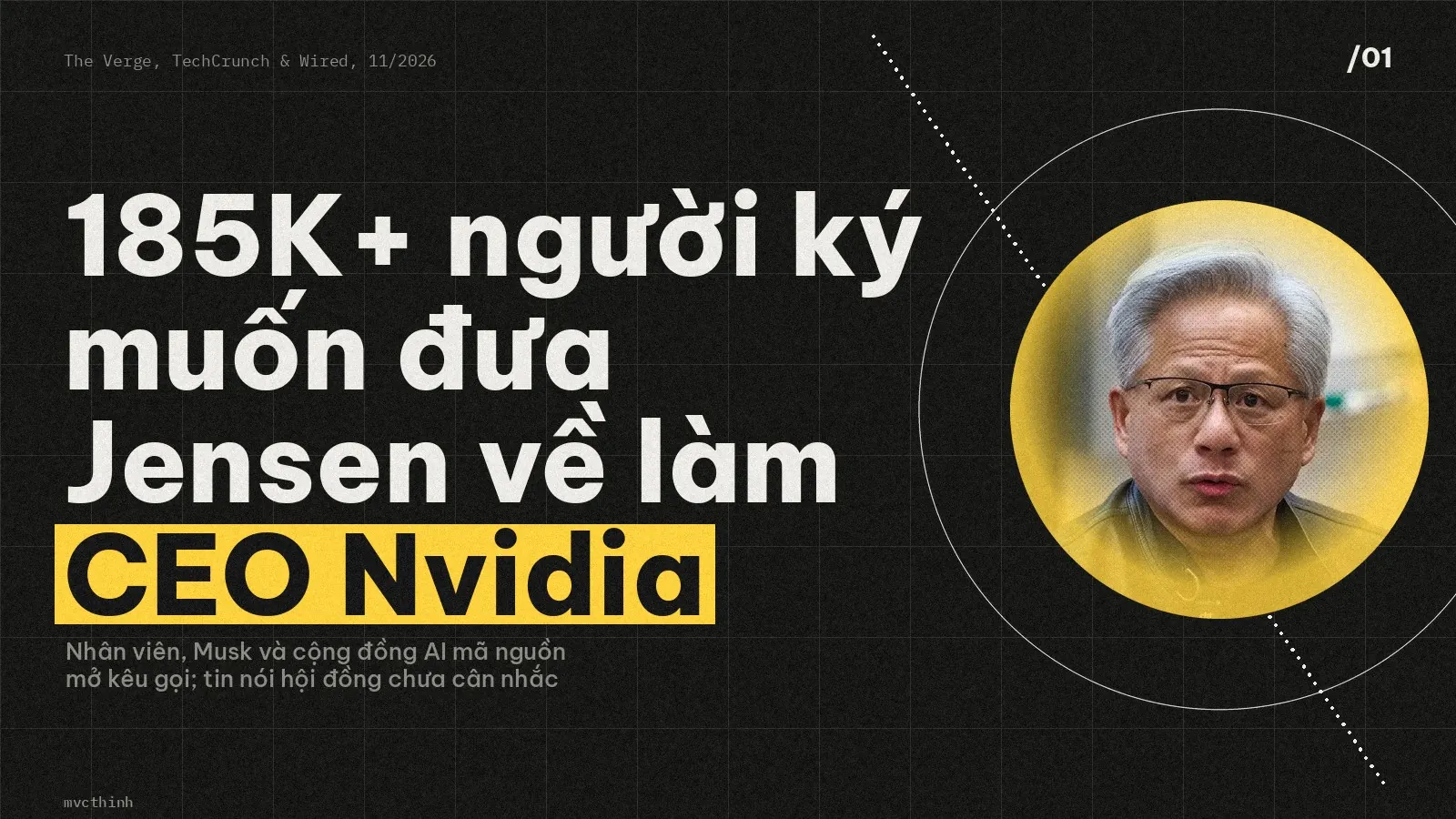
When co-founder Jensen Huang stepped down as Nvidia CEO on November 12, 2026 after 33 years at the helm, the tech industry reaction reached far beyond share prices. Within days, a group of Nvidia employees alongside major tech executives and open-source AI supporters launched petitions urging the board to bring him back. Understanding why one executive commands that kind of backing starts with what he built over two decades: the CUDA software platform and Nvidia’s AI hardware ecosystem.
What did Jensen Huang build for Nvidia and AI?
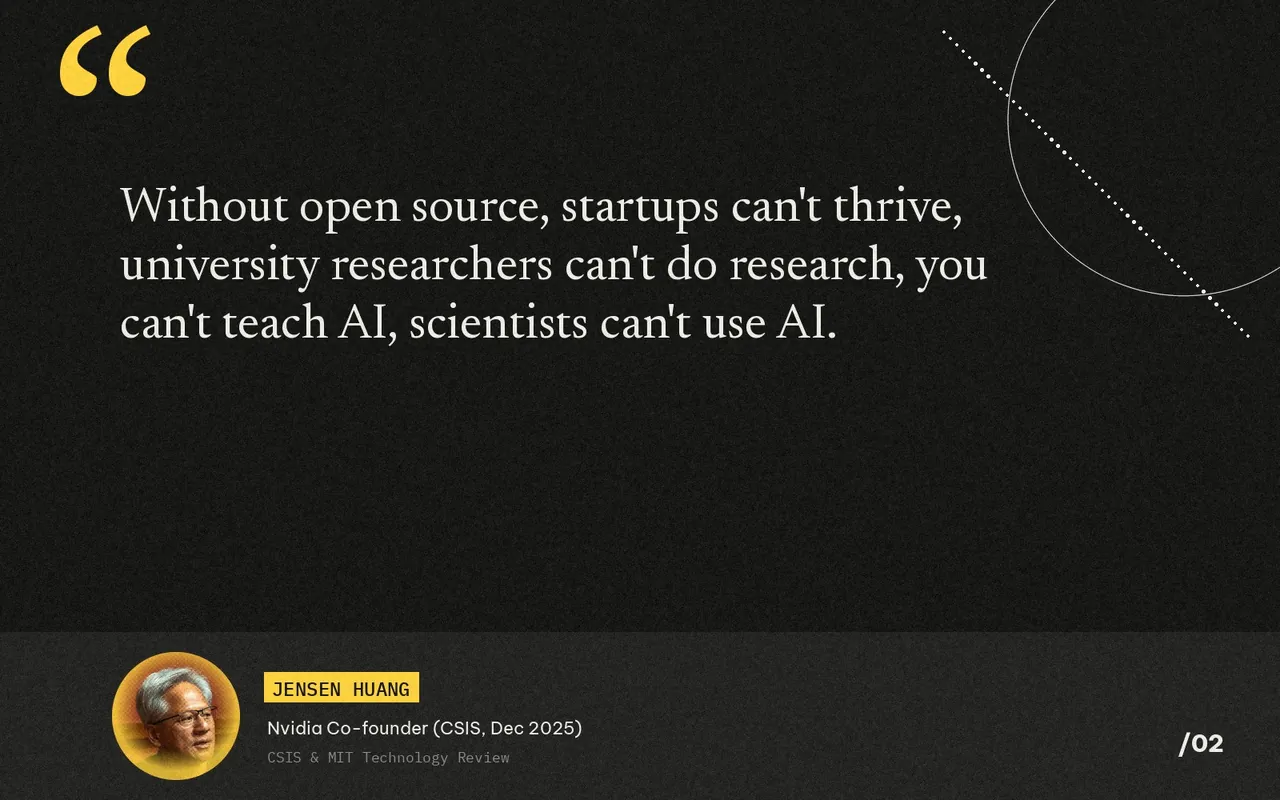
People who entered AI recently often assume Nvidia’s moat is just silicon. In reality, the lock-in that shaped two decades of computing sits in the software layer on top. After inventing the GPU, Huang and his engineering team unveiled the CUDA architecture in 2006. That move let developers write general parallel code directly for GPU cores without routing tasks through graphics APIs.
The deep learning turning point arrived in 2012 when Alex Krizhevsky’s team trained AlexNet on two Nvidia GPUs to win ImageNet. From there, Nvidia built a full software and systems stack around AI training. In 2014 it launched the cuDNN library to speed up neural network primitives for frameworks like Caffe and Torch. In 2016 it delivered the first DGX-1 supercomputer to OpenAI, followed by dedicated Tensor Cores starting with Volta in 2017 and continuing through Blackwell. Marking CUDA’s 20th anniversary in 2026, Nvidia built on Huang’s SC24 statement that the platform helped cut computing costs by roughly a millionfold since its inception.
flowchart LR
  A[2006: CUDA opens GPUs]:::data --> B[2012: GPU deep learning]
  B --> C[2014-26: cuDNN and Tensor Cores]:::key
  C --> D((Ecosystem tied to founder)):::human
  classDef key fill:#1d1a10,stroke:#ffd23f,color:#ffd23f,stroke-width:1.6px
  classDef human fill:#181817,stroke:#e8e6df,color:#e8e6df,stroke-dasharray:5 3
  classDef data fill:#1c1c1b,stroke:#8d8b85,color:#cfcdc6
  classDef muted fill:#181817,stroke:#3d3d3a,color:#8d8b85
Beyond chips, Nvidia announced a deal in September 2026 to acquire Hugging Face for nearly $13 billion. As MIT Technology Review noted, backing open-source AI directly supports Nvidia’s hardware business: the more companies build their own models instead of renting closed frontier APIs, the more GPUs Nvidia sells.
Why are Nvidia employees and tech leaders calling for his return?
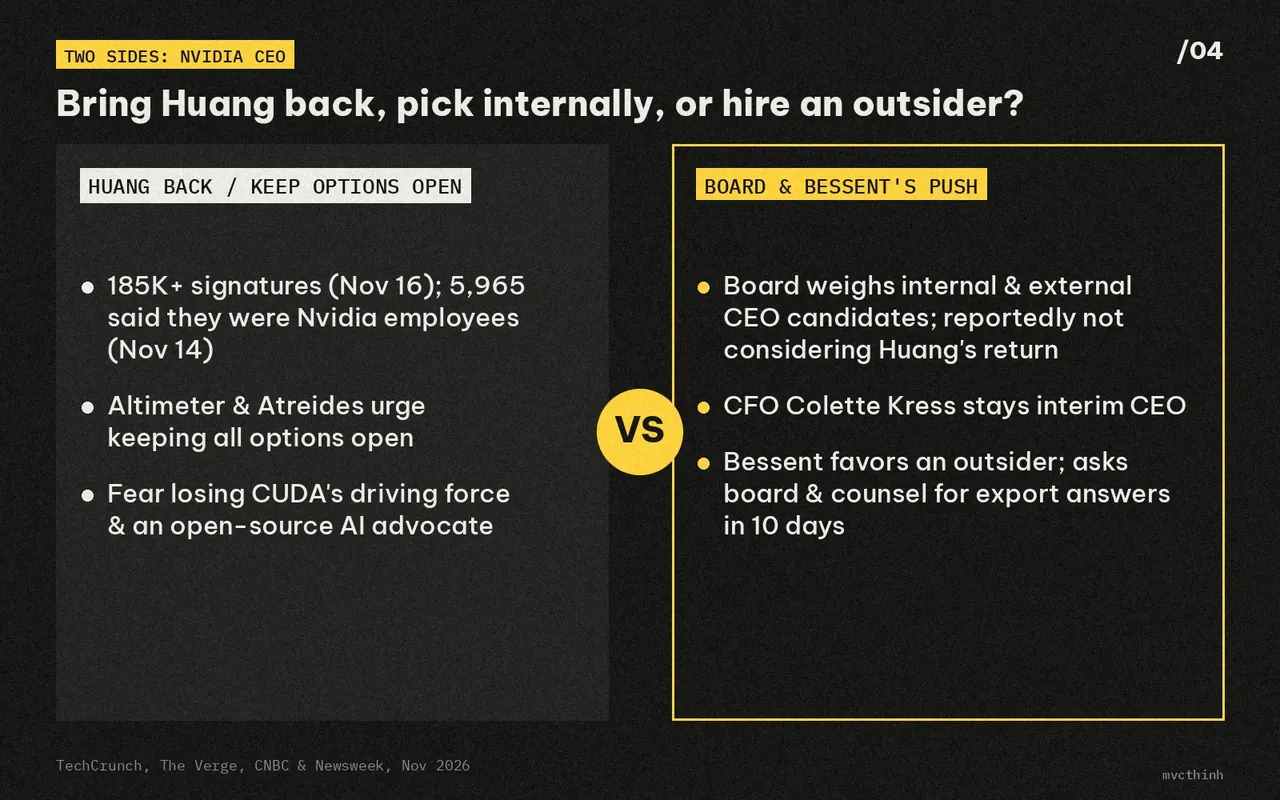
Employees and tech leaders are pushing to reinstate Jensen Huang because they fear losing Nvidia’s technical anchor, question the speed of his removal, and worry open-source AI could lose a key champion. That backlash drove over 1,600 internal comments and more than 185,000 petition signatures.
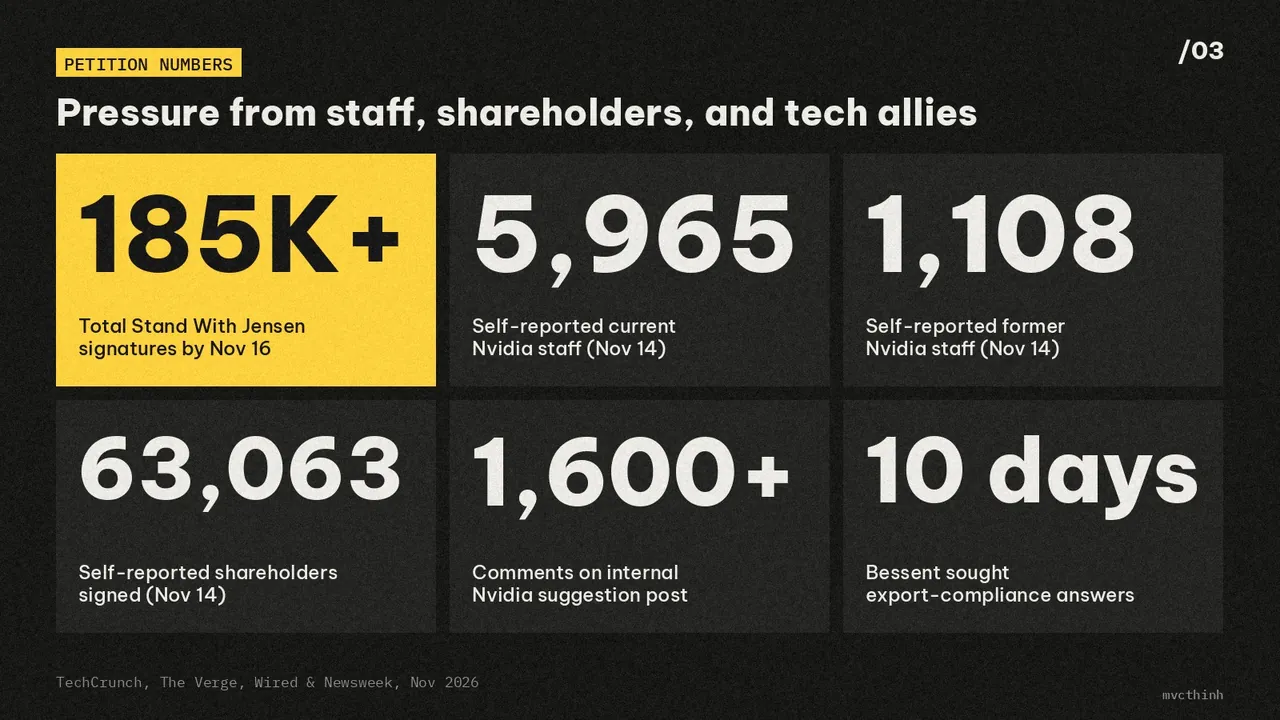
Soon after Huang resigned on November 12 amid investigations into personal conduct and scrutiny over AI chip exports to China, support surfaced inside the company. According to WIRED, an internal Nvidia suggestion-box post submitted by a longtime engineer drew more than 1,600 comments. Many urged the board to reinstate him, with one anonymous commenter writing "Bring back THE boss," while WIRED also reported normal operations with no work stoppage.
Outside the company, an online letter called Stand With Jensen surged rapidly. TechCrunch reported more than 115,000 signatures by Saturday afternoon, November 14, listing 5,965 self-reported current Nvidia employees, 1,108 self-reported former employees, and 63,063 self-reported shareholders. Notable signers included Elon Musk, Epic Games CEO Tim Sweeney, Replit CEO Amjad Masad, and Y Combinator CEO Garry Tan. By November 16, The Verge reported the signature count had crossed 185,000.
Alongside the letter, Financial Times and Ars Technica reported that Silicon Valley allies are assembling a "war room" to lobby both Nvidia’s board and the White House. People familiar with the talks told the Financial Times that Huang has discussed a potential comeback with close confidants.
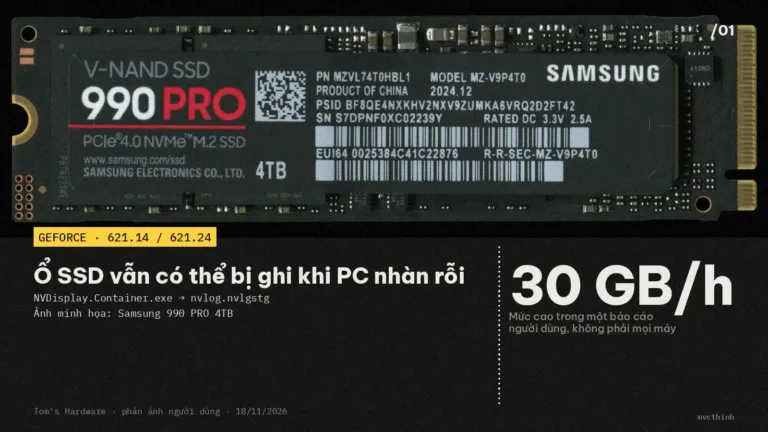 Also readNVIDIA driver SSD writes: Check with Resource Monitor
What the board says and where public theories stand
Despite intense lobbying from tech executives and shareholders, the board is holding firm for now. According to a CNBC report cited by The Verge, Nvidia’s board "isn’t considering" bringing Huang back as CEO. A source told CNBC the board remains focused on an independent investigation led by law firm Wachtell Lipton, while CFO Colette Kress serves as interim chief executive.
| Stakeholder view | Core argument | Current status |
|---|---|---|
| Reinstatement backers | Call for due process; warn against losing technical leadership and open-source AI voice | Over 185,000 signatures gathered; allies lobbying board and White House |
| Nvidia board | Prioritize governance review and independent probe over founder conduct | Not considering a return; CFO Colette Kress remains interim CEO |
| U.S. policymakers | Cite export compliance concerns around advanced AI chips reaching China | Commerce issued remote-access rule; Bessent urges an outsider and 10-day compliance answers |
Political pressure from Washington complicates any return further. U.S. Treasury Secretary Scott Bessent called for a dramatic shake-up with an external CEO and gave the board and outside counsel 10 days to prove Nvidia’s export-control compliance. On social media, David Sacks and Tim Sweeney publicly questioned the credibility of the Chinese-spy allegation, Amjad Masad argued that advocates of closed AI could benefit if open-model champions were sidelined, and research firm SemiAnalysis floated a theory that Huang’s exit cleared opposition to the RASA chip export-control bill. The Verge framed those claims strictly as unverified online chatter. Meanwhile, concrete policy moved forward on November 16 when the U.S. Commerce Department issued a new rule restricting remote access to advanced AI chips by Chinese firms through overseas servers.
What remains after Jensen Huang’s exit
Looking past the executive turmoil, this episode shows how heavily modern AI infrastructure still leans on one founder’s technical vision and political clout. A semiconductor giant like Nvidia will not grind to a halt over a CEO shake-up drama, since foundry schedules at TSMC and CUDA roadmaps run years ahead.
For the broader AI industry and local builders at home, however, leadership priorities carry real weight. Under Huang, Nvidia had strong business reasons to champion open-weight models and keep developer GPUs relevant alongside hyperscale clusters. If new leadership faces pressure to appease regulators and prioritize tightly monitored cloud deals, both open-model momentum and relief on retail GPU pricing could become much harder to come by.
My take: Nvidia's real test is trust, not silicon
In my view, the board does not need to bow immediately to petition counts, nor should it let the succession vacuum drag on without clarity. Publishing transparent investigation findings and reassuring CUDA developers and open-source AI builders will matter far more to Nvidia’s long-term moat than who temporarily sits in the corner office.
Sources
- Our History: Innovations Over the Years Nvidia
- CUDA at 20: How the Platform Transformed Scientific Computing Nvidia
- AI Will Drive Scientific Breakthroughs, NVIDIA CEO Says at SC24 Nvidia
- Accelerate Machine Learning with the cuDNN Deep Neural Network Library Nvidia Developer
- Programming Tensor Cores in CUDA 9 Nvidia Developer
- NVIDIA's Jensen Huang on Securing American Leadership on AI CSIS
- ‘Bring Back THE Boss’: Nvidia Employees Petition for Jensen Huang’s Return WIRED
- Elon Musk, other tech execs sign petition calling on Nvidia to reinstate Jensen Huang TechCrunch
- Nvidia’s board is reportedly ‘not considering’ hiring Jensen Huang back The Verge
- Tech leaders are convinced that Jensen Huang’s exit was a plot against him The Verge
- Jensen Huang allies build a 'war room' to get him back at Nvidia Ars Technica
- The open-source movement wants Jensen Huang back MIT Technology Review
- Jensen Huang discusses comeback as Nvidia CEO with allies Financial Times
- Why the next 10 days could be crucial for Nvidia Newsweek
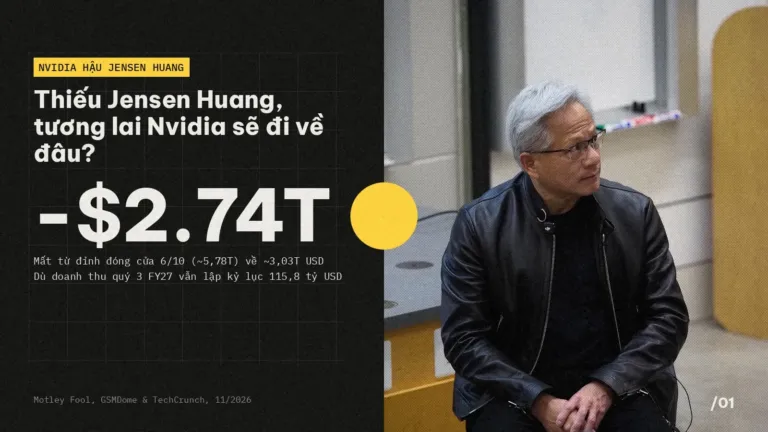 Safety & policy · Nov 21, 2026Nvidia Without Jensen Huang: Where Do CUDA and GPUs Go?
Analyzing Nvidia after Jensen Huang: the 60-report leadership gap, Claude Mythos and AMD pressure on CUDA, and what GPU buyers face next.
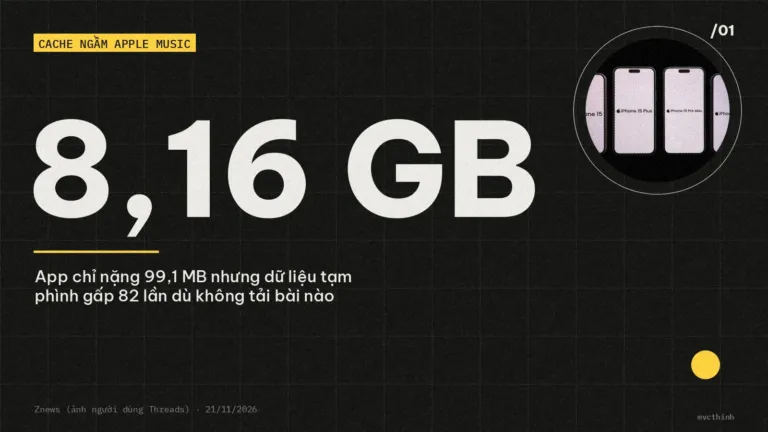 Safety & policy · Nov 21, 2026Apple Music Eats 8–11 GB With Zero Downloads: How to Fix It
Streaming only, yet Apple Music takes up 8–11.5 GB on your iPhone? See why Lossless caching bloats Documents & Data and 4…
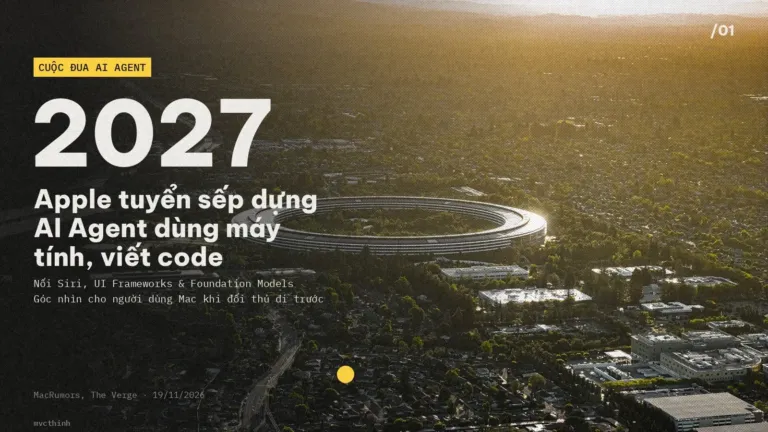 Coding agents · Nov 21, 2026Apple's Computer-Use AI Agent Listing and What It Means for Mac
Analysis of Apple's proactive AI agent job listing, how it compares with Gemini on Mac, and macOS 27.3 permission splits for Mac…