Blog · AI Agent News · Agent basics VIEN
Apple iCloud Outage After Microsoft: Why Single-Cloud Reliance Hurts
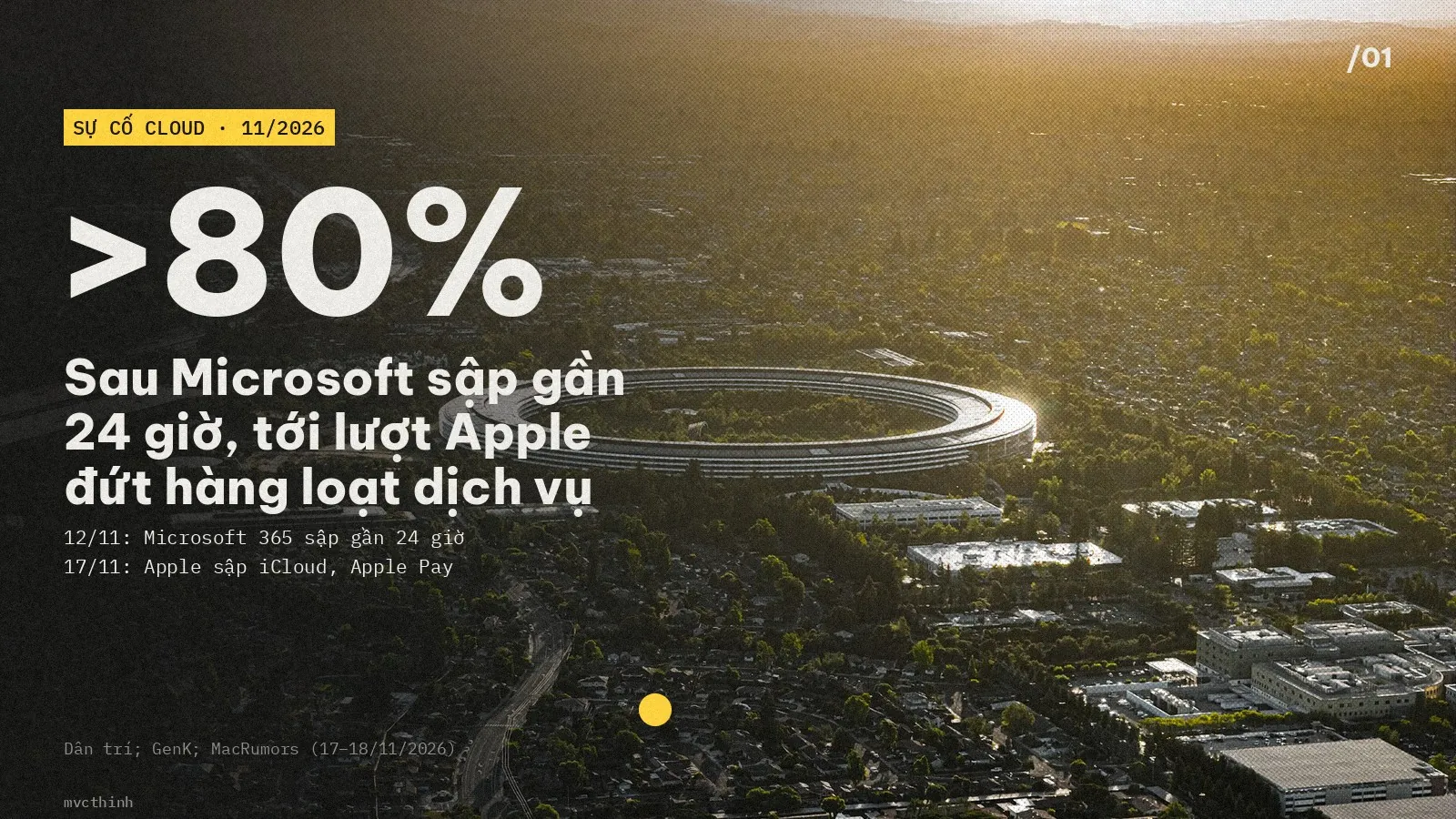
Four major US disruptions from Microsoft 365 and the FAA to Apple between Nov 12 and Nov 17, 2026 show why creative teams still need offline backups.
In this article
Imagine sitting down to pull project footage from iCloud or push a build in App Store Connect, only to find your Mac signed out and verification refusing to let you back in. Between Nov 12 and Nov 17, 2026, both Microsoft and Apple went through major service outages triggered by internal technical faults rather than external hackers.
What happened during the Nov 12–17, 2026 outage streak?
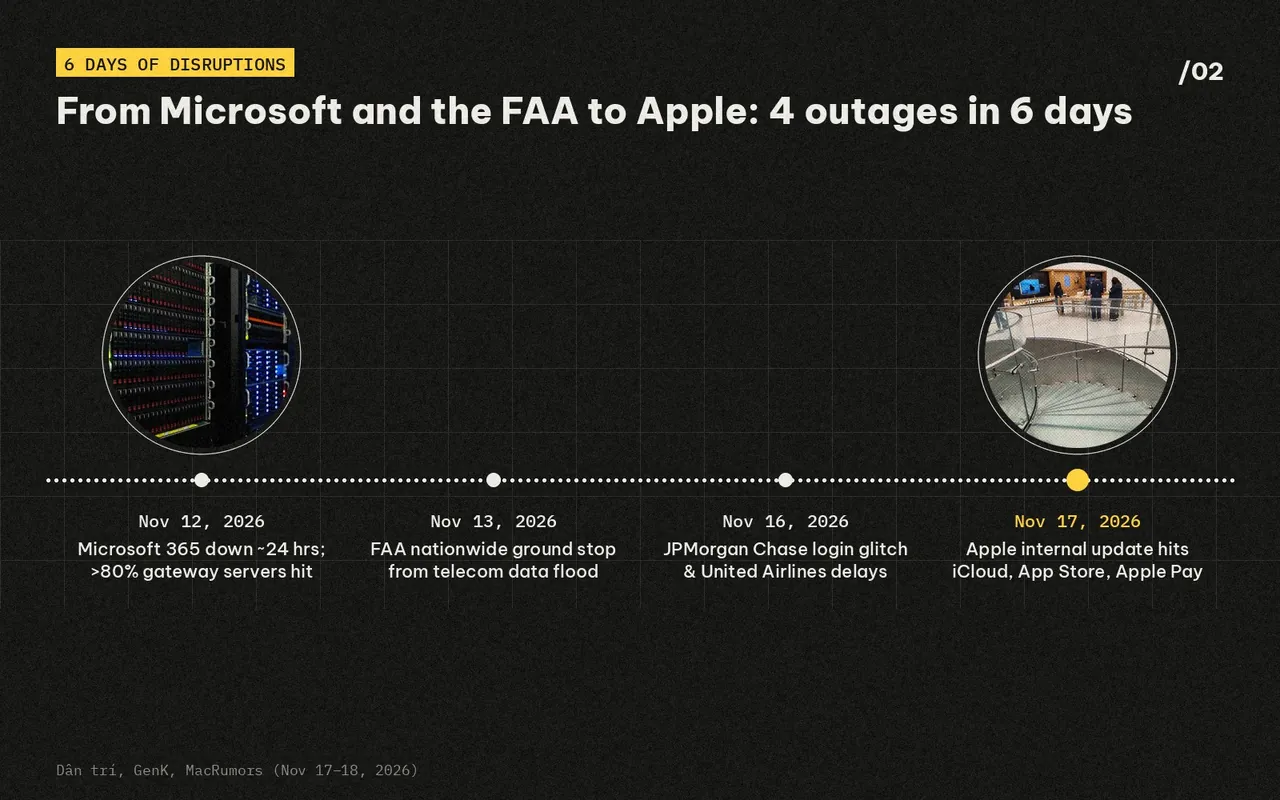
Over six days from Nov 12 to Nov 17, 2026, four major US systems—Microsoft 365, the FAA air-traffic telecom network, JPMorgan Chase alongside United Airlines, and Apple—experienced cascading or back-to-back disruptions. Officials and companies found no evidence linking the events together.
| Date (US time) | Organization | Impacted services | Reported cause |
|---|---|---|---|
| Nov 12, 2026 | Microsoft | Outlook, Teams, OneDrive, Copilot | Gateway bug under load + traffic shift |
| Nov 13, 2026 | FAA | Air-traffic comms, nationwide ground stop | ~1,000 requests/4–5 sec during router swap |
| Nov 16, 2026 | JPMorgan Chase & United Airlines | Online banking access; temporary flight holds | Technical system glitches |
| Nov 17, 2026 | Apple | iCloud, App Store, App Store Connect, Apple Pay, Apple Music | Internal software update |
The FAA disruption on Nov 13, 2026 lasted from roughly 3:30 PM to 8:15 PM ET after telecom traffic spiked to around 1,000 connection requests every four to five seconds. According to Dân trí citing the FAA, the issue occurred while network provider L3Harris was replacing router equipment in El Dorado, Arkansas. Separately, GenK noted CNN reporting that an internal secure communications network at the NSA also experienced trouble during the same stretch.
Which Apple services broke on Nov 17, 2026?
Starting around 11:45 AM ET on Nov 17, 2026 (11:45 PM Vietnam time), Apple's iCloud, App Store, Apple Pay, Apple Music, and Apple Support went down or slowed sharply before full restoration around 5:46 PM ET. Even in-store checkout systems at Apple retail locations in New York and Chicago stalled.
As reported by MacRumors and GenK, Apple's System Status page flagged issues across iCloud Accounts and Sign In, iCloud Mail, iCloud Web Apps, AppleCare on Device, Apple Business, Apple School Manager, and Schoolwork. Users saw iPhones and Macs unexpectedly signed out, new iPhones failing activation, and developers locked out of App Store Connect.
An Apple spokesperson confirmed the disruption stemmed from an internal update rather than a cyberattack, stating: "Many of our systems are back online after an internal update caused some disruptions this morning. We are working to get remaining systems back up as soon as possible." Tightly coupled cloud ecosystems can hit operational walls fast, much like the usage ceilings covered in Apple's daily Siri AI limits in iOS 27.3.
 Also readMeta Muse Signal & Bank Balance Report: Fact vs. Fiction
Why did over 80% of Microsoft's gateway servers stall?
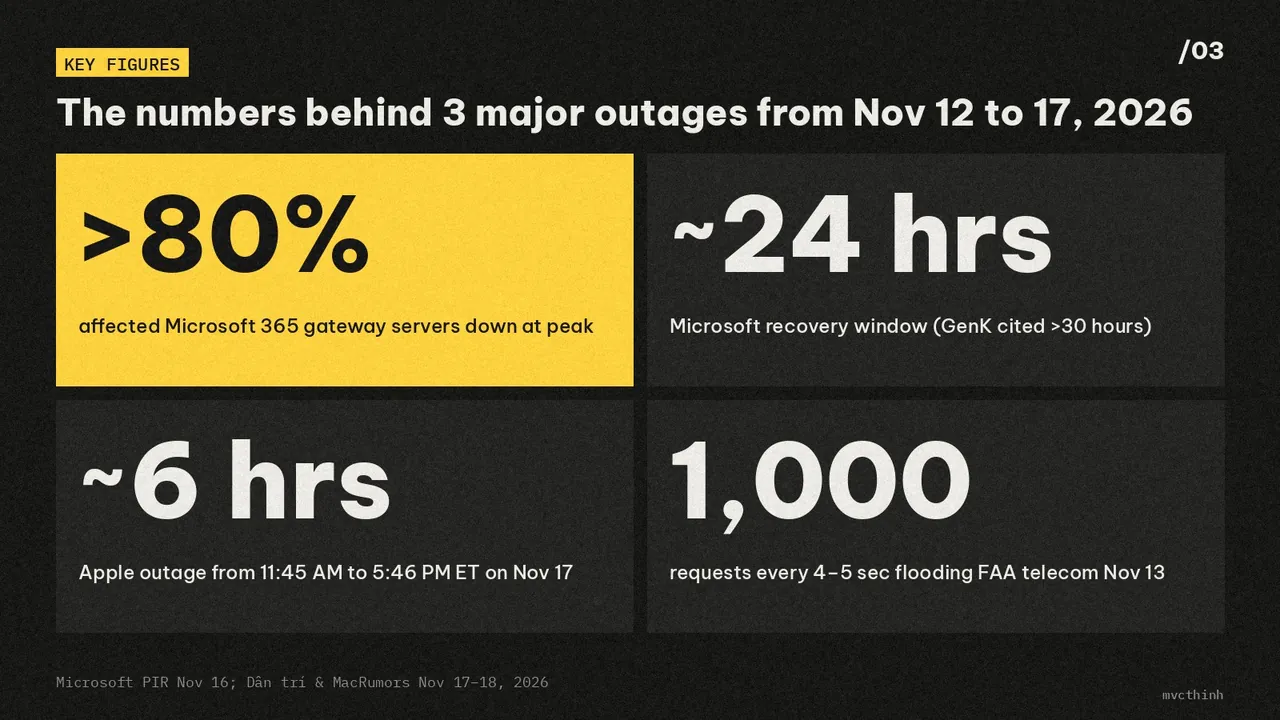
In its preliminary report released Nov 16, 2026, Microsoft said the Nov 12, 2026 outage resulted from three factors hitting at once: a latent bug inside Microsoft 365 networking gateway servers, extra traffic shifted over from Teams, and pre-existing reduced server capacity.
Think of those gateway servers like tollbooths feeding a highway. When several lanes are already closed and extra traffic from Microsoft Teams gets routed through the same gate, a hidden glitch in the booth software locks up traffic until more than 80% of the affected gateway servers stop responding. Microsoft reported the core disruption lasted nearly 24 hours before recovery, while earlier Vietnamese coverage in GenK noted Outlook and Teams interruptions exceeding 30 hours for businesses, schools, and government agencies.
My take: Keep the cloud as a bridge, not your only vault
I rely on macOS and iCloud every day because syncing files between a Mac, iPad, and iPhone feels effortless when everything works. Watching Microsoft and Apple both stumble inside the same six-day window is a clear reminder that cloud storage is best treated as a transport layer, not the single source of truth for active client work.
If you are cutting a video on a deadline or shipping an app update, getting unexpectedly logged out of iCloud or App Store Connect halts your day even though nothing is wrong with your own hardware. Local control over working files matters for reliability just as much as local control over AI history matters for privacy, similar to what we looked at when Claude's incognito mode still tied activity to account identity.
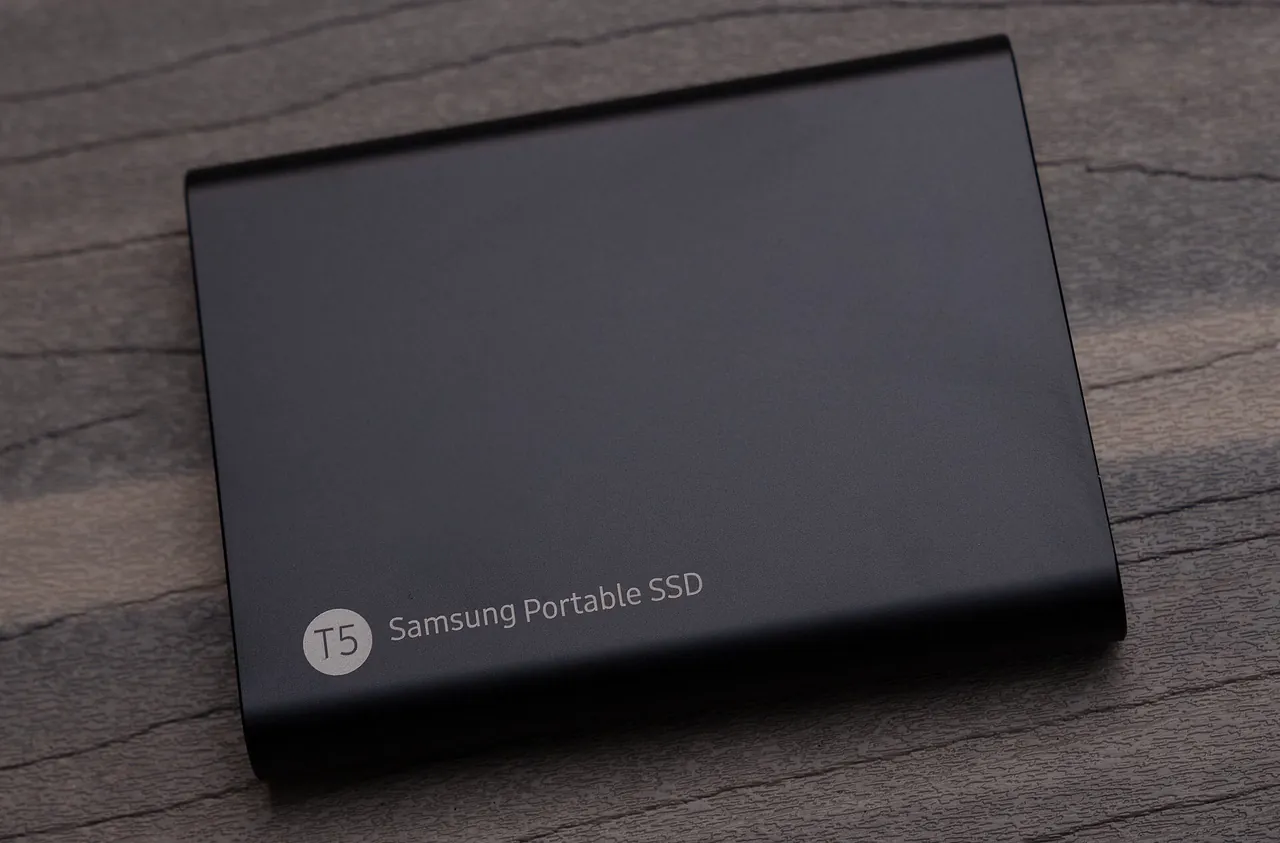
Where do you keep your main working files right now—all inside iCloud or OneDrive, or backed up onto a local SSD on your desk? Share your setup in the comments.
Sources
Agent basicsSafety & policyAutomation
 Safety & policy · Nov 21, 2026Nvidia Without Jensen Huang: Where Do CUDA and GPUs Go?
Analyzing Nvidia after Jensen Huang: the 60-report leadership gap, Claude Mythos and AMD pressure on CUDA, and what GPU buyers face next.
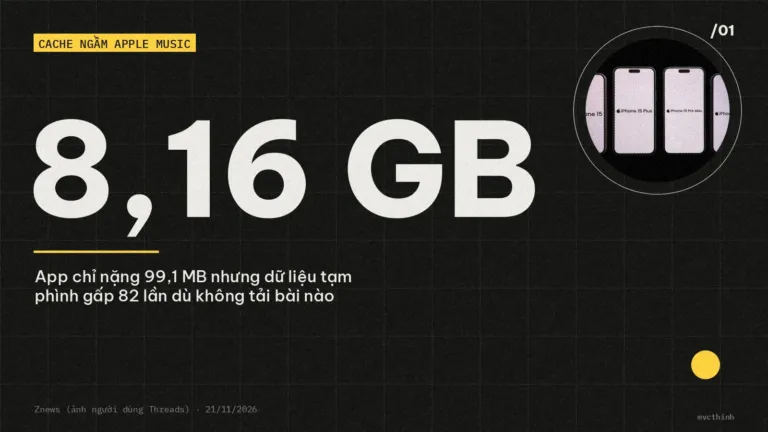 Safety & policy · Nov 21, 2026Apple Music Eats 8–11 GB With Zero Downloads: How to Fix It
Streaming only, yet Apple Music takes up 8–11.5 GB on your iPhone? See why Lossless caching bloats Documents & Data and 4…
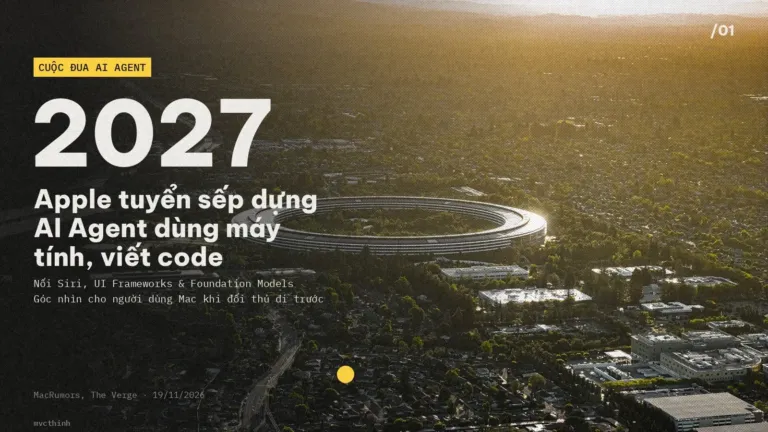 Coding agents · Nov 21, 2026Apple's Computer-Use AI Agent Listing and What It Means for Mac
Analysis of Apple's proactive AI agent job listing, how it compares with Gemini on Mac, and macOS 27.3 permission splits for Mac…