Blog · AI Agent News · Agent basics VIEN
GPT-Live-1.1 Standby Cuts the Idle Rate 60%, Not Your Bill
Standby drops the idle-minute price from $0.05 to $0.02, but only after a timeout. We run 1,000 idle hours to show how much your bill really falls.
In this article
If you build a voice bot for customer support or language practice, you know this scene. A caller says "hold on" to find an order number or reread a prompt, both sides go quiet for half a minute, and the API meter keeps running at $0.05 a minute as if they were talking nonstop.
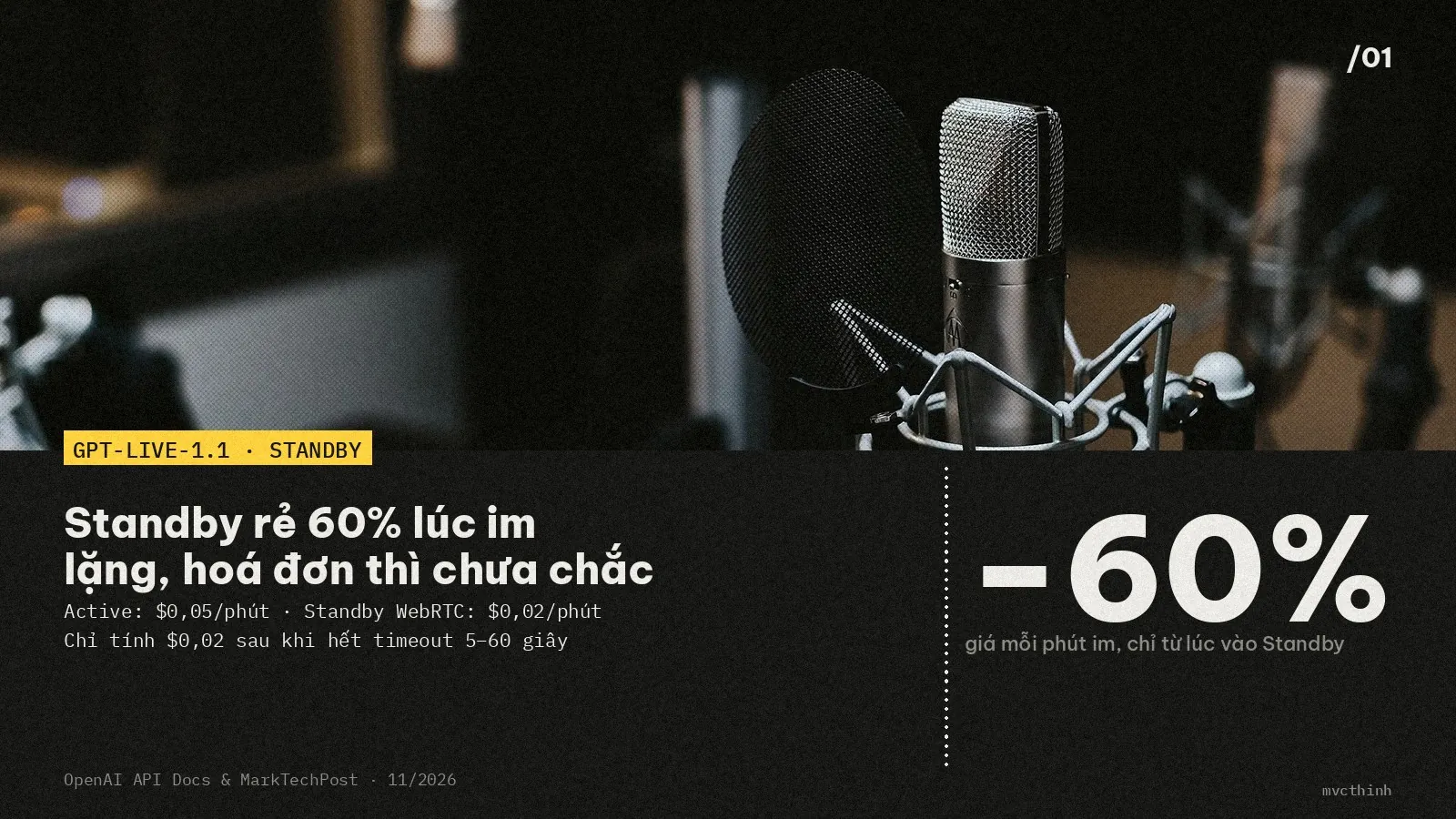
OpenAI added a Standby mode to GPT-Live-1.1: idle minutes drop to $0.02, a 60% lower rate. Turn it on now, but do not expect your monthly bill to fall 60%. The math below shows 1,000 idle hours a month saves about $900 (30%), not $1,800.
Standby works like a TV on standby: still plugged in, still listening for the remote, but drawing less power than while playing. It only runs on WebRTC sessions, a direct audio link between your app and the server, like a phone call.
Why 60% off does not mean 60% off your bill
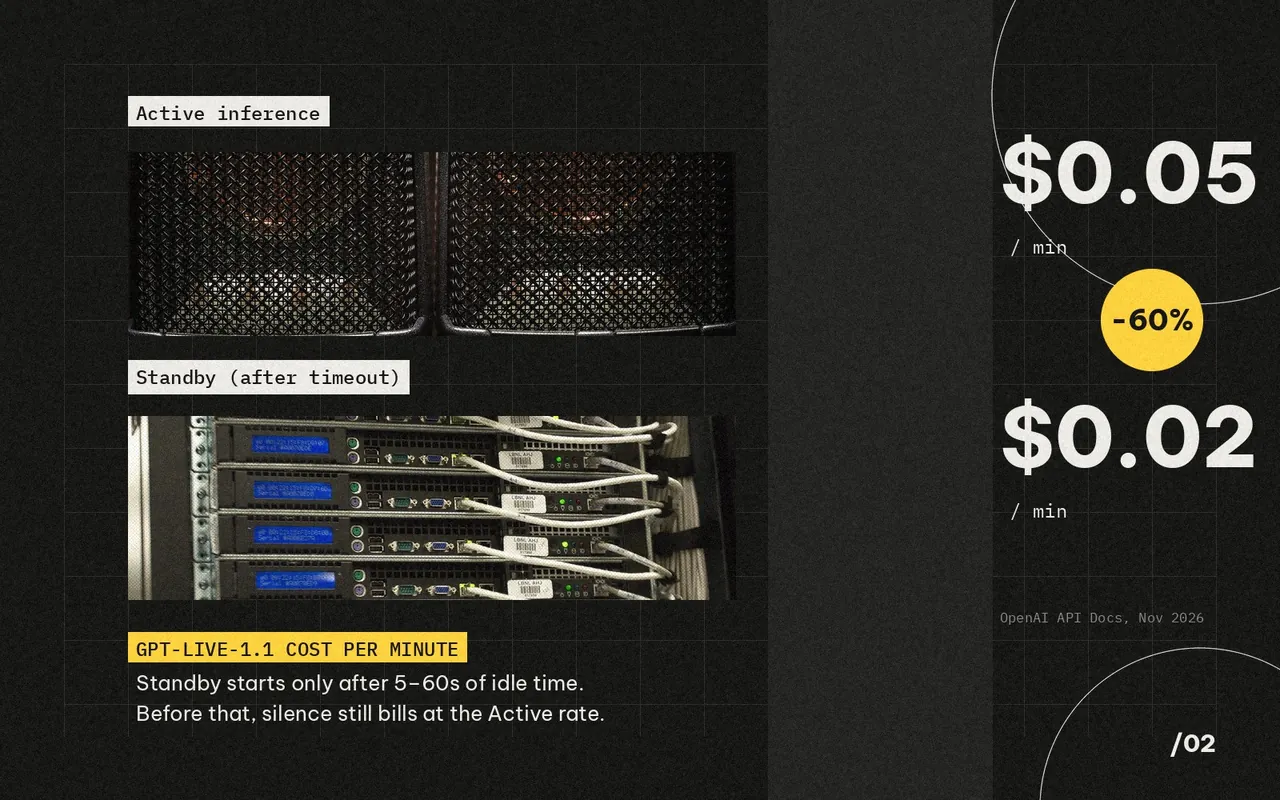
5 to 60 seconds is the wait you set, called the idle timeout: like a stairwell motion light, it switches to power-saving only after enough quiet. Until it expires, the $0.02 rate does not apply. Per OpenAI, Active time includes speech, silence before the timeout expires, and time spent waiting for backend work while inference is still running.
| During silence | Rate per minute | Note |
|---|---|---|
| Default (Active) | $0.05 | Silence still bills |
| Mute mic in your app | $0.05 | Session stays Active |
| Standby on | $0.02 | After timeout; first reply may be slower |
Note that $0.02 is the voice-session duration rate. Backend tokens and tools bill separately, so your total bill falls even less.
To enable it, set session.wake_policy.type to "speech" and session.idle_timeout_s to 5–60 when you create the session. Omit the timeout and, after the first wake, the session stays Active until it ends.
flowchart LR
  A[Active · $0.05/min]:::key -->|Idle for 5–60s| B[Standby · $0.02/min]:::data
  B -->|Someone speaks| A
  classDef key fill:#1d1a10,stroke:#ffd23f,color:#ffd23f,stroke-width:1.6px
  classDef human fill:#181817,stroke:#e8e6df,color:#e8e6df,stroke-dasharray:5 3
  classDef data fill:#1c1c1b,stroke:#8d8b85,color:#cfcdc6
  classDef muted fill:#181817,stroke:#3d3d3a,color:#8d8b85
Run the numbers
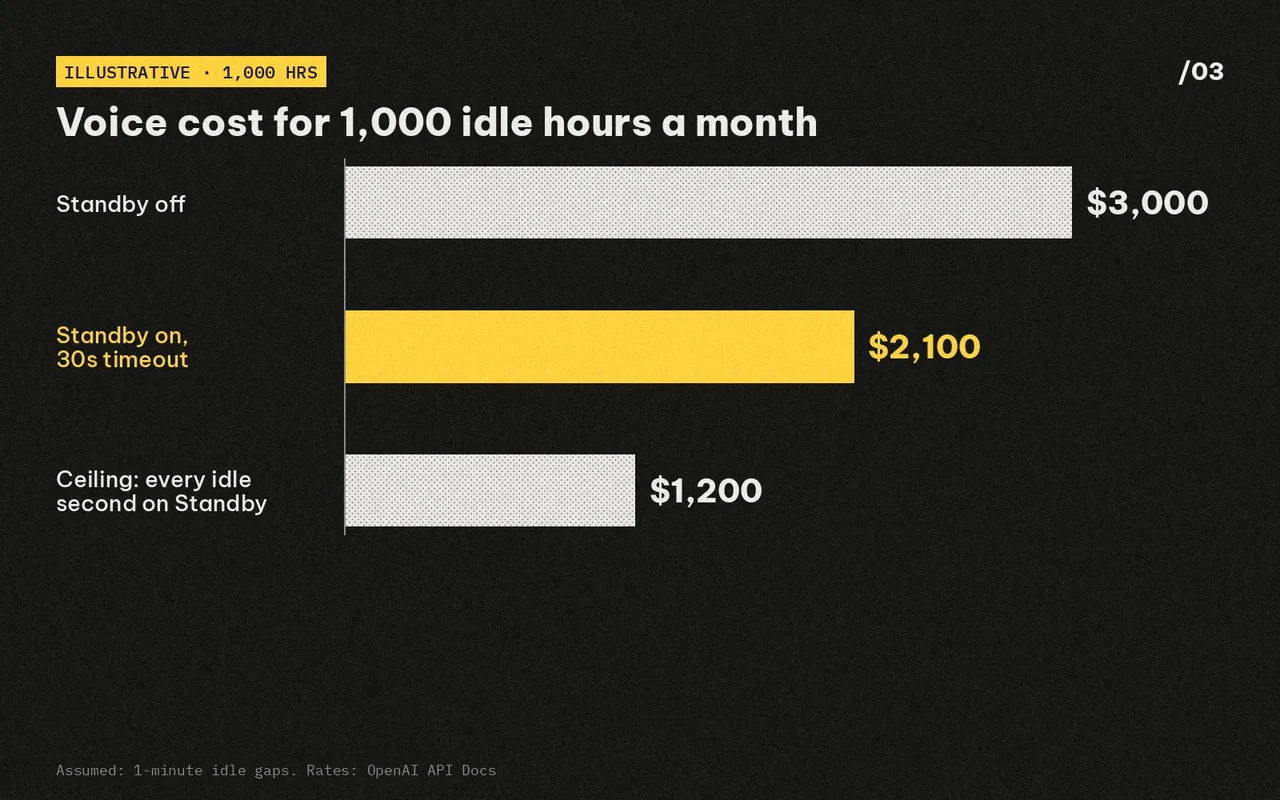
$0.41 is the voice cost of a 10-minute speaking drill with 6 minutes of silence, instead of $0.50. My assumptions: each silent gap lasts 1 minute and the timeout is 30 seconds, so only the second half of each gap is Standby. $0.32 is reachable only if every silent second were Standby.
Scale it to a shop with 1,000 idle hours a month: $3,000 without Standby, $2,100 with it under the same assumptions, saving $900 (30%). The $1,200 figure (60%) is a theoretical ceiling. This is an illustrative calculation, not your measured data. The longer gaps run compared with the timeout, the closer you get to 60%; gaps shorter than the timeout save nothing.
 Also readApple Music Eats 8–11 GB With Zero Downloads: How to Fix It
Is closing the session cheaper than Standby?
15 seconds is what OpenAI bills up front each time you create a new WebRTC session (credited against duration once it runs), so closing and reopening constantly is not free. But for long breaks where your app can disconnect, closing the session stops voice charges entirely and is still cheapest.
My take: turn Standby on, but measure first
I'm on the side of turning Standby on now if your app runs WebRTC. It works for both gpt-live-1 and gpt-live-1.1, so you do not need to switch models first. Before you report "60% savings," though, measure the real idle seconds per call and how long each gap lasts. That number decides whether you land near 30% or near 0%.
Beyond cost, OpenAI says 1.1 transcribes more accurately, keeps a more consistent accent and voice across languages, and has powered voice in ChatGPT Plus and Pro since October 15, 2026. According to MarkTechPost, OpenAI has not published benchmark scores for these improvements.
Back to the caller hunting for an order number: if they take 15 seconds and your timeout is 30, Standby never kicks in and the meter keeps running at $0.05. If they take three minutes, that is when Standby finally has work to do.
Sources
Agent basicsOpenAI & ChatGPTAutomation
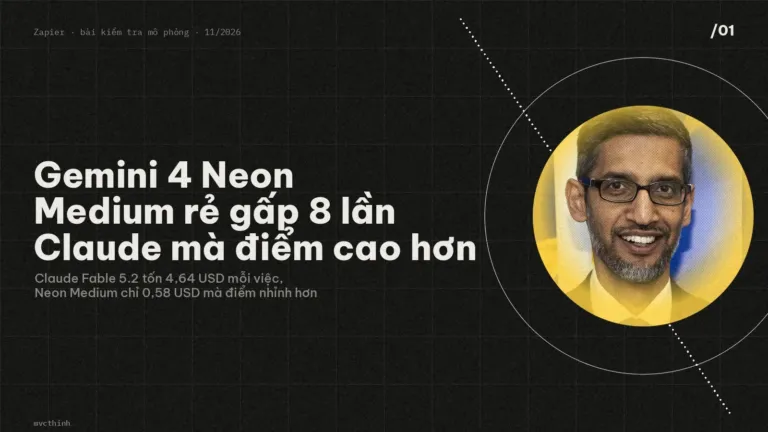 Agent basics · Nov 22, 2026Gemini 4 Neon: Medium Costs 8× Less Than Claude, Scores Higher
Zapier ran AI through 657 simulated office tasks: Neon on Medium cost $0.58 a task, Claude Fable 5.2 cost $4.64 and scored…
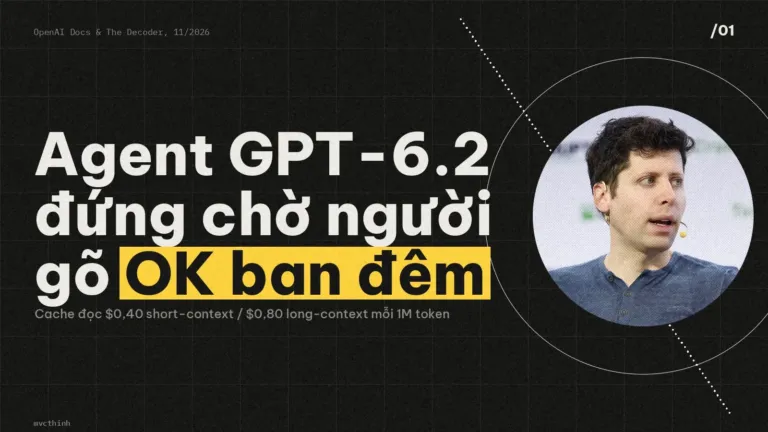 Coding agents · Nov 22, 2026Moving to GPT-6.2 with your old prompt? Your agent may wait for "OK"
OpenAI had to write three prompt snippets to stop GPT-6.2 from pausing to ask. Before an overnight agent runs on it, retest…
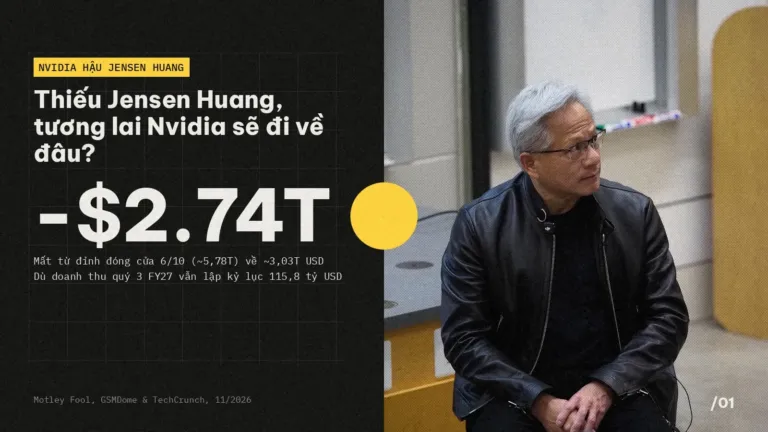 Safety & policy · Nov 21, 2026Nvidia Without Jensen Huang: Where Do CUDA and GPUs Go?
Analyzing Nvidia after Jensen Huang: the 60-report leadership gap, Claude Mythos and AMD pressure on CUDA, and what GPU buyers face next.