Blog · AI Agent News · Open models VIEN
China says its Lushan card will break NVIDIA's monopoly?
Moore Threads says its Lushan card has the most memory ever on a consumer GPU, but gives no price or test results. I will wait for the 29 December 2026 launch.
In this article
Say you download a big AI model to run at home. Halfway through, your graphics card runs out of memory, so you end up on a cloud rental page, paying by the hour. Nobody enjoys that.
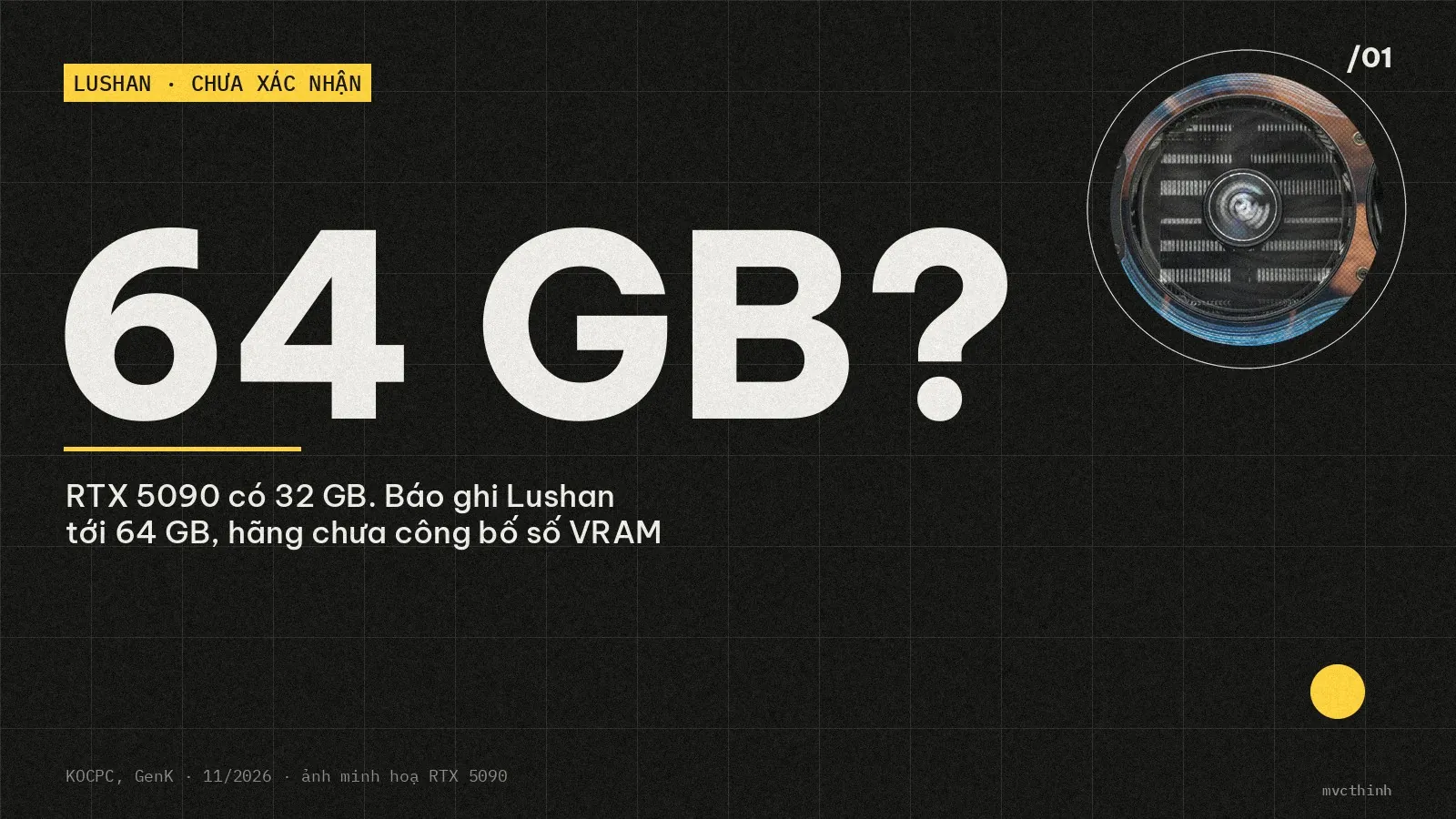
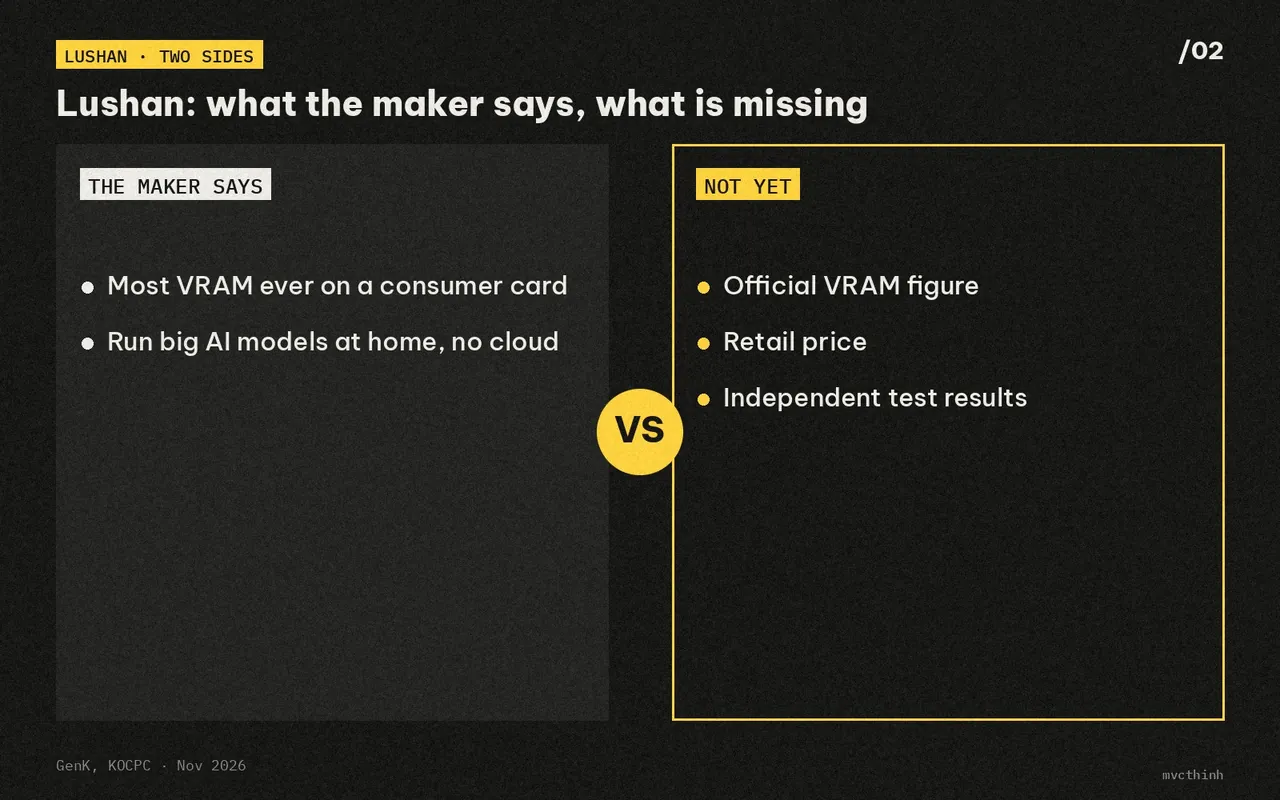
That is exactly the itch Chinese chipmaker Moore Threads says it wants to scratch. The company just teased a new graphics card called Lushan and claims it will carry the most memory (VRAM) ever put on a mainstream graphics card, enough to run large AI models at home. The twist is that the GenK report itself says the company is still keeping the exact VRAM figure, the price and real test results secret.
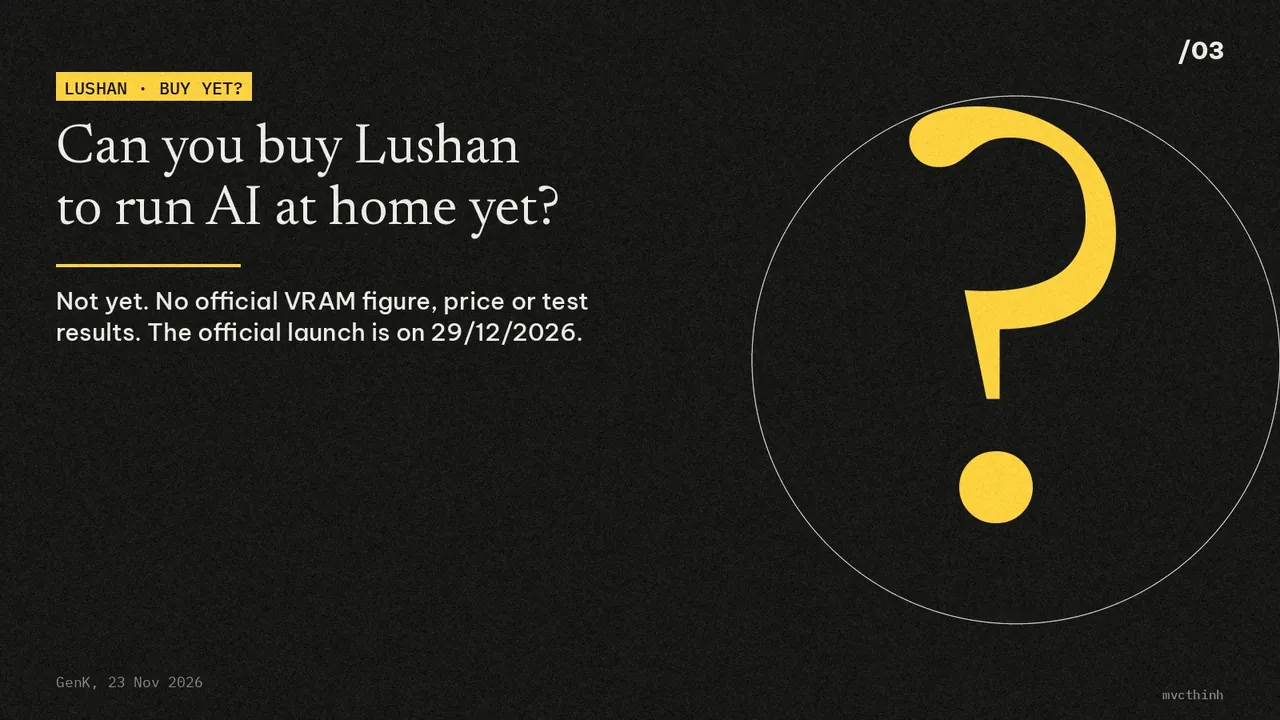
So I have decided to wait. The smartest move is not to spend money or change your plans over a clickbait headline. I will wait for the official launch on 29 December 2026 and read independent reviews, instead of trusting what the maker says about its own card. That is my plan.
What does a big memory give you at home?
A graphics card's own memory is called VRAM. Think of an AI model as a ship that wants to enter a harbor: the bigger the ship, the wider the harbor must be to hold it, and VRAM is that harbor. A wide enough harbor means you can run the model on your own computer, with no cloud rental and no constant internet connection.
So where does 64 GB come from? The company has said Lushan's memory will be four times the previous generation's, and the previous cards, the S80 and S90, have 16 GB, so Tom's Hardware worked out up to 64 GB.
| Card | VRAM | Where the figure comes from |
|---|---|---|
| Moore Threads S80, S90 (previous generation) | 16 GB | Tom's Hardware |
| Nvidia RTX 5090 | 32 GB | KOCPC |
| Lushan | up to 64 GB | Inferred by the press, not published by the company |
Is buying this card cheaper than renting cloud?
Nobody can calculate that yet, because the company has not published a price, so anyone saying how much cheaper than cloud Lushan will be is only guessing. Once a price exists, divide it by your monthly cloud bill and you will know how many months it takes to earn the money back.
 Also readSearch Browser vs Chrome: Is a 10.8 MB Mac Browser Worth It?
More memory does not mean more speed
Several Chinese outlets ran headlines like "beats the RTX 5090". Read past the headline and Lushan only beats it in memory size, not in gaming power. According to KOCPC, the industry generally puts Lushan's computing power around an RTX 5060 or 5070, which is mid-range, and no third party has tested it.
If the industry guess is right, Lushan is like a truck with a very big cargo bed but only an average engine: it carries a lot, but do not expect it to race like a sports car.
Where I stand, and what you should do
According to KOCPC, Lushan's main customers are Chinese gamers and the Chinese government procurement market, and none of the sources I read say whether the card will be sold outside China.
If you already rent cloud GPUs for AI, keep doing it and do not cancel yet, because you can only compare once a price exists.
If you plan to buy an Nvidia card for AI and need it now, buy it. Waiting for a card with no price, no tests and no confirmed sales outside China is a gamble. And if you are in no hurry, wait until after the launch, when the company has promised to publish the full specs.
Back to that moment when your card ran out of memory. Today you can open the model file you want to run and check how many GB it weighs, which is a rough guide to the VRAM you need. On 29 December 2026, hold that number up next to Lushan's official VRAM figure, then look at the price to decide.
Sources
- Thách thức thế độc tôn của NVIDIA: Hãng chip Trung Quốc Moore Threads vừa hé lộ card đồ họa có dung lượng VRAM lớn nhất lịch sử phân khúc tiêu dùng (bài gốc, GenK đăng lại) Đời sống & Pháp luật
- Thách thức thế độc tôn của NVIDIA: Hãng chip Trung Quốc vừa hé lộ card đồ họa có dung lượng VRAM lớn nhất lịch sử phân khúc tiêu dùng, có khả năng tự chạy siêu mô hình AI ngay tại nhà GenK
- Does this spec surpass the RTX 5090? China's first hardware ray-tracing GPU, Moore Threads "Lushan," to launch at year-end KOCPC
- Moore Threads unveils next-gen gaming GPU with 15x performance and 50x ray tracing improvement Tom's Hardware
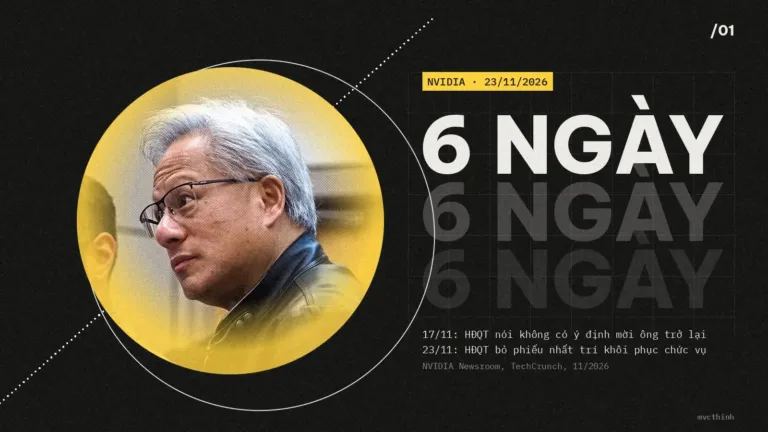 Safety & policy · Nov 23, 2026Jensen Huang Returns as Nvidia CEO, 6 Days After Board Said No
Nvidia reinstated Jensen Huang as CEO on Nov 23, just 6 days after its board said it had no plan to bring…
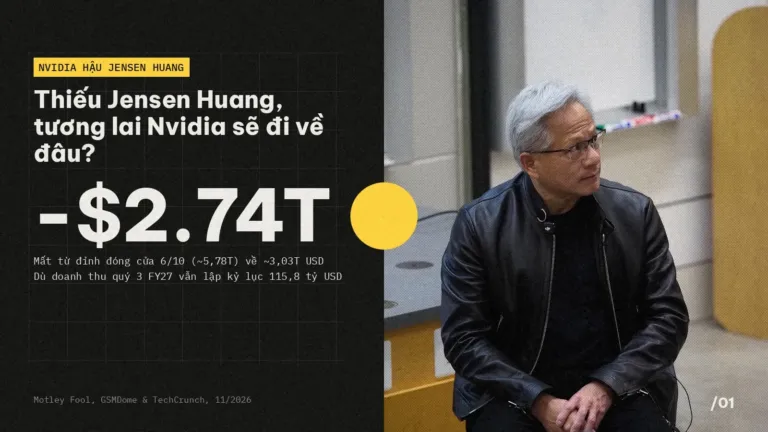 Safety & policy · Nov 21, 2026Nvidia Without Jensen Huang: Where Do CUDA and GPUs Go?
Analyzing Nvidia after Jensen Huang: the 60-report leadership gap, Claude Mythos and AMD pressure on CUDA, and what GPU buyers face next.
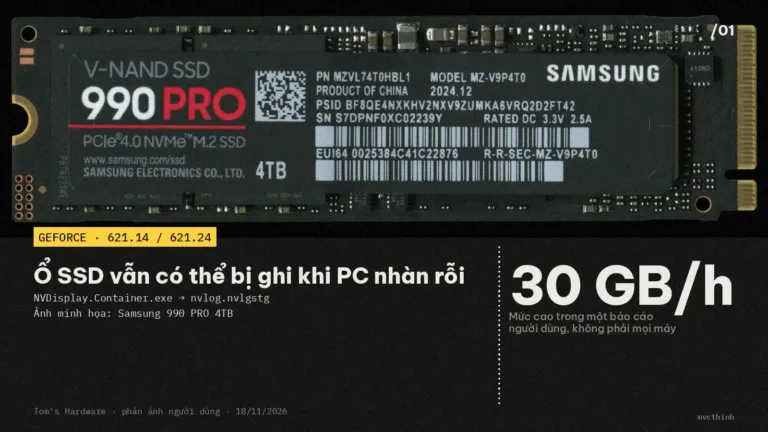 AI video · Nov 20, 2026NVIDIA driver SSD writes: Check with Resource Monitor
GeForce 621.14/621.24 users report 3–30 GB/hour of idle writes. Check NVDisplay.Container.exe, monitor SSD writes, and consider rolling back to 621.01.