Blog · AI Agent News · Agent basics VIEN
66.5% of Korean Workers Use AI, Yet Output Barely Moves
A Bank of Korea survey of 16,342 workers shows AI saves 3.7 hours a week per employee, yet output correlation sits at just 0.08.
In this article
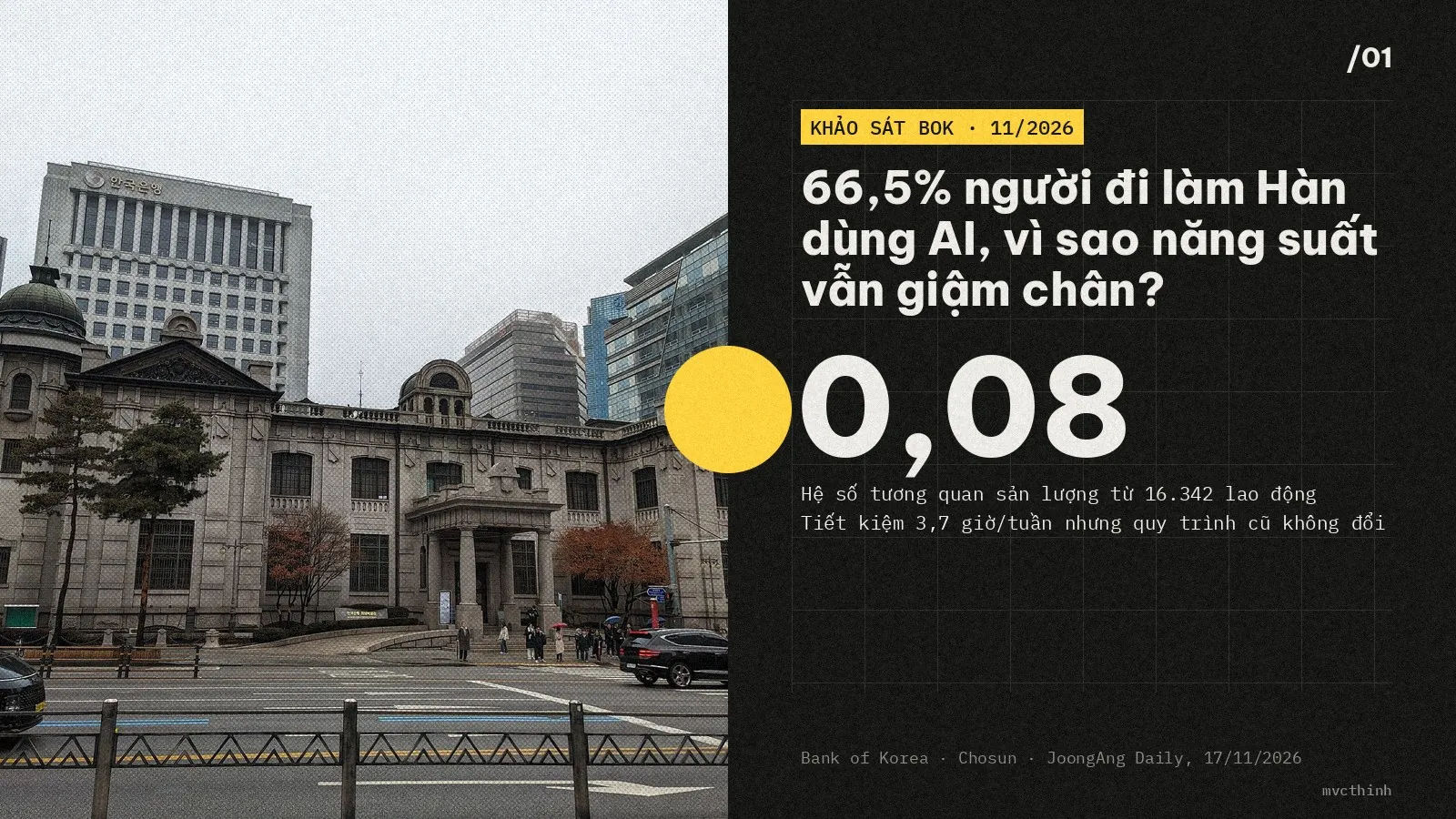
Walk around almost any office and seeing ChatGPT, Gemini, or Claude open on half the screens makes it easy to assume team output is soaring. Yet a Bank of Korea (BOK) issue note published on November 17, 2026—titled "AI Diffusion and Productivity Effects: More Widely, More Efficiently, but Still Shallow"—tells a starkly different story across 16,342 employed workers.
How far has workplace AI spread in South Korea?
Surveyed in August and September 2026 across 16,342 employed individuals aged 18–64 nationwide, 66.5% confirmed they use generative AI tools for work. That puts South Korea well ahead of the 43% rate reported in the United States and more than double Germany at 31.5%.
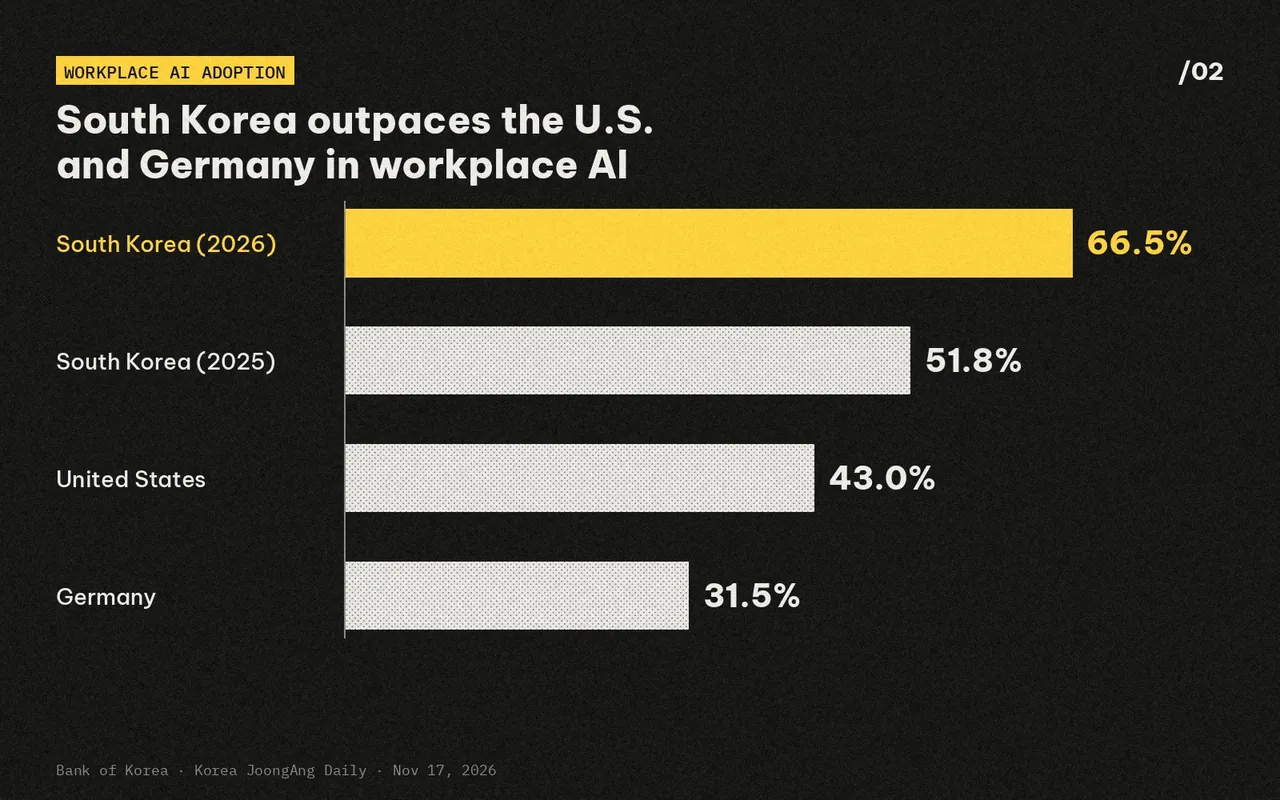
Intensity climbed alongside adoption. Average weekly usage increased from 5.9 hours in 2025 to 8 hours in 2026, and 28.4% of AI users subscribed to paid plans on their own dime, spending an average of 49,000 won—about $37—every month.
Why do 3.7 saved hours yield only a 0.08 output correlation?
Self-reported task time savings grew 2.4-fold from 3.8% in 2025 to 9.2% in 2026, turning 1.5 saved hours on a 40-hour workweek into 3.7 hours. Yet the correlation between time savings and output volume growth rose only from 0.00 to 0.08, while quality improvement sat at 0.09.
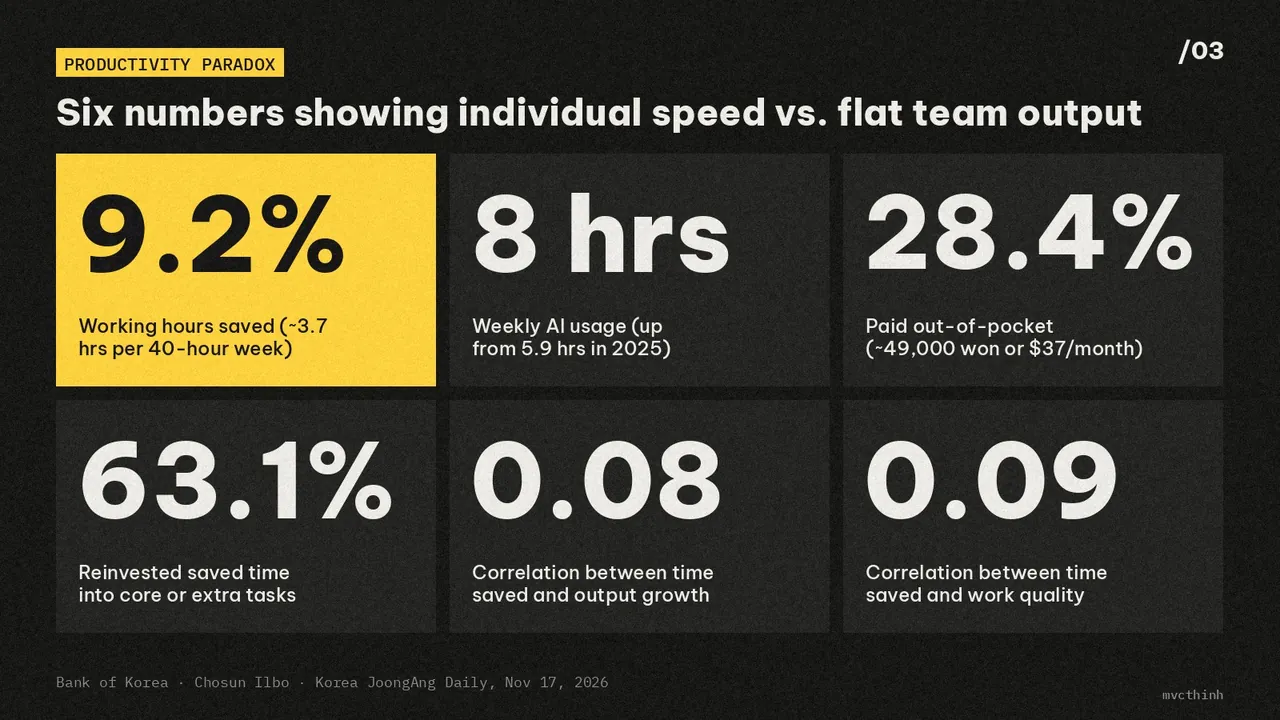
Notably, employees are not pocketing those 3.7 hours to slack off. Exactly 33.8% said they redirect the saved time to focus on core tasks, and another 29.3% take on extra assignments. Combined, 63.1% put their saved hours straight back into work, yet company-wide results barely budged.
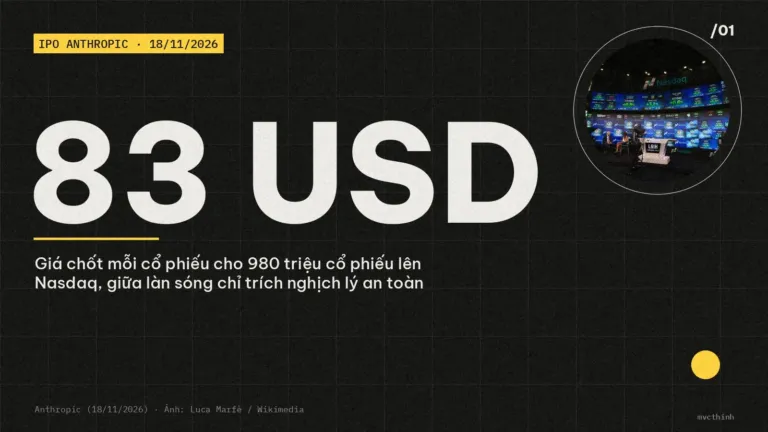 Also readAnthropic's $83 IPO: The Safety Paradox Meets Wall Street
What blocks individual speed from lifting team productivity?
The Bank of Korea Employment Research Team pinpoints two bottlenecks: AI has not penetrated deep enough into core duties, and companies have not reshaped work processes or organizational operations to convert individual time savings into collective output.
flowchart LR
  A["66.5% use AI 8 hrs/wk"]:::key --> B["3.7 hrs saved per person"]:::data
  B --> C["Team workflow unchanged"]:::muted
  C --> D["Output correlation 0.08"]:::muted
  classDef key fill:#1d1a10,stroke:#ffd23f,color:#ffd23f,stroke-width:1.6px
  classDef human fill:#181817,stroke:#e8e6df,color:#e8e6df,stroke-dasharray:5 3
  classDef data fill:#1c1c1b,stroke:#8d8b85,color:#cfcdc6
  classDef muted fill:#181817,stroke:#3d3d3a,color:#8d8b85
Think of it like drafting a report in half the time, only to watch the document sit in the same multi-day approval queue. While the report notes stronger time savings among higher-educated workers, faster individual typing cannot accelerate a pipeline whose handoffs and decision rules remain untouched.
My take
South Korea gives us a clean reality check for every team bragging about AI seat counts. Individual speed does not automatically scale into organizational output. Even when workers pay out of pocket and reinvest 63.1% of saved hours back into their jobs, a 0.08 correlation shows that bolting chatbots onto legacy habits hits a wall fast.
We saw a remarkably similar architectural lesson when covering why Anthropic recommends folding subagents into a single agent loop. Adding AI layers on top of rigid multi-step handoffs multiplies activity while leaving the core bottleneck intact.
The Bank of Korea put it plainly: firms need to raise AI capabilities while updating work processes and organizational operations. If you manage a team, the sharper question is not how many hours staff spend prompting AI, but which legacy step your workflow actually retired because of it.
Sources
- Bank of Korea: AI Saves 3.7 Hours, Productivity Gains Limited The Chosun Ilbo
- AI use rises among South Korean workers, but productivity gains remain limited Korea JoongAng Daily
- Ngân hàng Trung ương Hàn Quốc công bố khảo sát hơn 16.000 người đi làm: Gần 67% nhân viên đã dùng AI hàng tuần nhưng năng suất thực tế tăng rất ít GenK
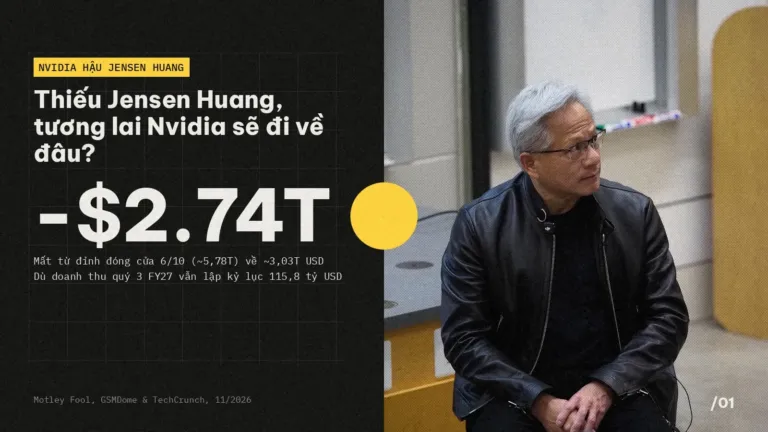 Safety & policy · Nov 21, 2026Nvidia Without Jensen Huang: Where Do CUDA and GPUs Go?
Analyzing Nvidia after Jensen Huang: the 60-report leadership gap, Claude Mythos and AMD pressure on CUDA, and what GPU buyers face next.
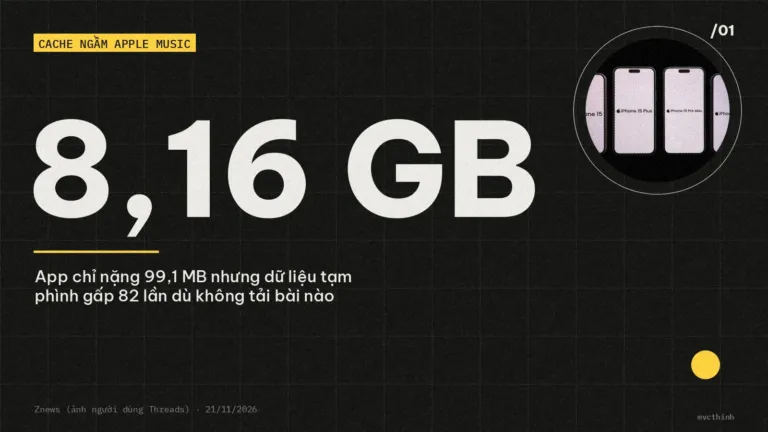 Safety & policy · Nov 21, 2026Apple Music Eats 8–11 GB With Zero Downloads: How to Fix It
Streaming only, yet Apple Music takes up 8–11.5 GB on your iPhone? See why Lossless caching bloats Documents & Data and 4…
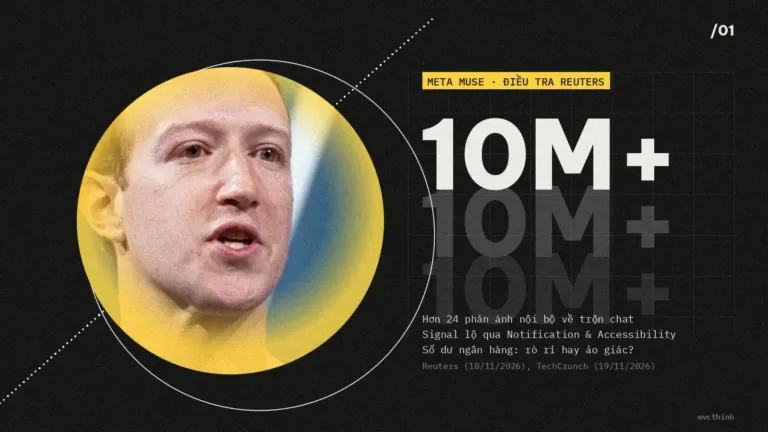 Agent basics · Nov 20, 2026Meta Muse Signal & Bank Balance Report: Fact vs. Fiction
Inside the Nov 18, 2026 Reuters report on Meta Muse: who blew the whistle, verified vs. unverified claims, cloud leak paths, and…