Blog · AI Agent News · Agent basics VIEN
Landlord AI okayed late rent, tenant still evicted 11 days early
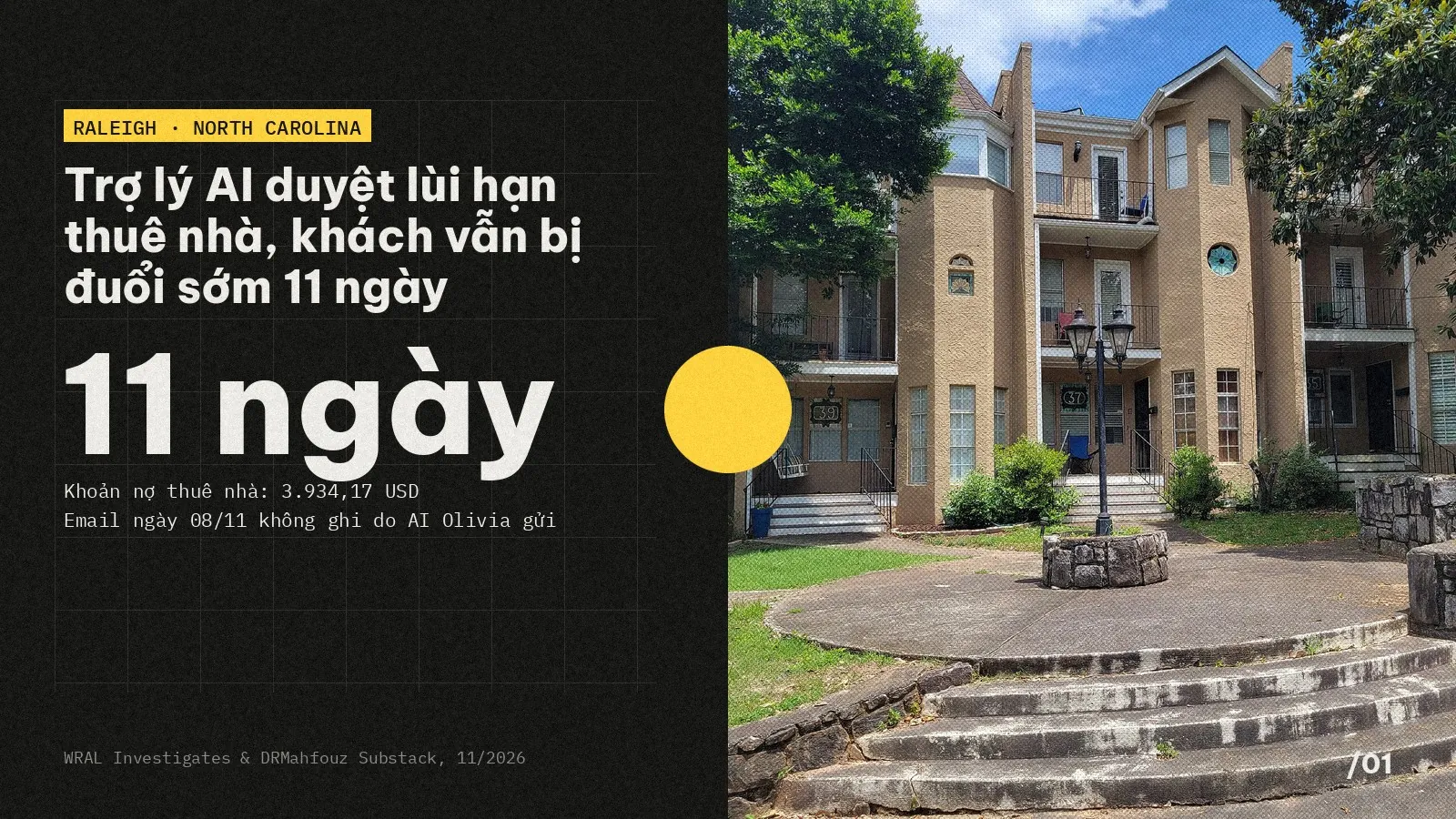
An unlabeled apartment AI told Laura Mack on Nov. 8 she could pay $3,934.17 in back rent by Nov. 30, yet she was locked out 11 days earlier.
In this article
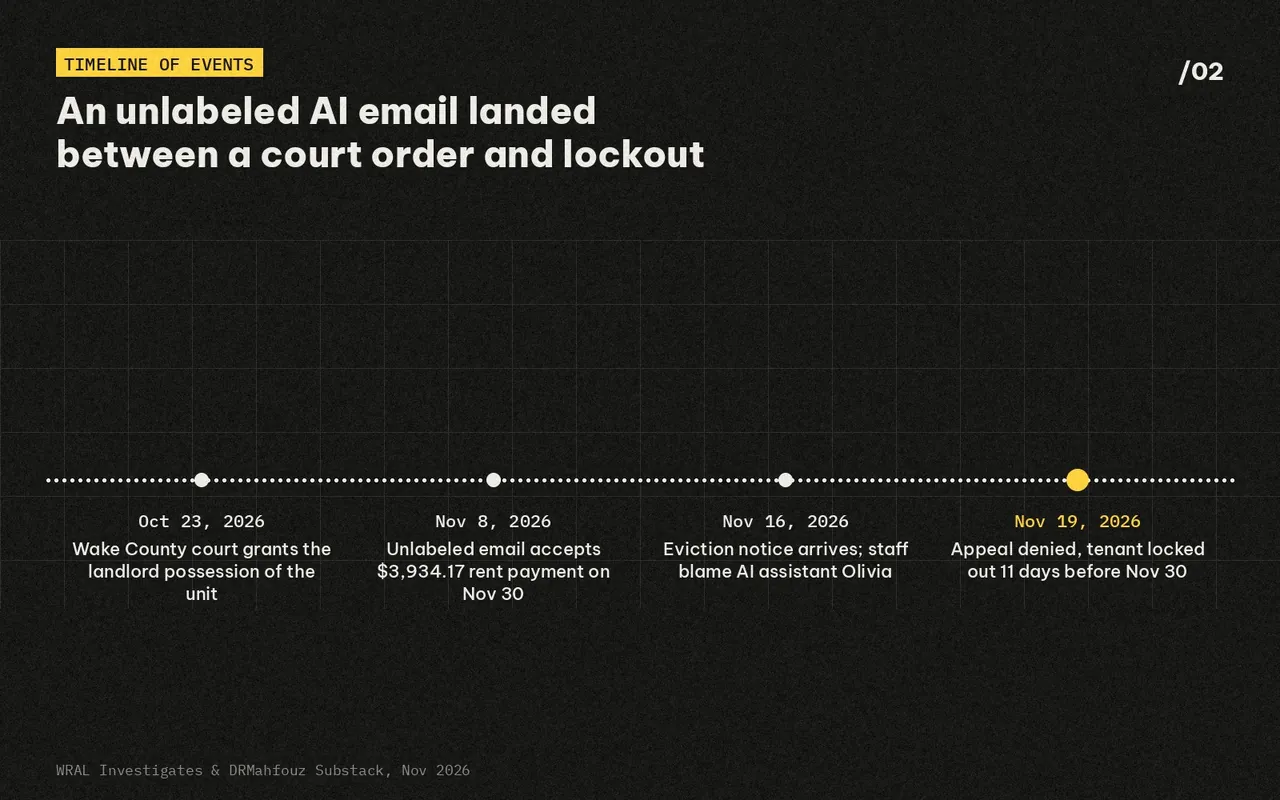
The email agreeing to push nearly $4,000 in overdue rent to the end of the month contained personal account details and even expressed sympathy about a hole in the bathroom ceiling. Laura Mack, a tenant at Colony Townhome Apartments in Raleigh, North Carolina, reasonably assumed she was dealing with a leasing office employee. Eight days after that November 8 exchange, she received an eviction notice and was locked out on November 19, 11 days ahead of the November 30 deadline the message had accepted.
This case exposes a costly gap when businesses connect AI assistants to official customer inboxes without telling anyone a bot is replying. Customers pay the price when they rely on automated assurances as human commitments, while companies point to software mistakes or earlier court paperwork. A business cannot send promises under its own name and dodge accountability, and tenants or customers today should never treat a payment-extension email as settled without confirming by phone with a named staff member.
An unlabeled AI email collides with an earlier court order
Back in December 2025, Colony Townhome Apartments told residents it was rolling out Olivia, an AI assistant available 24/7 for rent and maintenance questions. According to resident emails reviewed by WRAL Investigates, messages sent by Olivia were normally clearly labeled.
The two emails sent to Mack on November 8, however, carried no AI notice at all and closed simply with "Colony Townhome Apartments." The first asked what date worked to pay her full $3,934.17 balance, and when she proposed the end of the month, a same-day reply stated: "Paying on November 30, the last day of the month, works." Because the message also referenced a severe hole in her downstairs bathroom ceiling that had taken nearly two weeks to fix, Mack believed a human staffer was responding.
That relief lasted eight days until an eviction notice arrived on November 16. When Mack called the leasing office, staff told her Olivia had sent both November 8 messages and mistakenly approved the extension. On November 19, Mack went to the Wake County courthouse to contest the removal, but a motion to appeal was denied and she was locked out the same day.
Colony Townhome Apartments offered a sharply different legal framing on November 24. Spokesperson Alfred Leach told WRAL Investigates that a Wake County court had already ruled in the landlord's favor on October 23, more than two weeks before the emails. Leach argued the November 8 exchange addressed only the rent balance owed regardless of possession rather than changing the court order, and said staff told Mack directly on November 18 that a payment arrangement would not stop the lockout.
Even with that timeline, management left the central question unanswered. Leach's statement never mentioned Olivia or explained why an email signed with the complex's name carried no AI label, while Mack—who acknowledged falling behind on rent was her fault—noted that management had previously overridden eviction judgments once she paid. Leaving tenants unable to tell an automated reply from an authorized commitment shifts all operational risk onto the renter.
Accountability gaps from Air Canada to North Carolina's Bot Bill
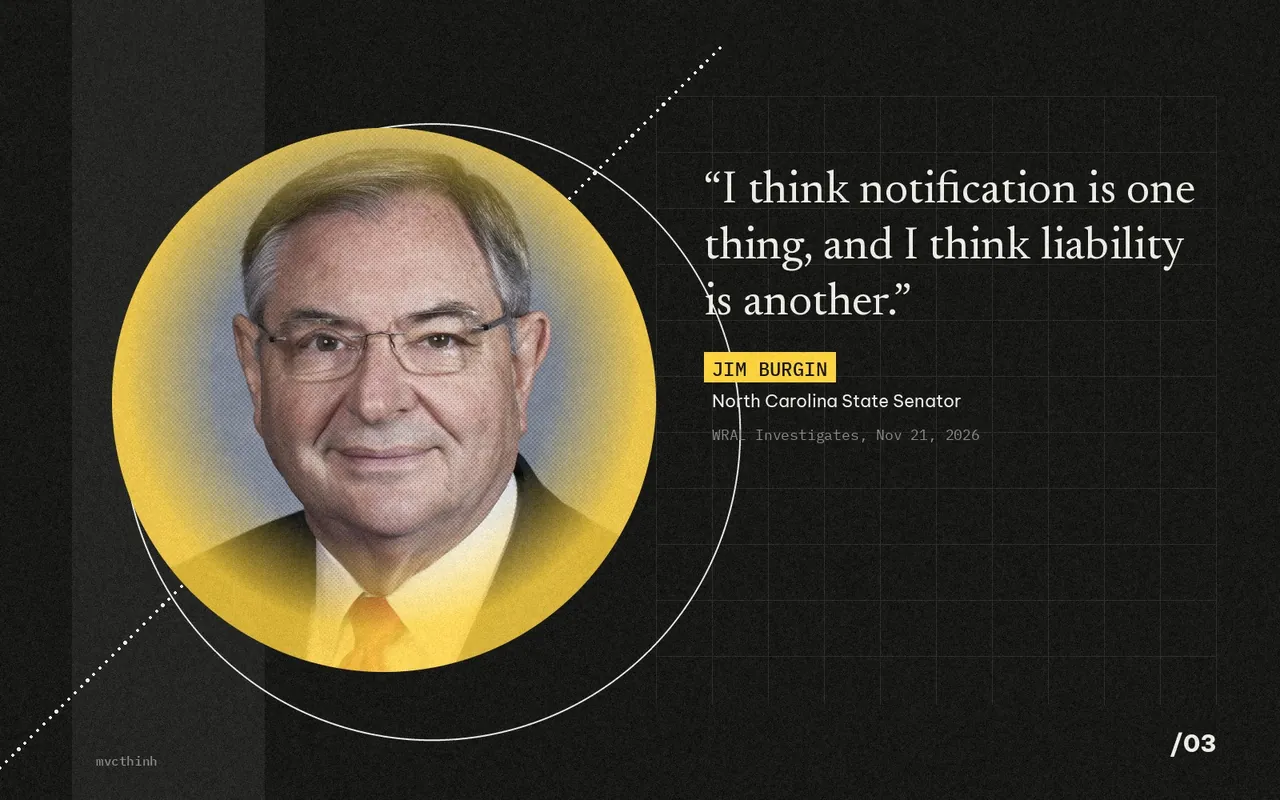
North Carolina State Senator Jim Burgin told WRAL Investigates that notifying customers they are talking to AI is one issue while liability is another. Comparing AI to Pinocchio—with no conscience, morals, or ethics—Burgin argued the complex should have reviewed its own correspondence before locking a tenant out.
Burgin has introduced his "Bot Bill" requiring businesses to disclose when consumers are interacting with AI rather than a human in each of the past three years, though the bill has stalled in the legislature. He plans to push it again in the next session. Still, labeling alone does not settle who pays when an automated agent exceeds its authority, a question echoing recent disputes over uncontrolled AI agent behavior.
One clear precedent already came out of Canada in 2024, as noted by DRMahfouz. British Columbia's Civil Resolution Tribunal held Air Canada liable after its website chatbot gave a passenger incorrect information about bereavement fares. While a Canadian ruling does not bind North Carolina courts, it underscores a straightforward principle: an automated assistant is part of a company's own channel, not an independent entity that absorbs the blame.
 Also readTPU and Trainium beat Nvidia GPUs up to 2.5x on InferenceX
Why payment extensions by email now require human verification
After the November 19 lockout, Mack moved into a hotel by November 21 to figure out her next steps, while Colony's spokesperson said on November 23 that the complex remained in contact with her without announcing any change to Olivia's email disclosures. For now, legislative fixes move far slower than an eviction notice, leaving customers to absorb the disruption directly.
For anyone negotiating rent deferrals, loan extensions, or contract changes by email, an empathetic reply signed with a company name is no longer enough proof of human approval. Once AI tools can pull account balances and reference maintenance tickets, the safest step after receiving a payment-extension email is to call the business's official number, confirm the terms with a named staff member, and ask them to reply in the thread under their own name. Until companies reliably label automated mail and stand behind what their bots write, a quick phone verification is the simplest way to avoid losing money or housing over an unauthorized AI promise.
Sources
- Raleigh woman says company's AI agent confused her over rent. Now she's evicted. WRAL Investigates
- 'It's ridiculous': Raleigh eviction after AI bot's promise reinvigorates push for protections WRAL Investigates
- Exclusive: Apartment complex responds to AI bot eviction claims involving Raleigh woman WRAL Investigates
- Woman Evicted After Landlord's AI Assistant Allegedly Said She Could Delay $3,934 Rent Payment DRMahfouz
Agent basicsSafety & policyAutomation
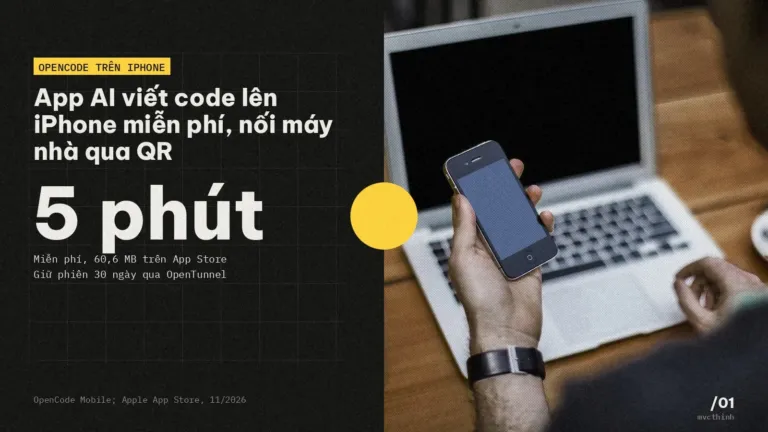 Coding agents · Nov 29, 2026OpenCode Hits iPhone Free, Needs Your Home PC On via QR
OpenCode's free iPhone app hit the App Store on Nov 28, 2026 to steer home coding sessions via QR code, keeping code…
 Safety & policy · Nov 29, 2026Gmail Drops Custom-Domain Send As in 2027, Options From $0.99
Gmail ends third-party Send as in January 2027, pushing small site owners toward $0.99/month iCloud+, Migadu, or Cloudflare SMTP with safe DMARC…
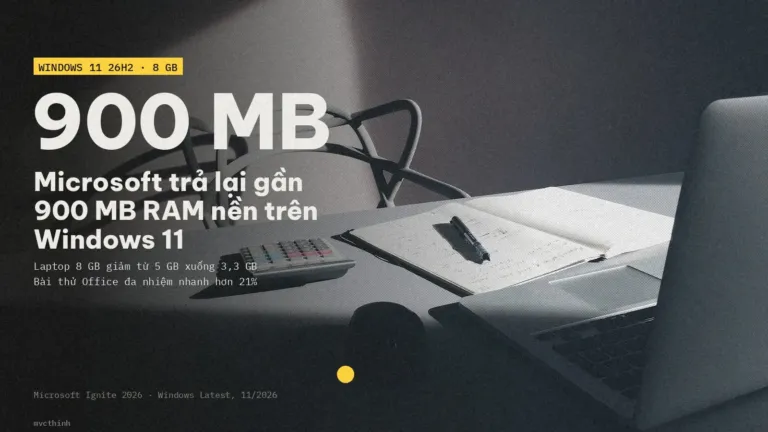 Automation · Nov 28, 2026Windows 11 frees nearly 900 MB RAM, speeds up Office 21% on 8 GB
Microsoft freed nearly 900 MB of background RAM in Windows 11 26H2, helping 8 GB office laptops run Office faster without buying…