Blog · AI Agent News · Agent basics VIEN
TPU and Trainium beat Nvidia GPUs up to 2.5x on InferenceX
Google TPU and AWS Trainium beat Nvidia GPUs by 1.5 to 2.5x in performance per dollar on InferenceX, signaling lower AI subscription and API costs.
In this article
At the end of the month, Minh opened his credit card statement and saw the same steady total for his daily Gemini plan and API usage. When most AI services behind the scenes rely on expensive Nvidia GPUs, paying customers have had little reason to expect meaningful price drops from hardware alone.
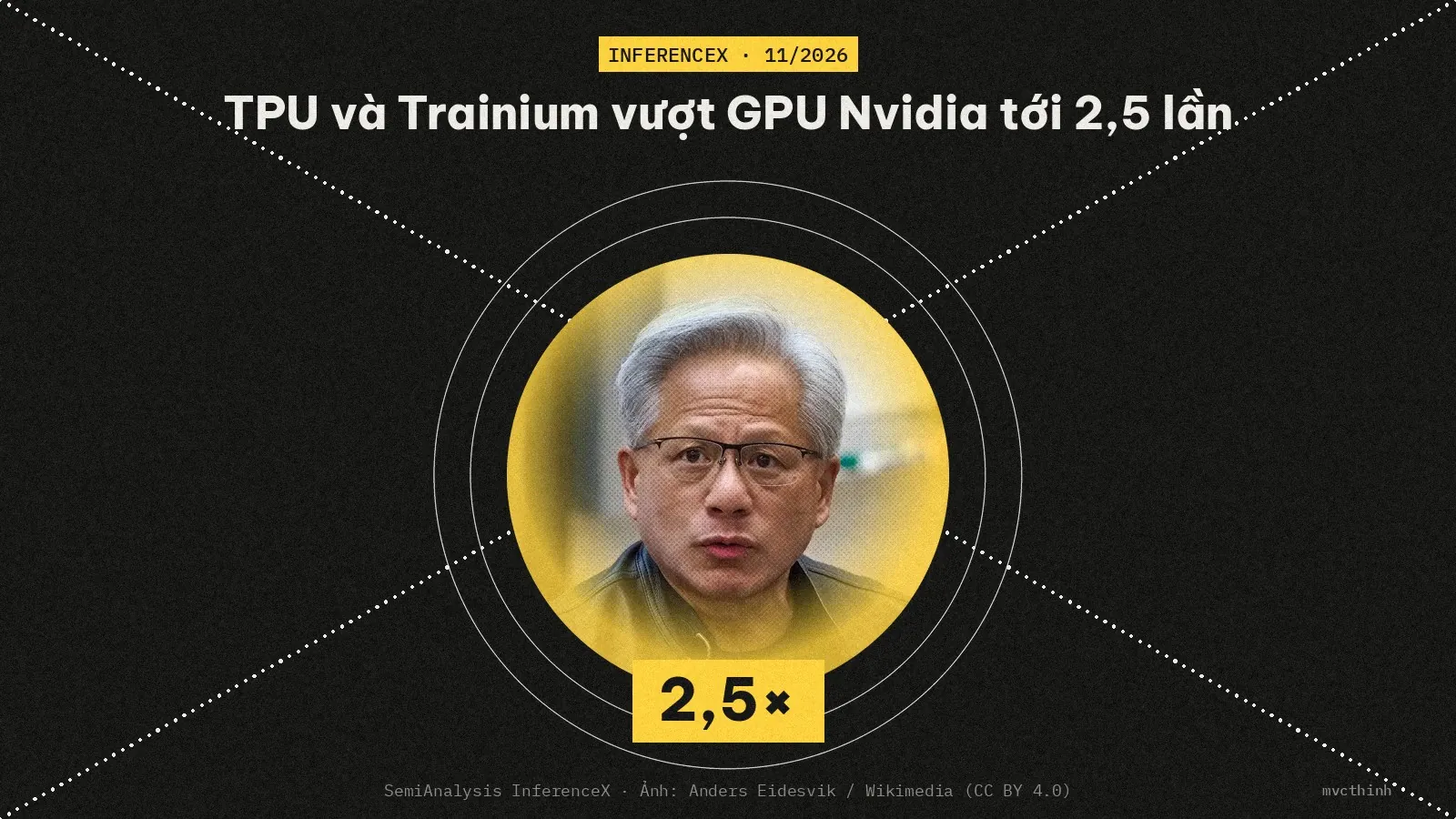
That single-vendor wall now has a clear crack on the independent InferenceX benchmark. Seven months after Nvidia CEO Jensen Huang suggested on Dwarkesh Patel's podcast that Google's TPU and Amazon's Trainium would stay off the benchmark because their performance per dollar fell short, both chips posted results showing 1.5 to 2.5x better performance per dollar at release than equivalent Nvidia GPUs, according to SemiAnalysis on X on Nov 27, 2026 (UTC).
As someone paying for Gemini on TPU infrastructure every day, my read is that Nvidia's software grip over day-to-day AI serving costs is loosening, giving cloud labs room to cut API prices or raise monthly plan limits. Even so, custom chips from Google and Amazon will not replace Nvidia GPUs overnight because they still trail in initial response speed and per-chip memory.
Custom chips from Google and Amazon beat Nvidia GPUs on everyday serving costs
Understanding why this matters to a monthly AI bill starts with what each chip was built to do. Nvidia GPUs began as general-purpose graphics processors that added specialized AI blocks generation by generation, whereas Google's TPU and Amazon's Trainium are built from the ground up like dedicated stamping presses for AI matrix math, cutting hardware and power cost per answer.
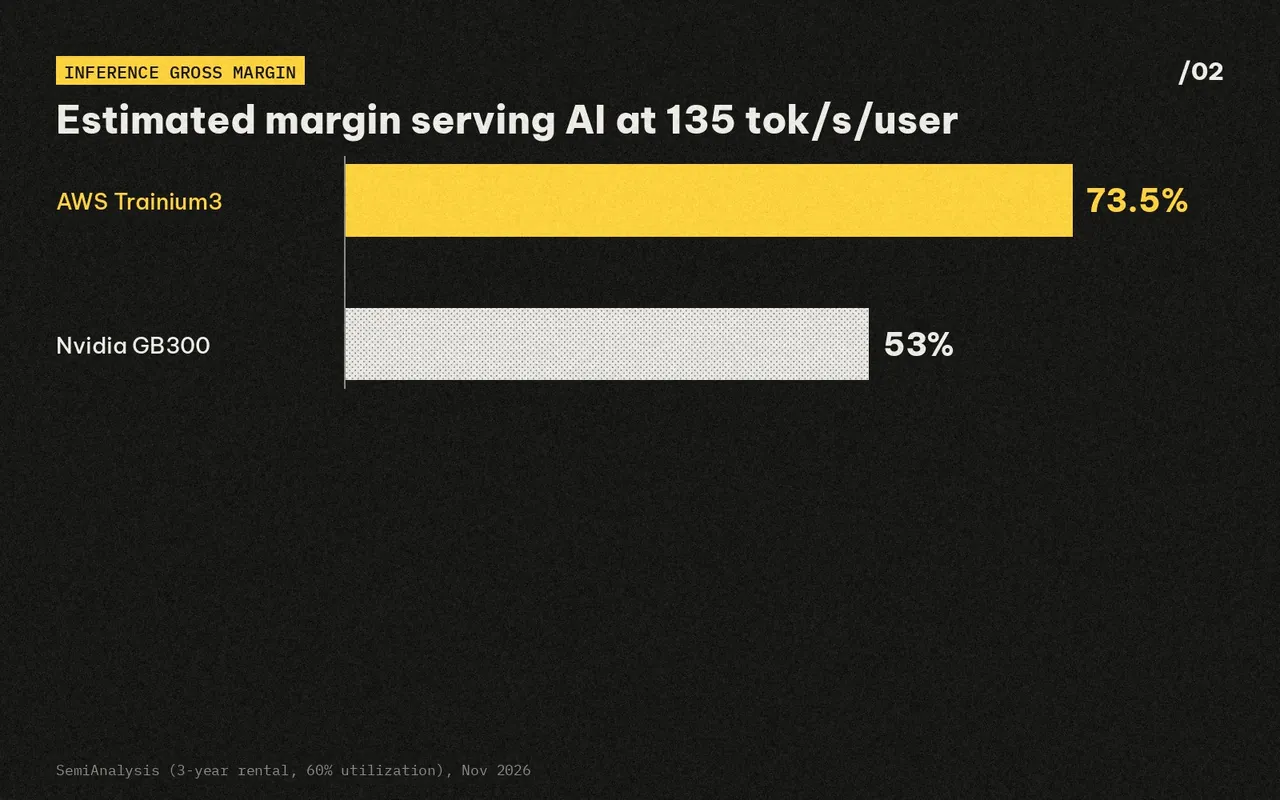
That cost gap shows up most clearly during inference—the stage where servers read your prompt and stream back an answer, rather than initial model training—where providers bill by the token (the small chunks of text an AI reads and generates). In its Trainium3 and TPU InferenceX deep dive, SemiAnalysis modeled a typical serving speed of 135 tokens per second per user across 3-year rental prices at 60% fleet utilization, finding that AWS Trainium3 yields a 73.5% gross margin versus 53% on Nvidia GB300.
Lower cost per generated token gives cloud providers real room to trim API rates or offer higher usage caps on consumer plans. Google has already confirmed on its official company blog that custom TPUs powered 100% of Gemini 2.0 training and inference, showing that major labs can run flagship consumer models without relying solely on external GPU supply.
| Comparison metric | Google TPU & AWS Trainium3 | Nvidia GB300 GPU |
|---|---|---|
| Performance per dollar at launch | 1.5 to 2.5x higher | Baseline on InferenceX |
| Gross margin (135 tok/s/user) | 73.5% on Trainium3 | 53% on GB300 |
| Memory & initial prompt speed | 144 GB per chip, half of GB300 | Double the memory, faster first token |
For users pasting tens of thousands of words into a prompt and waiting for the first line to appear, Nvidia GPUs keep a real edge thanks to raw prefill compute and larger per-chip memory. Google and Amazon's custom chips shine most once a model starts streaming tokens steadily across millions of daily chat sessions.
Nvidia revenue more than tripled while the stock stalled as its software moat narrows
The InferenceX numbers quickly sparked debate on X on Nov 28, 2026 over whether Nvidia's software lock-in can hold. Elon Musk quoted the SemiAnalysis thread on his X account with a blunt line: "Super intelligent AI eliminates any company’s software advantage."
His point targets Nvidia's longtime software layer that kept developers tied to its GPUs for years. As AI coding tools make it easier to tune kernels and serving stacks for competing chips, switching to TPU or Trainium hardware becomes less painful for major buyers.
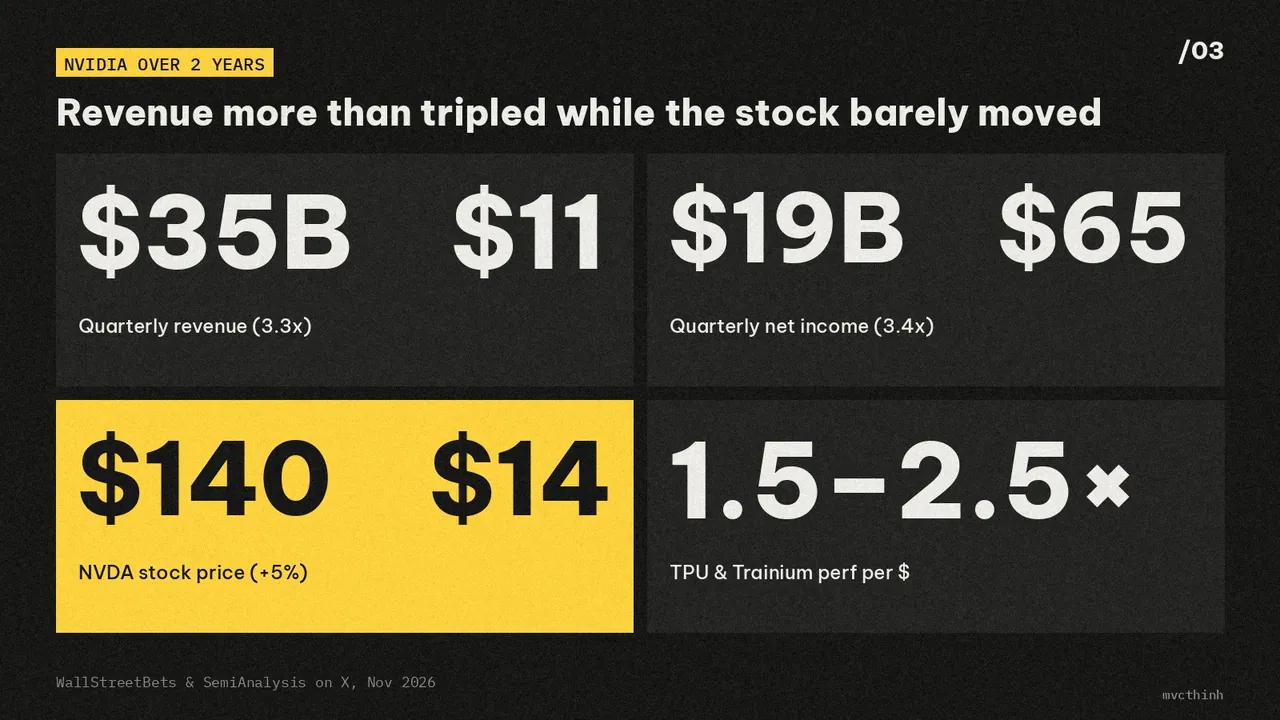
That competitive threat helps explain a puzzling stock chart for investors. On Nov 28, 2026, WallStreetBets posted on X that over the past two years Nvidia's quarterly revenue jumped from $35 billion to $116 billion (3.3x) and quarterly net income climbed from $19 billion to $65 billion (3.4x), yet the share price moved only from $140 to $147 (up 5%).
Markets price future margins rather than past quarters alone. Once Nvidia's biggest cloud customers demonstrate 1.5 to 2.5x better performance per dollar on their own inference silicon, investors naturally question how long Nvidia can defend peak margins even while current sales surge.
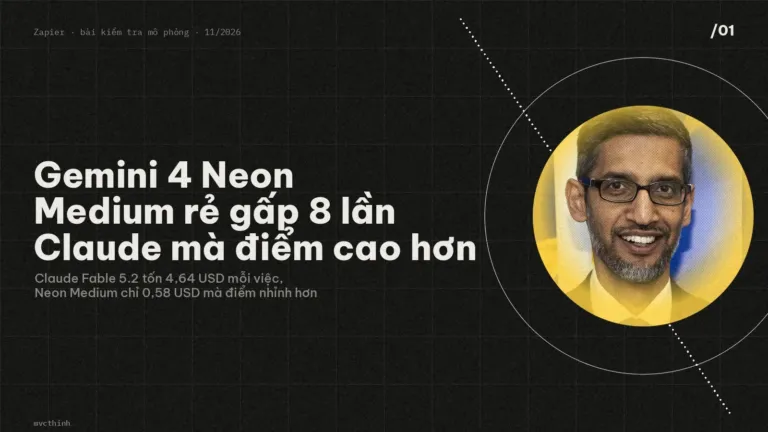 Also readGemini 4 Neon: Medium Costs 8× Less Than Claude, Scores Higher
My take
In my view, the InferenceX numbers are better news for everyday AI payers than for investors betting on permanent single-vendor pricing power. Even though Trainium3's 73.5% margin estimate comes from an early benchmark configuration that still awaits wider audit, Google running Gemini on TPUs and Amazon scaling Trainium3 show that Nvidia's hardware grip is no longer uncontested.
Back to Minh's monthly statement, subscription fees and API rates will not drop overnight, yet cheaper cloud silicon builds real pressure for lower tiers and higher usage limits ahead. If you pay for chat plans like Gemini or monthly API tokens, the practical step is to re-test speed and cost on the same task across TPU-backed and GPU-backed models once a quarter before locking into a long-term plan. Nvidia's dominance in daily AI serving is now challenged by public data, while whether those savings reach retail pricing—or whether Nvidia's next hardware generation closes the gap on long-context speed—remains an open test for upcoming releases.
Sources
- SemiAnalysis on X: TPU and Trainium on InferenceX X
- AWS Challenger: Trainium3 Inference and Microarchitecture Deep Dive SemiAnalysis
- Elon Musk on X: Super intelligent AI eliminates any company's software advantage X
- WallStreetBets on X: Nvidia NVDA revenue vs stock price X
- Google introduces Gemini 2.0: A new AI model for the agentic era Google
 Agent basics · Nov 29, 2026Landlord AI okayed late rent, tenant still evicted 11 days early
An unlabeled apartment AI told Laura Mack on Nov. 8 she could pay $3,934.17 in back rent by Nov. 30, yet she…
 Agent basics · Nov 28, 2026AI memory crunch pushes budget phone costs up, cuts models
Memory now makes up 54% of a budget phone's component cost as fabs prioritize AI servers, leaving mainstream buyers facing higher prices…
 Agent basics · Nov 23, 2026Delta Outage: Over 1,000 Flights Ran Late Even With Manual Backup
Delta switched to manual work, so flights stayed safe, yet nearly half still ran late. If you hand work to AI agents,…