Blog · AI Agent News · Safety & policy VIEN
Nvidia halts 4 SEA hubs: Vietnam hosts see an opening, startups pay
Nvidia's server freeze in four neighboring hubs gives Vietnamese hosts an opening while squeezing cheap cloud GPUs, pushing startups toward local hardware.
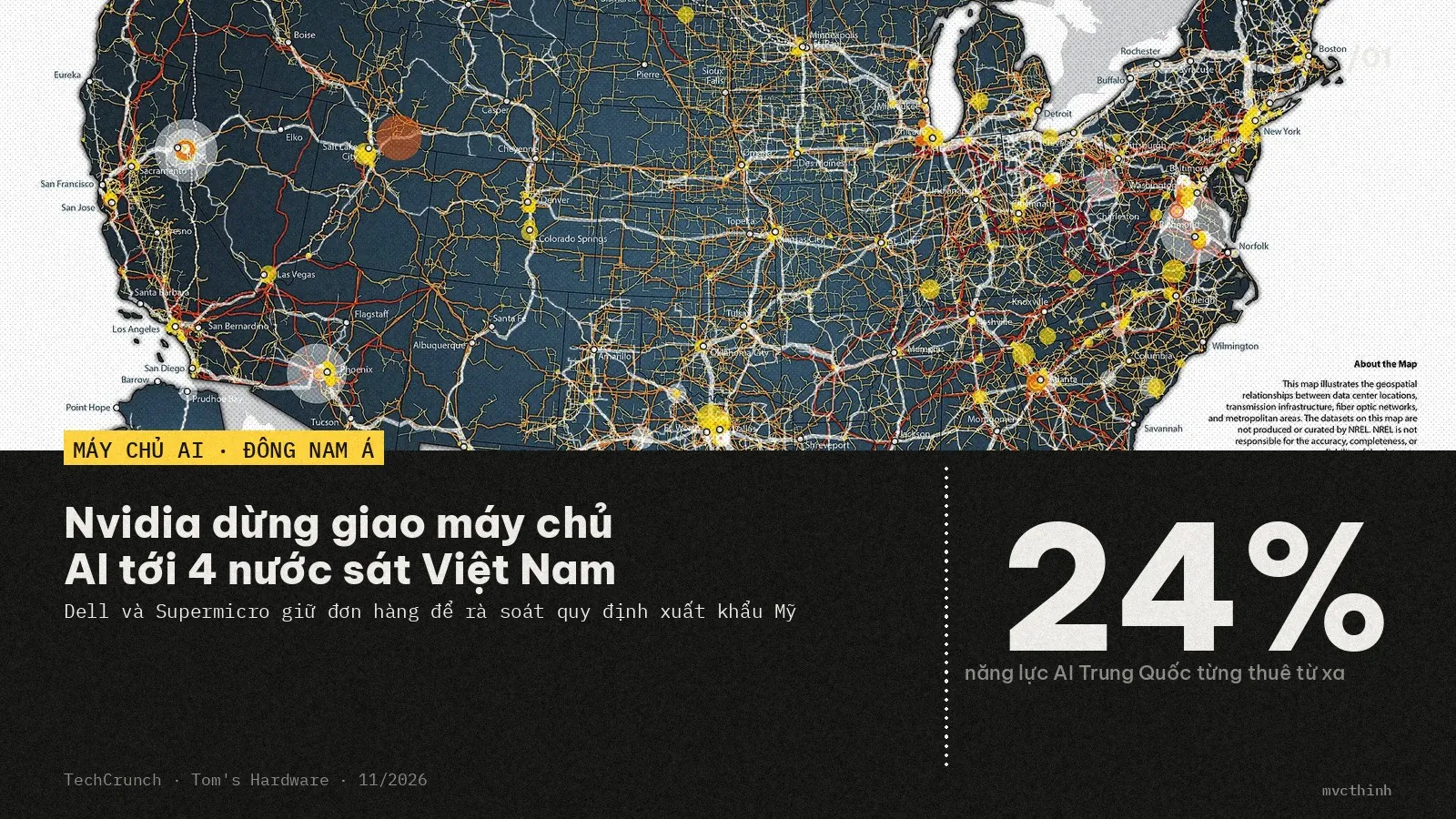
Put yourself in the shoes of a server provider in Vietnam reading on November 26, 2026, that Nvidia has paused AI server deliveries to four neighboring countries. Manufacturing partners Dell and Supermicro are holding shipments bound for Malaysia, Singapore, Thailand, and Indonesia at the factory while checking compliance with U.S. export rules. Because Vietnam is left off that pause list, local infrastructure providers have an immediate reason to expect overflow inquiries from teams looking for nearby capacity outside those four hubs.
Step across the table as a founder renting low-cost GPU servers for an AI project, however, and the same news points to steeper bills for local startups. Washington's clampdown targets remote chip rentals by Chinese firms, which supplied roughly 24% of China's AI computing power according to the think tank Institute for Progress. With fresh servers blocked across Southeast Asia's four main cloud hubs and licensing friction rising, cheap regional GPU capacity is set to tighten, forcing engineering teams to offload lighter work onto hardware they already own.
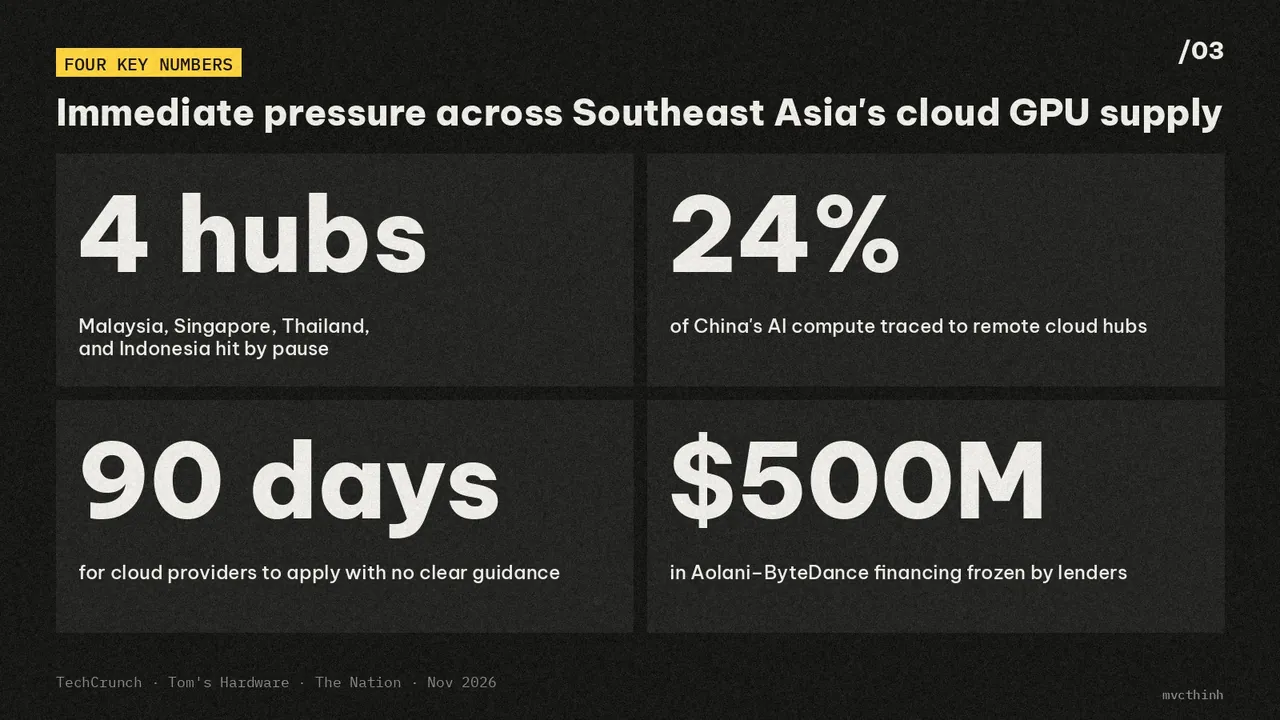
Four years of chip curbs led to the four-nation server freeze
The factory hold at the end of November 2026 is the latest step in a four-year U.S. push to restrict high-end AI silicon. A GPU is the specialized processor that handles heavy AI math, similar to a gaming graphics card scaled up into data center racks. Washington barred direct sales of its top AI GPUs to China in 2022, then allowed Nvidia to resume selling one high-end chip in December 2025 only if buyers obtained an import license and paid a 25% fee per chip.
Those added costs pushed Chinese AI labs to rent computing power remotely from Southeast Asian data centers—massive facilities packed with thousands of leased servers. To close that gap, the U.S. Commerce Department's Bureau of Industry and Security issued an interim rule effective November 19, 2026, requiring export licenses for advanced chips shipped to Malaysia, Singapore, Thailand, Indonesia, and Brazil. Days later, on November 23, 2026, the agency added seven businesses in Malaysia, Thailand, and Singapore to its restricted trade list over concerns about remote computing access.
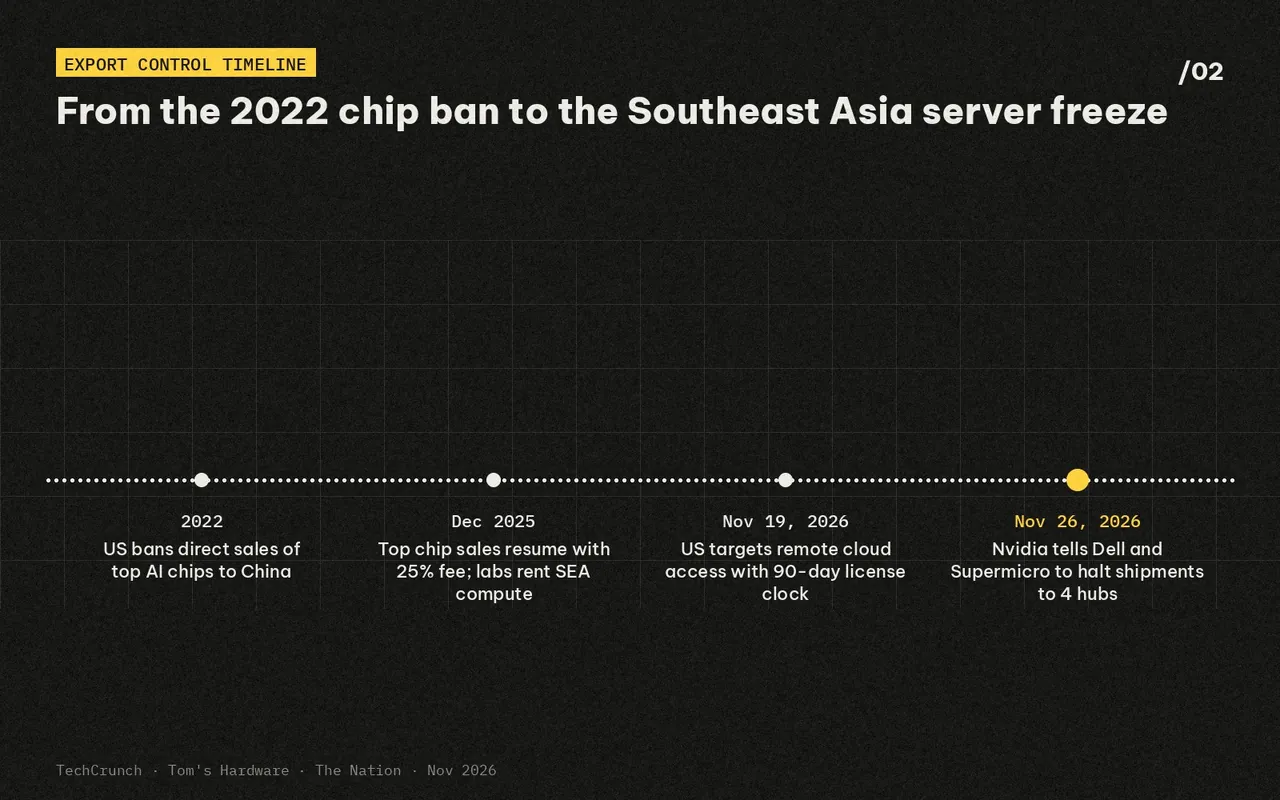
Financial strain showed up immediately as regional cloud operators faced a 90-day deadline to apply for export licenses and prove their customers are not restricted entities. Lenders stopped issuing roughly $500 million in credit for Singapore-based cloud firm Aolani on its agreement to supply computing power to TikTok parent ByteDance. One regional cloud executive told the Financial Times that the 90-day clock is already ticking with no execution guidance, creating sheer chaos across the market. Even a day before the rule took effect, on November 18, 2026, Thailand's Commerce Ministry warned that chip supply uncertainty could stall data center expansion and raise costs for importers.
Still, the freeze does not treat every operator identically because qualifying U.S.-headquartered companies can receive shipments under an exemption if they satisfy reporting requirements. Beijing objected strongly, with Chinese Foreign Ministry spokesperson Guo Jiakun saying the restrictions stretch national security and disrupt global supply chains. Neither Nvidia, Dell, nor Supermicro commented publicly on when deliveries might resume, leaving regional operators unable to gauge how long the pause will last.
flowchart LR
  A[Chinese AI labs] -->|Rented 24% compute| B[4 Southeast Asian hubs]:::key
  C[US rule Nov 19, 2026] -->|90-day license clock| B
  B -->|Orders & $500M loan held| D[Dell, Supermicro & Aolani]:::data
  classDef key fill:#1d1a10,stroke:#ffd23f,color:#ffd23f,stroke-width:1.6px
  classDef human fill:#181817,stroke:#e8e6df,color:#e8e6df,stroke-dasharray:5 3
  classDef data fill:#1c1c1b,stroke:#8d8b85,color:#cfcdc6
  classDef muted fill:#181817,stroke:#3d3d3a,color:#8d8b85
Vietnamese server hosts spot an opening, while startups face steeper GPU bills
Looking at this freeze from the seat of a server provider in Vietnam, the clearest advantage is simply staying outside the four Southeast Asian markets currently on hold. As clusters in Singapore and Malaysia lose fresh Dell and Supermicro racks, watch $500 million credit lines freeze, and scramble through unclear licensing paperwork, teams needing regional AI capacity have to look for backups. That gives domestic hosts a rare opening to pitch buyers who once defaulted to Singapore, especially companies serving users inside Vietnam and neighboring markets.
Even so, that opening comes with two constraints that keep Vietnamese providers from expanding blindly. U.S. rules target not only shipping destinations but also large-scale remote compute delivered to Chinese-headquartered firms, underlined by the seven regional companies blacklisted on November 23, 2026. Because new AI servers across the region still flow through Nvidia, Dell, and Supermicro, any Vietnamese host that scales fast without transparent customer vetting risks delivery delays of its own in future compliance checks.
| Role in Vietnam | Impact from the four-nation freeze | Practical next step |
|---|---|---|
| Server provider | Stands outside the shipment hold with an opening for spillover demand | Screen customer identities and end uses early to protect future hardware supply |
| AI startup renting GPUs | Faces shrinking budget capacity in neighboring hubs and higher rental costs | Audit where rented GPUs sit and shift light tasks onto compressed local models |
On the other side of the table, if you are renting low-cost GPU servers to build an AI product, the outlook for Vietnamese startups is far less forgiving. Small local teams have long relied on budget GPU plans in Singapore and Malaysia thanks to low latency and ample capacity. When regional providers lose fresh Dell and Supermicro deliveries and absorb new licensing costs as Thailand's Commerce Ministry warned, budget GPU supply shrinks immediately. With ongoing demand chasing fewer open racks, domestic startups are likely to pay higher hourly rates and wait longer for capacity.
The practical move for both sides is to stop planning around cheap regional cloud expansion returning anytime soon. Vietnamese server hosts should document customer identities and end uses upfront so they can capture regional spillover without jeopardizing hardware deliveries. Meanwhile, AI startups should check where their rented GPUs physically sit and whether their vendor qualifies for a U.S.-headquartered exemption, while moving lighter testing and document tasks onto compressed local models—AI weights shrunk to run directly on office workstation memory. Checking the real-world limits of compressed coding models on local hardware helps small teams keep quarterly bills under control without relying entirely on volatile cloud rates.
Sources
- Nvidia hits pause on chip shipments to Southeast Asia TechCrunch
- Nvidia stops AI GPU shipments to Southeast Asia amid purported China cloud access ban, report claims Tom's Hardware
- Nvidia halts server shipments to Thailand and three other markets The Nation Thailand
- Nvidia partners told to halt server shipments to four Southeast Asian countries: Report W.Media
- U.S. closes loophole that let Chinese companies use top AI chips NBC News
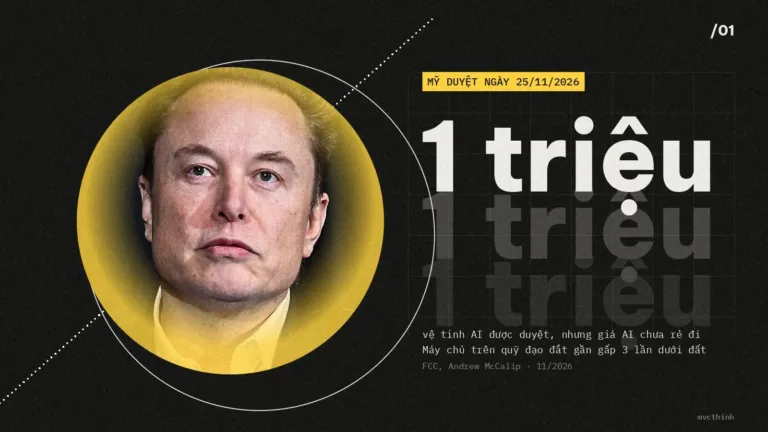 Safety & policy · Nov 27, 2026SpaceX Gets 1M AI Satellites Approved, but AI Won't Get Cheaper
The US cleared SpaceX for 1 million AI satellites, yet orbital servers still cost nearly 3x ground ones. Here is what it…
 Safety & policy · Nov 26, 2026AI Crypto-Breaking Rumor: Aaronson Never Said Bitcoin Was Broken
Scott Aaronson only said AI labs may hold a cryptography breakthrough; posts on X added Bitcoin. Three layers of the rumor, and…
 Safety & policy · Nov 26, 2026DeepSeek Says It Could Fall 9 Months Behind US AI Without Distillation
DeepSeek's own estimate puts its gap to US AI at 9 months if distillation ends. How solid is that number, and what…