Blog · AI Agent News · Coding agents VIEN
Ladybird doesn't run on Google's engine: worth a download, not for Gmail logins yet
Nearly every popular browser runs on one engine mainly developed by Google. Ladybird built its own. Why that matters, what the alpha is worth trying for, and where the risk is.
In this article
Why does it matter that the whole market shares one engine?
A browser engine is the part that reads a web page's code and draws the page on screen. It works like a car engine: many car brands can share one type of engine, and drivers notice the body while the part that decides how the car runs sits in one place. For browsers, the most common engine is Chromium. According to Wikipedia, Google mainly develops it, and it supplies most of the code for Chrome, Edge, Samsung's browser and Opera. Brave and Vivaldi are built on it too.
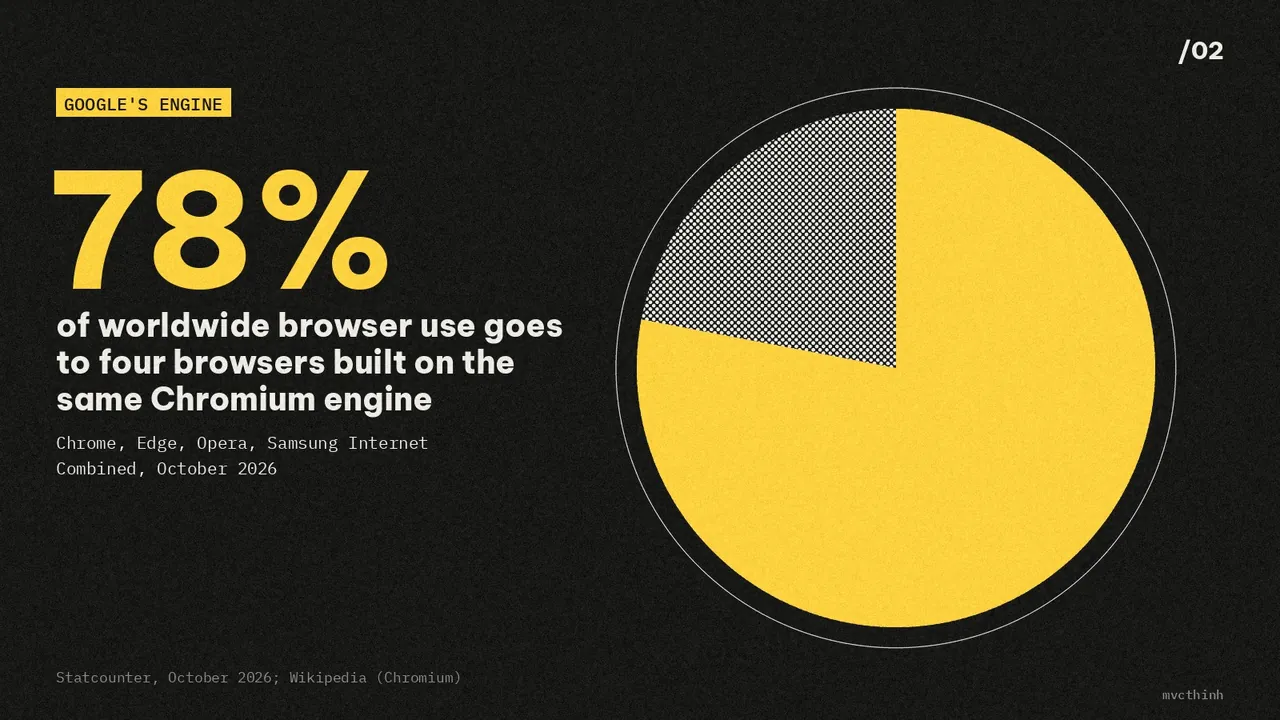
It matters because Google earns its living mostly from ads: according to the 2025 annual report of Alphabet, Google's parent company, advertising brought in about 73% of revenue. The sources I read do not say Google has done anything wrong with Chromium. My own takeaway is a way of looking at it: when almost every browser shares one engine, decisions about how browsers handle ads and tracking all run through one company with its own stake in advertising. I'd guess that is also why the Ladybird team wants an alternative. They themselves write that only a small number of engines power the whole web, each controlled by a company with its own agenda.
How is Ladybird different, and what does the difference cost?
It differs in the engine and in where the money comes from. The team says it does not use code from Blink (the engine inside Chromium), WebKit or Gecko, and wrote its own from scratch, including the part that runs JavaScript, the code that makes web pages respond to clicks and move. It also says plainly that it uses outside libraries for images, audio, video and encryption, some of the same ones other browsers use. On money, its homepage says there are no default search deals, meaning it does not take payment to make a search engine the default. Funding comes from donations and sponsors, and the team says sponsors have no say in its technical roadmap.
The cost is size. The team has a small full-time engineering crew, so the alpha still has bugs and makes no security promises. This is the team describing itself, and nobody outside has checked it.
 Also readMoving to GPT-6.2 with your old prompt? Your agent may wait for "OK"
What is worth trying right away in the alpha?
Three things, and you can test the first one yourself right now.
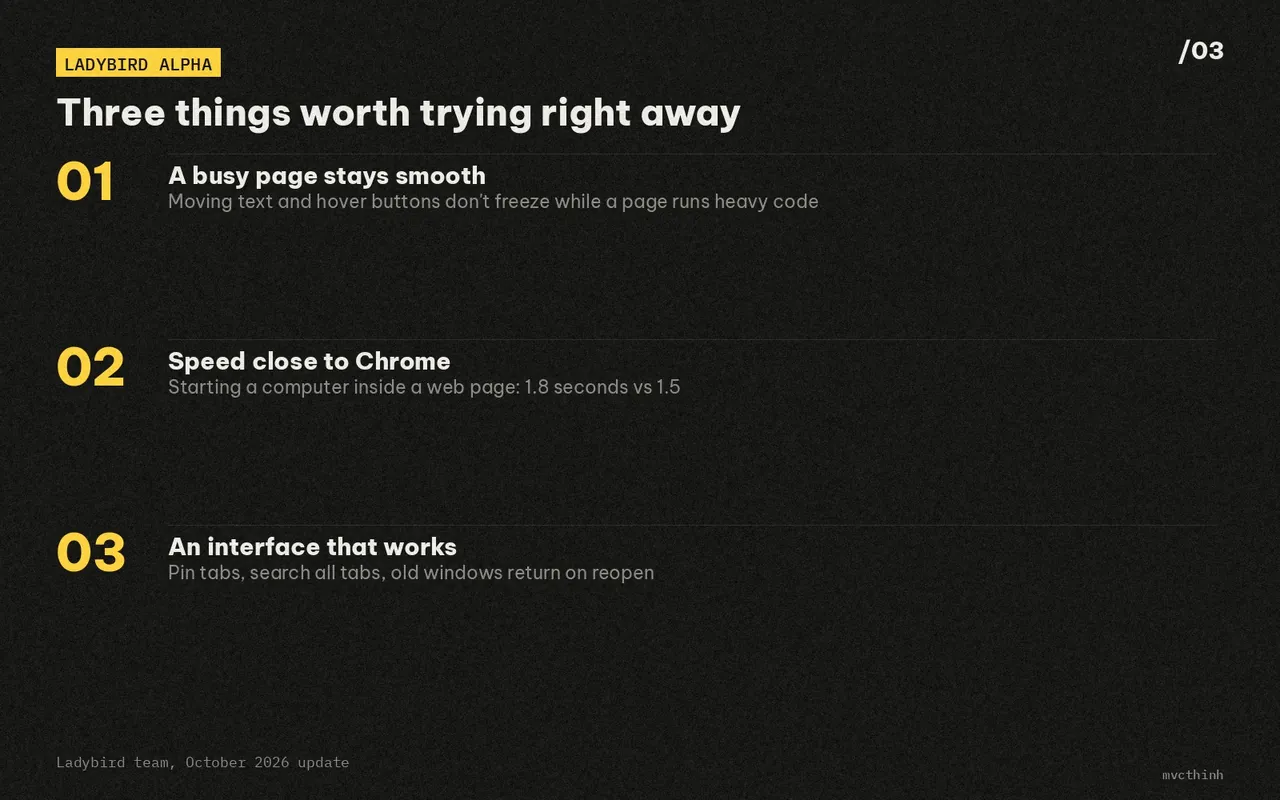
- A busy page stays smooth. Normally a browser does one thing at a time: while a page runs heavy code, animations and buttons freeze. The Ladybird team moved the drawing of effects to a separate worker, so moving text and hover effects keep running instead of waiting in line behind that code. They write that, as far as they know, no other browser can do this. That is the team's claim and I have not checked it. You can test it: their October update has a button that keeps the page busy for three seconds, so open it in both Ladybird and Chrome and compare.
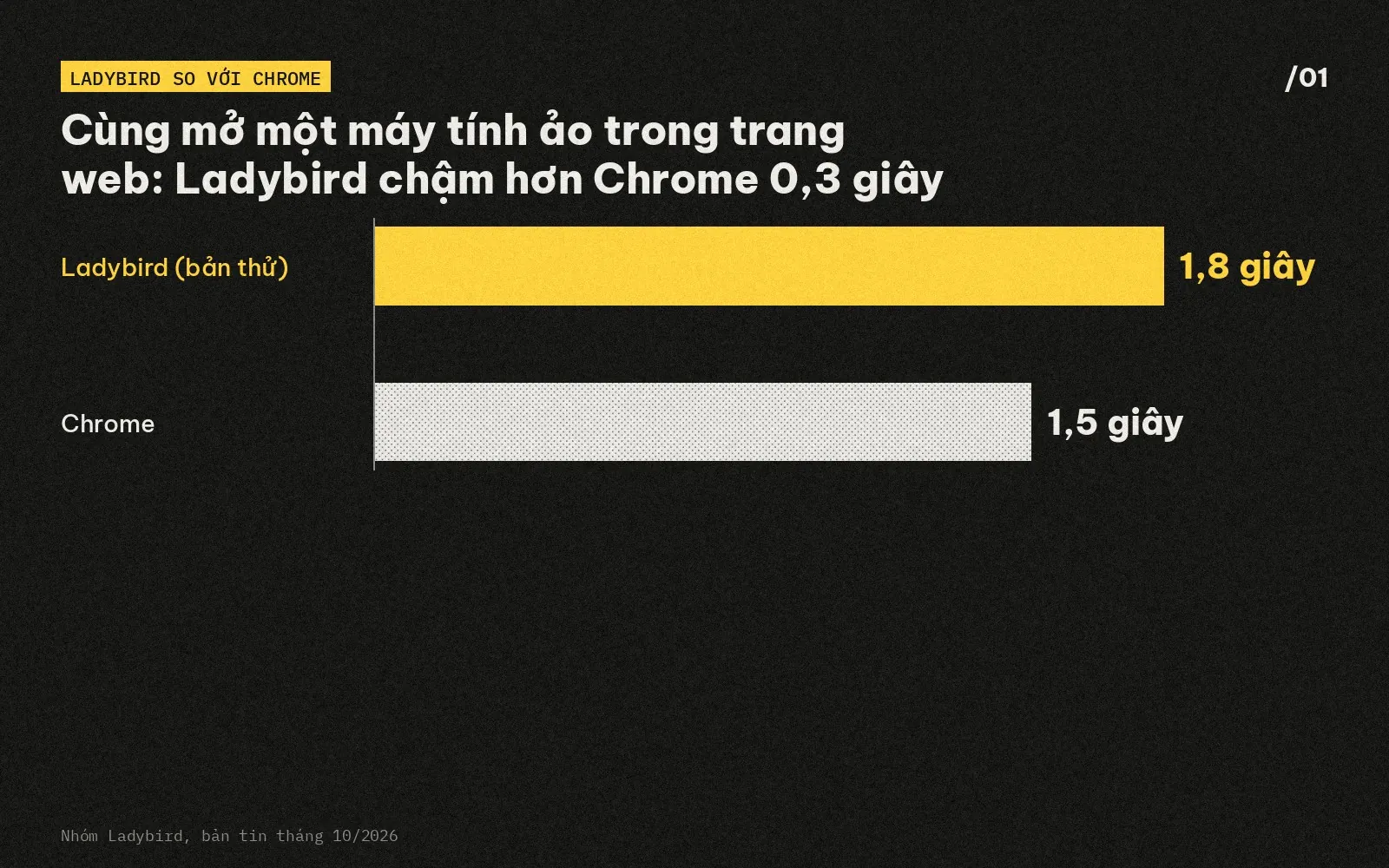
- Speed close to Chrome. In a test that starts a Linux computer inside a web page, Ladybird took 1.8 seconds and Chrome took 1.5, which is 0.3 seconds slower. These are the Ladybird team's own numbers. I have no other benchmark comparing it with Chrome, so read it as one test, not a verdict on every page.
- An interface that works. You can pin tabs, search across all open tabs, and your old windows come back when you reopen it.
Simon Willison, a tech blogger, tried the alpha on release day. He writes that it feels fast, the interface is light, and most sites he tried worked as they should. The one thing that did not work was Datasette Lite, one of his own tools.
What is the risk of using this alpha?
Yes, there is risk, and the team says so: some sites won't work, the browser will crash sometimes, and it makes no promises about security today. If your email or bank account is exposed through a flaw, the damage is yours, not the team's.
On security, the team writes that a new browser gets hacked over and over and that this is part of the process, so it invites people who know security to attack it and report back so it can patch.
Should you back Ladybird when it isn't safe yet?
I think yes, by trying it rather than switching to it. My reasoning: an independent option is only useful if people use it and report bugs, because a small team can only fix quickly what it knows is broken. On the other hand, the price of backing it shouldn't be your accounts, since the team itself says it promises nothing on security. So I separate two things: try Ladybird on pages where you have nothing to lose, and keep important work on a browser that has been tested for years.
What should you do first?
Download the alpha and open a few pages that need no login, such as news or reference sites. If you build websites, open yours: the team wants to hear which pages break, and the browser has a reporting feature built in. Try the three-second button from the October update to see the difference yourself. Keep Gmail and banking on your current browser until the team says something firm about security.
Sources
- Ladybird’s first alpha release Simon Willison’s Weblog
- Ladybird is now in alpha Ladybird
- Ladybird Ladybird
- This Month in Ladybird — October 2026 Ladybird
- Chromium (web browser) Wikipedia
- Browser Market Share Worldwide Statcounter Global Stats
- Alphabet Inc. Wikipedia
 Safety & policy · Nov 24, 2026GPT-6 Cyber Validates 948 Linux Kernel Bugs: What to Do
OpenAI says AI validated 948 Linux kernel bugs that give root access. How it worked, how far to trust it, and what…
 Safety & policy · Nov 23, 2026Jensen Huang Returns as Nvidia CEO, 6 Days After Board Said No
Nvidia reinstated Jensen Huang as CEO on Nov 23, just 6 days after its board said it had no plan to bring…
 Agent basics · Nov 23, 2026Delta Outage: Over 1,000 Flights Ran Late Even With Manual Backup
Delta switched to manual work, so flights stayed safe, yet nearly half still ran late. If you hand work to AI agents,…