Blog · AI Agent News · Safety & policy VIEN
GPT-6 Cyber Validates 948 Linux Kernel Bugs: What to Do
OpenAI says AI validated 948 Linux kernel bugs that give root access. How it worked, how far to trust it, and what Linux users should do now.
In this article
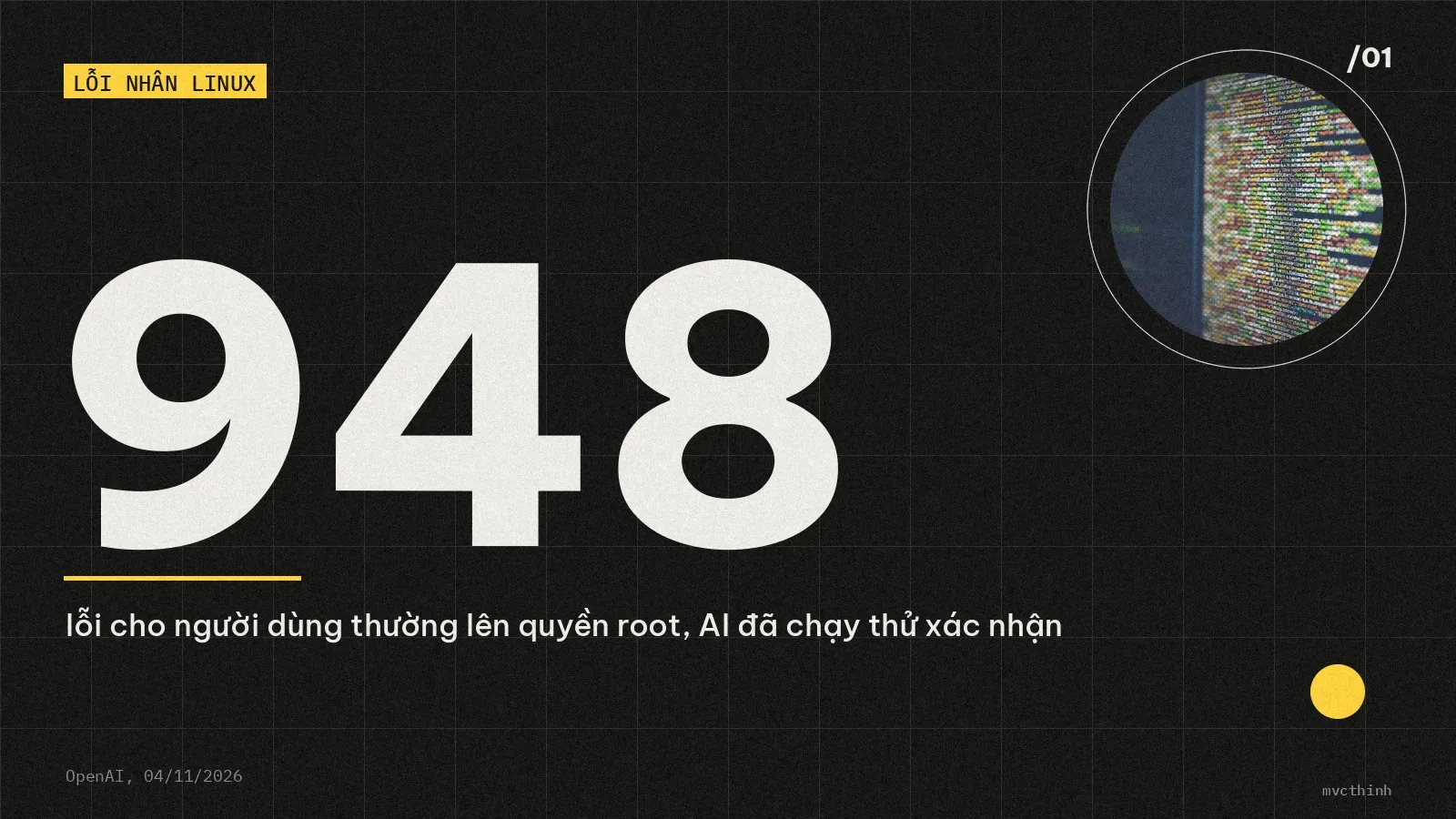
OpenAI says its specialized GPT-6 Cyber model has analyzed and validated 948 memory-corruption bugs in the Linux kernel. The company posted the news on X on Nov 23, 2026, with a full research write-up.
Picture a small shop renting a Linux server to run its website. The kernel is the core that controls the whole machine, and it runs to more than 40 million lines of code. One bug in it can let an ordinary user on that machine become "root", the highest admin level, like holding the master key to the whole building.
Here is my take: don't worry about AI false alarms, worry about patching late. Most of these bugs were actually exploited in testing, so the useful move is to update now, not to argue about the number.
How did the AI find 948 bugs?
It did not just read code and guess. OpenAI's system works in five steps, and every bug has to survive a real test run.
flowchart TD
  A[AI picks code worth auditing]:::data --> B[AI reads code, flags suspects]
  B --> C[Test run in a virtual machine]:::key
  C --> D[Try root, write a patch]
  D --> E((Researcher reviews)):::human
  classDef key fill:#1d1a10,stroke:#ffd23f,color:#ffd23f,stroke-width:1.6px
  classDef human fill:#181817,stroke:#e8e6df,color:#e8e6df,stroke-dasharray:5 3
  classDef data fill:#1c1c1b,stroke:#8d8b85,color:#cfcdc6
  classDef muted fill:#181817,stroke:#3d3d3a,color:#8d8b85
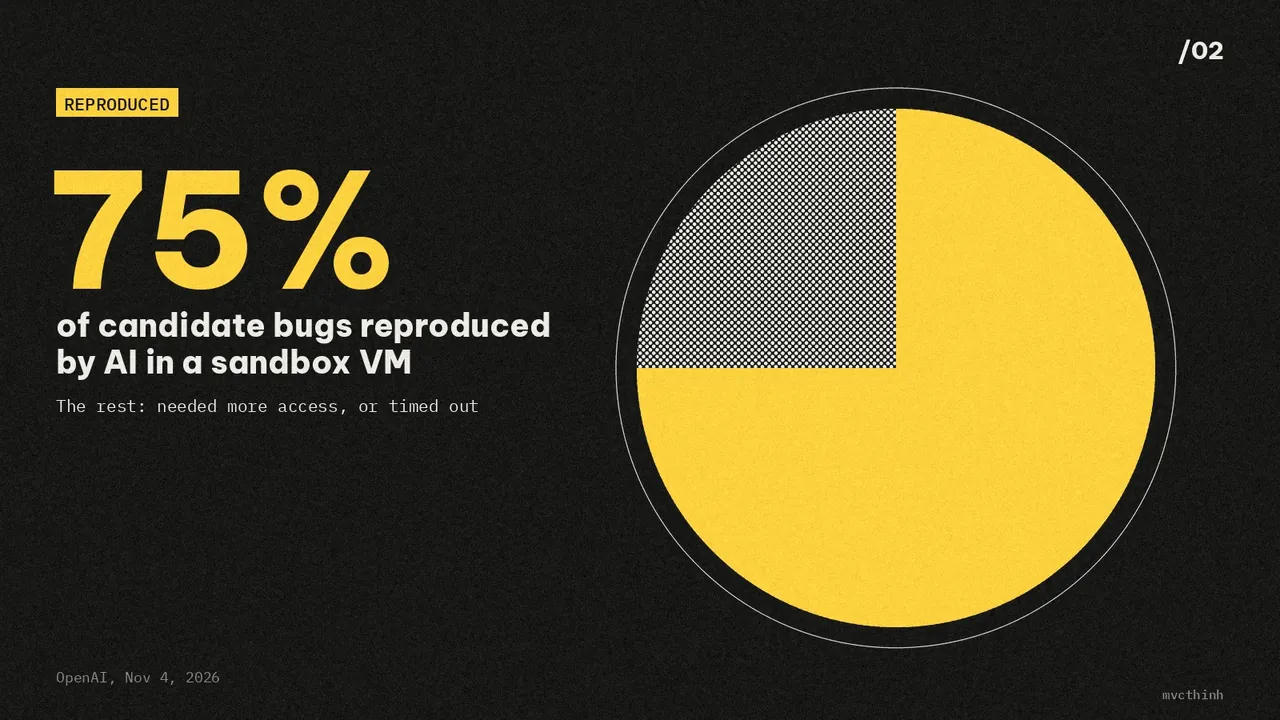
Of 2,308 suspected bugs, the AI reproduced about three quarters. The whole run cost roughly $1.2 million in AI usage, according to OpenAI.
Where I stand: is the checking done?
Not quite, but the worry is not where many people expect it. Only 3.1% of suspected bugs came from the AI getting the analysis wrong. OpenAI also says AI-written patches work as intended but sometimes introduce other problems, so a person must review them.
One example stands out. In an early run, the AI reported 200 successful root takeovers. After human review, 20 of them had actually reached root through a different bug than the one assigned. So every result still needs a person to check it.
Linux maintainers are moving fast. In the 10 days of the scan, 61 bugs were patched upstream, 43 had staged patches, and 299 were being discussed in public.
 Also readGPT-Live-1.1 Standby Cuts the Idle Rate 60%, Not Your Bill
What should Linux users do now?
This affects anyone running a Linux server or desktop. OpenAI writes that a machine missing the latest patches should be treated as equivalent to root access for a well-resourced attacker. I suggest three things:
- Install security updates from your own distribution's vendor, and turn on automatic updates.
- Don't load random patches from the web unless your vendor has confirmed them.
- Back up your data before any big update.
Back to the shop owner at the top: run the update today (Nov 24, 2026), and that master key gets much harder to steal.
Sources
Safety & policyOpenAI & ChatGPT
 Coding agents · Nov 24, 2026Ladybird doesn't run on Google's engine: worth a download, not for Gmail logins yet
Nearly every popular browser runs on one engine mainly developed by Google. Ladybird built its own. Why that matters, what the alpha…
 Safety & policy · Nov 23, 2026Jensen Huang Returns as Nvidia CEO, 6 Days After Board Said No
Nvidia reinstated Jensen Huang as CEO on Nov 23, just 6 days after its board said it had no plan to bring…
 Agent basics · Nov 23, 2026Delta Outage: Over 1,000 Flights Ran Late Even With Manual Backup
Delta switched to manual work, so flights stayed safe, yet nearly half still ran late. If you hand work to AI agents,…