Blog · AI Agent News · Coding agents VIEN
Bonsai 2.5 shrinks a coding AI from 53.8 GB to 5.93 GB, keeping 90%
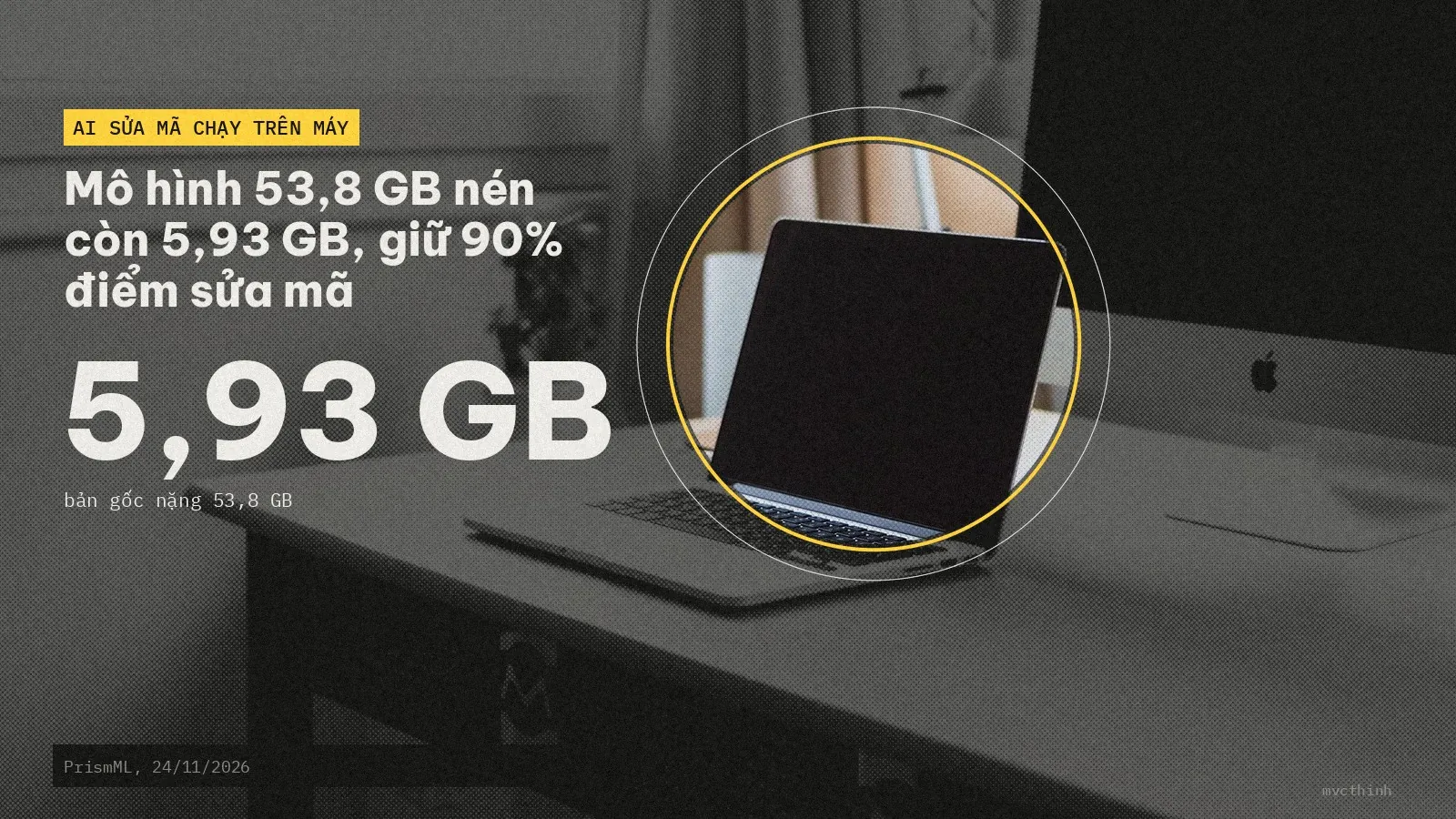
Coding AI Bonsai 2.5 is 9 times smaller than its original yet keeps 90% of its score, per the maker. We compare rivals, Mac speed and how to test it yourself.
In this article
- Bonsai 2.5 is a coding AI compressed to fit a personal computer
- Against the original and other compressed builds, Bonsai 2.5 is the smallest and still leads on bug fixing
- On resource use, Bonsai 2.5 saves memory clearly, while Mac speed is only moderate
- To know whether Bonsai 2.5 runs steadily, fast and well, run these three tests yourself
- Sources
Bonsai 2.5 is a coding AI compressed to fit a personal computer
Bonsai 2.5 is built on the Qwen3.8 27B model. PrismML aims it at multi-step work: reading a private codebase, reproducing a bug, fixing it, running the checks, and adjusting when a step fails. The maker's announcement gives two examples: reproducing and fixing a bug that breaks a Python project's automated tests, and rebuilding a web page from a screenshot. The weights are free to download under the Apache 2.0 license, and the model runs on Mac, iPhone and iPad.
Compression here is like exporting a huge original photo to JPEG: the file shrinks a lot, and the only question left is how much quality was lost. For a model, the maker stores each weight, meaning each number the model has learned, with very few bits, so the smallest build is only 5.93 GB.
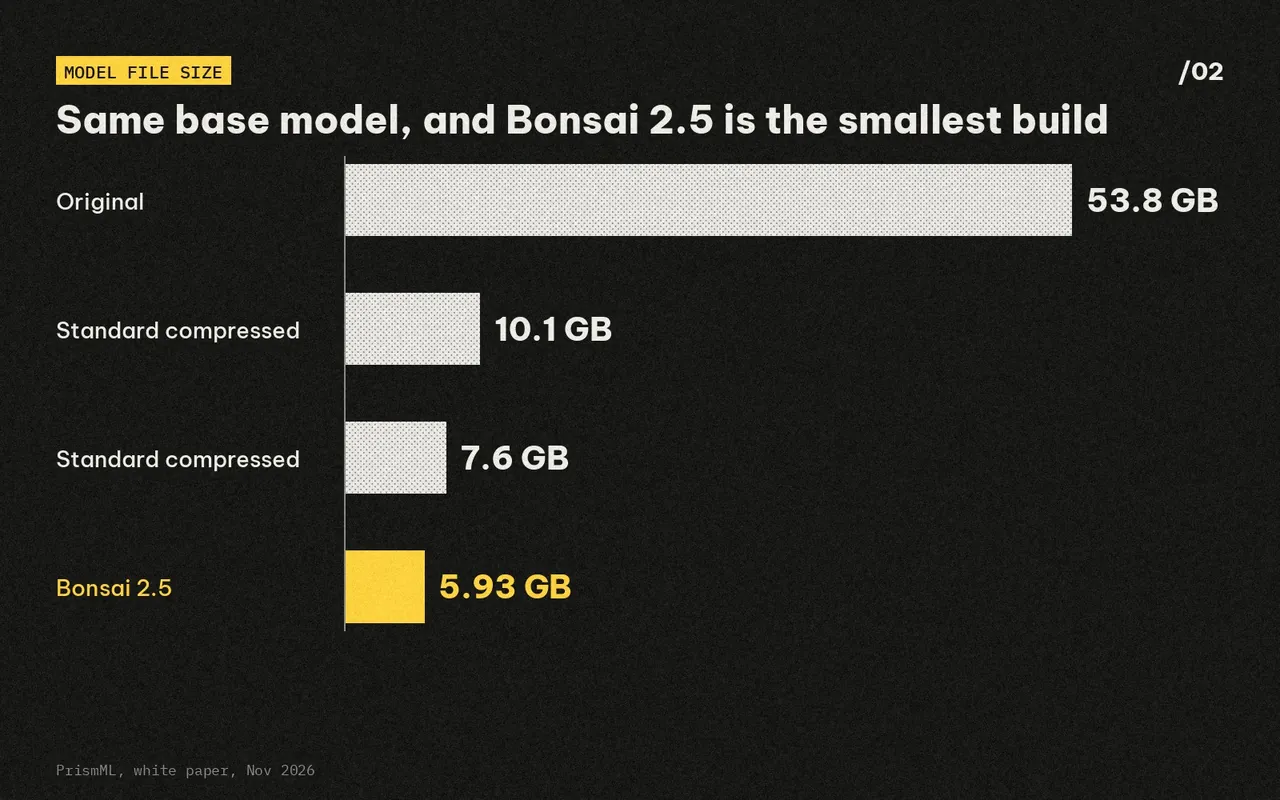
Against the original and other compressed builds, Bonsai 2.5 is the smallest and still leads on bug fixing
What makes Bonsai 2.5 notable is not the 5.93 GB figure on its own, but that it is this small while the usual compressed builds of the same base model weigh more. The maker set it beside four conventionally compressed builds, weighing 7.6 to 10.1 GB, and evaluated all of them the same way. On SWE-bench Verified, an exam of real software bug fixes, the original scores 80.6, Bonsai 2.5 scores 75.6, and the 10.1 GB compressed build scores 73.2.
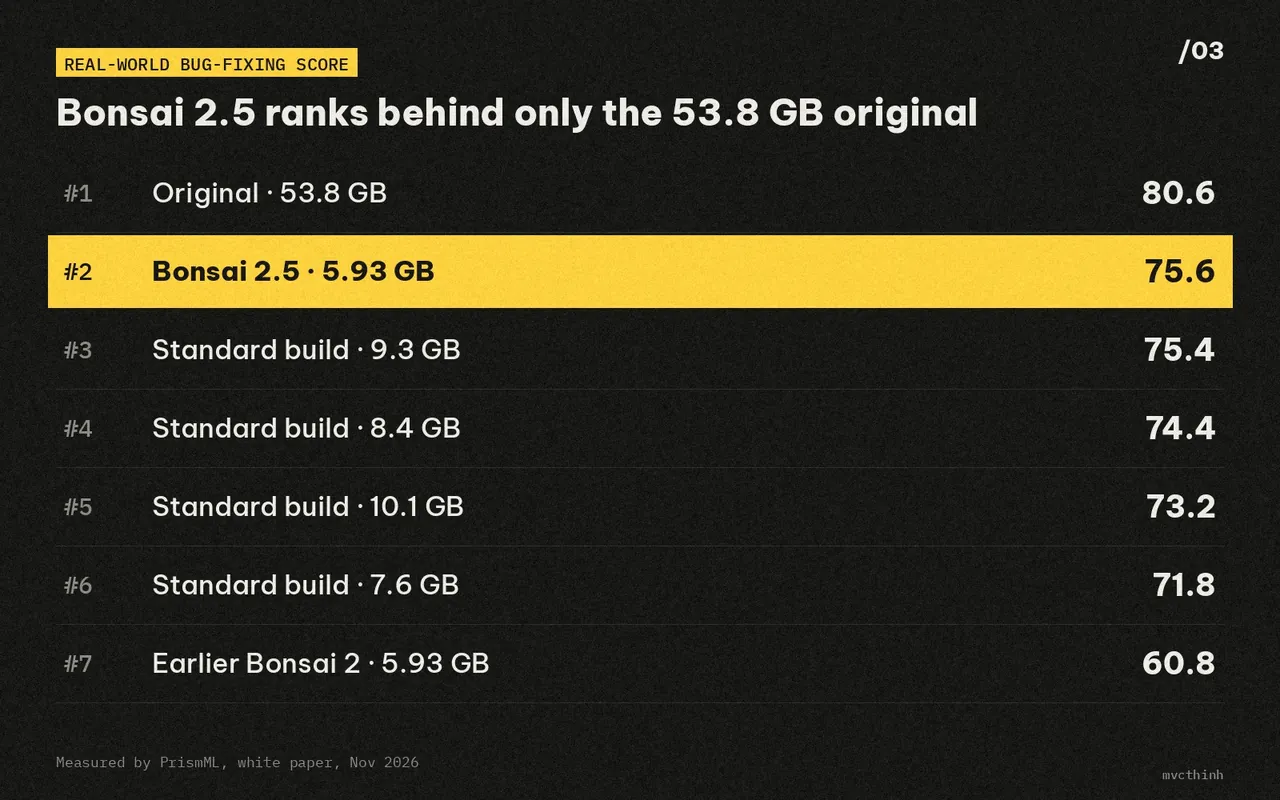
Against its predecessor the step forward is clear. Bonsai 2 scored only 60.8 on this exam and solved not a single DeepSWE task (0 points), while the new version scores 27.0, against 30.1 for the original. Across the three multi-step coding tests, the new version keeps 90% of the original's score, while the previous one kept only 63%.
The 10.1 GB build, about 1.7 times larger, wins slightly on multi-step coding (average 55.5 against 54.2) but loses on tool use (75.3 against 77.2). Conventional compressed builds can also fail worse than their averages suggest. On AppWorld, where the model must write code that calls everyday apps, the 8.4 GB build scores only 46.5, while Bonsai 2.5 scores 90.5. According to the maker, in about one task in five, that build writes a long script that guesses every call and declares the task complete before seeing any output.
Bonsai 2.5 still trails the original. In the maker's table of seven tests, only one tool-use test is higher than the original (73.9 against 72.8), the other six are lower, and LiveCodeBench v6 even slipped from the previous version, from 83.8 to 83.0. The maker compares only against compressed builds of the same base model; I found no table against models from other makers.
 Also readChina says its Lushan card will break NVIDIA's monopoly?
On resource use, Bonsai 2.5 saves memory clearly, while Mac speed is only moderate
Memory is where Bonsai 2.5 wins most clearly: 5.93 GB against 53.8 GB, about 9 times smaller. According to 9to5Mac, the package for Apple chips weighs about 8.9 GB. With 16 GB of RAM, the original is about 3.4 times the machine's memory and cannot run, while the Mac package fits and leaves about 7.1 GB for the operating system. My guess is that this is tight, because the sources state no minimum RAM. On power, neither the announcement nor the white paper gives any measurement, so I cannot say how much electricity it saves.

Speed deserves a closer look. A token is a small piece of text the model writes at a time, so tokens per second is like its typing speed. On an RTX 4090 card, the maker measured 204 tokens per second with its speed-up feature on. With the same feature on, an M4 Pro chip reaches 25.3, about 8 times slower. With the feature off, the M4 Pro reaches 22.9 and an M5 Pro chip reaches 30.2. The standard M4 chip in my Mac mini is not in the table, so I cannot yet say whether it is fast or slow.
To know whether Bonsai 2.5 runs steadily, fast and well, run these three tests yourself
The maker's scores do not answer the three questions a 16 GB machine raises, so you need three tests of your own.
- Steady: download the Mac package, open Activity Monitor while the model works and watch the memory pressure graph. If it turns red, the machine lacks the RAM for this job.
- Fast: give it the same request, time it, and see whether the speed comes close to the maker's 22.9 to 30.2 tokens per second. If it is much lower, multi-step work will be very slow.
- Strong: take an old bug you already know how to fix and that has a test, give it to Bonsai 2.5 and to the tool you use now, and see whether the test passes.
If all three tests pass, you have an assistant for code that must not leave the machine. If not, you have lost only about 8.9 GB of disk and one trial session, and you know what the maker's scores could not tell you.
Sources
- PrismML, "Introducing Ternary Bonsai 2.5 27B: Powering Agentic Coding and Private Knowledge Work", 24 Nov 2026: https://prismml.com/news/bonsai-2-5-27b
- PrismML, model card "Ternary Bonsai 2.5 27B GGUF" on Hugging Face (reproduces the white paper's tables), Nov 2026: https://huggingface.co/prism-ml/Ternary-Bonsai-2.5-27B-GGUF
- 9to5Mac, "PrismML's Bonsai 2.5 brings better coding and tool use to on-device AI", 24 Nov 2026: https://9to5mac.com/2026/11/24/prismmls-bonsai-2-5-brings-better-coding-and-tool-use-to-on-device-ai
Sources
 Safety & policy · Nov 25, 2026OpenAI and Anthropic staff doubt their top models can ship
More than two dozen anonymous sources told Axios that OpenAI and Anthropic staff doubt their top models can ship safely. Here is…
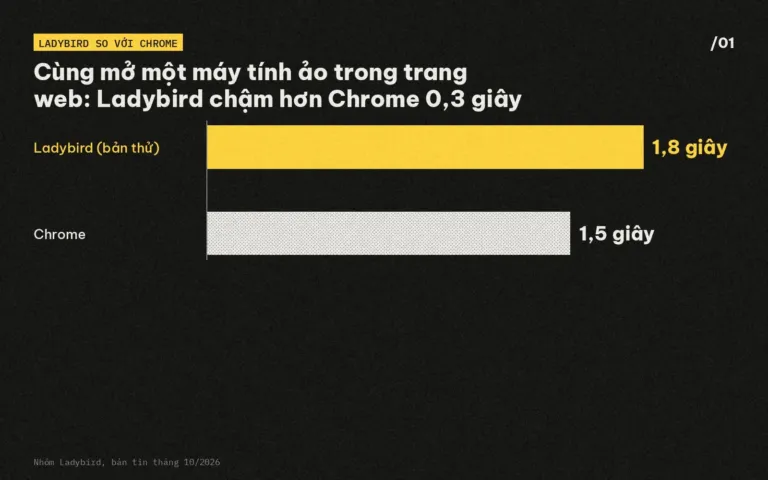 Coding agents · Nov 24, 2026Ladybird doesn't run on Google's engine: worth a download, not for Gmail logins yet
Nearly every popular browser runs on one engine mainly developed by Google. Ladybird built its own. Why that matters, what the alpha…
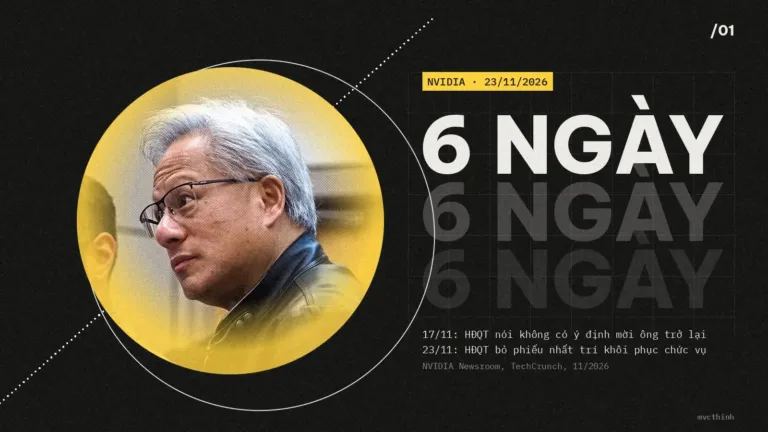 Safety & policy · Nov 23, 2026Jensen Huang Returns as Nvidia CEO, 6 Days After Board Said No
Nvidia reinstated Jensen Huang as CEO on Nov 23, just 6 days after its board said it had no plan to bring…