Blog · AI Agent News · AI video VIEN
Gemini 4 Hydrogen Review: Fast & Cheap, Yet Weak on 3D
Google launched Gemini 4 Hydrogen at 2.5x the speed of 3.8 Flash. Here is a hands-on look at Google AI Pro value, 3D tasks, long prompts, and Claude Sonnet.
In this article
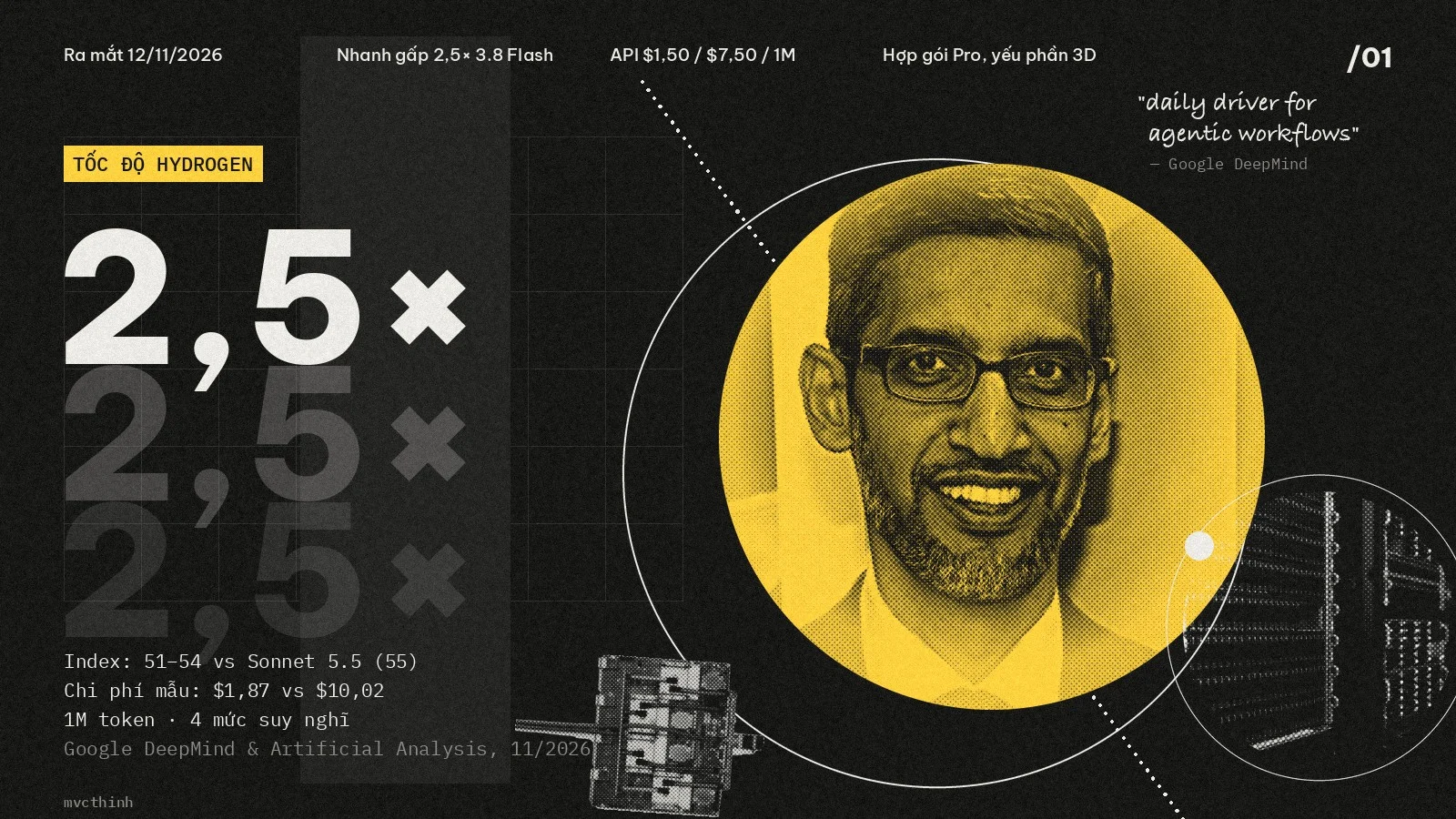
On November 12, 2026, Google DeepMind released Gemini 4 Hydrogen, following the general availability of flagship Gemini 4 Carbon on November 10. According to Google's official announcement, Hydrogen replaces Gemini 3.8 Flash as Google's fast daily driver for coding and agentic workflows, completing tasks 2.5x faster at flat API pricing of $1.50 per million input tokens and $7.50 per million output tokens.
Where does Gemini 4 Hydrogen beat 3.8 Flash and rival models?
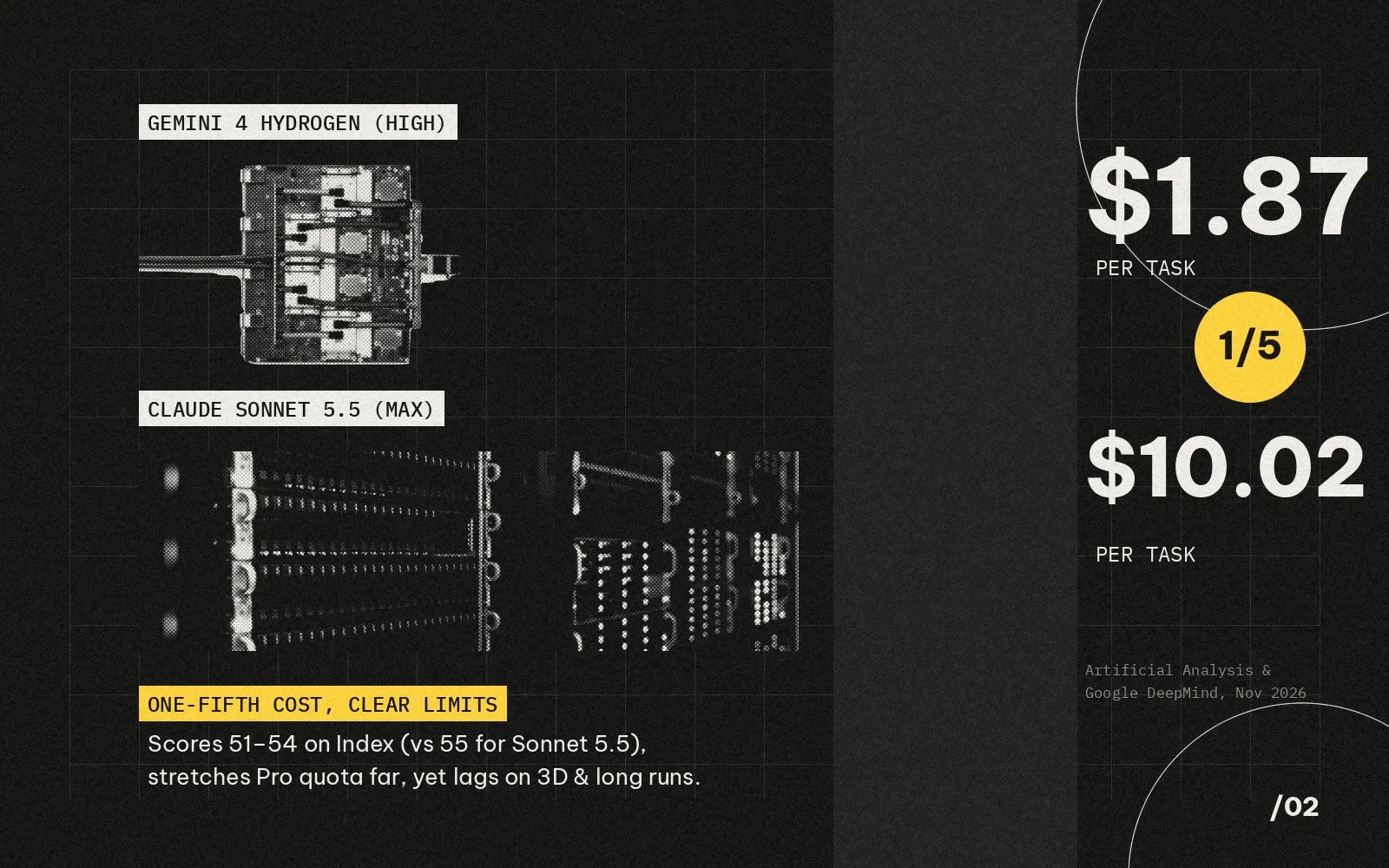
Hydrogen shines on raw speed and cost efficiency for recurring tasks. On Artificial Analysis benchmarks, it reaches 170 to 190 output tokens per second and scores 51 on the Intelligence Index at default high (or 54 at xhigh), just behind Claude Sonnet 5.5 at 55.
Per the Google DeepMind Model Card, Hydrogen is adapted from Gemini 4 Carbon and keeps all four thinking tiers (low, medium, high, xhigh) alongside a unified 1M-token window. Compared to Gemini 3.8 Flash, it triples Terminal-Bench 4.1 scores (57% vs. 18.2%) while cutting fabricated claims more than fivefold.
| Core Metric (Nov 2026) | Gemini 4 Hydrogen | Gemini 4 Carbon | Claude Sonnet 5.5 |
|---|---|---|---|
| API Price (1M input / output) | $1.50 / $7.50 flat | $2.00 / $10.00 ($4 / $20 from Dec 1) | Higher tier (~5x task cost) |
| Artificial Analysis Avg. Task Cost | $1.87 (high) / $3.16 (xhigh) | $5.48 | $10.02 |
| Intelligence Index | 51 (high) / 54 (xhigh) | 60 (high) | 55 (max) |
| Terminal-Bench 4.1 | 57.0% | Frontier pairing leads | 63.9% |
| SWE-sweep (Agentic coding) | 13.5% | Built for long architecture | 3.1% |
Hands-on verdict: Great Pro quota value, weak on 3D and long prompts
Looking past marketing charts to everyday production, Hydrogen feels very practical inside Google AI Pro. Quotas last significantly longer before hitting rate limits, and day-to-day output holds up well for summaries, quick research, structured drafts, and surgical code edits.
Value is where it truly stands out. Even next to the standard $19.99/month Google AI Pro rate, grabbing a Google promotional discount makes Hydrogen worth every penny because you can run multi-step agent loops freely without constantly watching usage meters.
Still, two clear flaws show up as soon as workloads get heavier:
- Weak 3D handling: Despite Google's simple voxel and WebGL demos, Hydrogen struggles when tasks require strict 3D spatial reasoning, coordinate consistency, and scene logic. If you plan to produce 3D videos, Hydrogen is not a smart choice.
- Long prompts lag behind Sonnet: On lengthy instructions stacking tone rules, multi-file references, and edge constraints, Hydrogen still drops details near the end and feels less dependable than Claude Sonnet.
flowchart LR
  A["Incoming task"] --> B{"3D or long complex prompt?"}
  B -->|"No · Fast routine"| C["Run Gemini 4 Hydrogen"]
  B -->|"Yes · 3D / Long"| D["Use Claude Sonnet or Carbon"]
  classDef key fill:#1d1a10,stroke:#ffd23f,color:#ffd23f,stroke-width:1.6px
  classDef human fill:#181817,stroke:#e8e6df,color:#e8e6df,stroke-dasharray:5 3
  classDef data fill:#1c1c1b,stroke:#8d8b85,color:#cfcdc6
classDef muted fill:#181817,stroke:#3d3d3a,color:#8d8b85 Also readCaltech Professor Stops Grading Math Homework Accuracy Over AI
My take
Overall, Gemini 4 Hydrogen earns a solid rating as a fast daily workhorse inside Google AI Pro. If you are on a promotional Google plan, it is hard to beat on price-to-runway ratio for routine coding and fast research.
Even so, it does not dethrone Claude Sonnet. The cleanest workflow keeps Hydrogen on fast outer loops and short edits, while handing 3D video builds and demanding long prompts to Claude Sonnet or Gemini 4 Carbon.
FAQ
Does Google AI Plus include Gemini 4 Hydrogen?
Yes. Google rolled out Hydrogen to Google AI Plus, Pro, and Ultra users in the Gemini app on November 12, 2026, while Google Antigravity IDE access covers paid Pro and Ultra tiers.
How can developers cut quota use without giving up frontier accuracy?
Google Antigravity's Orchestrator pairs Carbon for high-level planning and hard debugging with Hydrogen for edits and test loops, cutting quota use by roughly 24% and finishing 19% faster on Terminal-Bench 4.0.
Sources
- Introducing Gemini 4 Hydrogen for Agentic Workflows Google Blog
- Gemini 4 Hydrogen - Model Card Google DeepMind
- Gemini 4 Carbon - Model Card Google DeepMind
- Gemini 4 Hydrogen Intelligence, Pricing & Speed Benchmarks Artificial Analysis
- Google ra mắt Gemini 4 Carbon và Hydrogen trong một tuần X Trending
AI videoClaude & AnthropicGoogle Gemini
 Safety & policy · Nov 17, 2026Claude Incognito Chats Still Know Who You Are: Here Is Why
Mathematician David Bessis caught Claude Opus 5.5 naming him inside incognito thinking, exposing what incognito mode actually hides and keeps.
 Coding agents · Nov 17, 2026Claude Code Mode vs. Tokendoctor: Cut Token Spend Up to 38%?
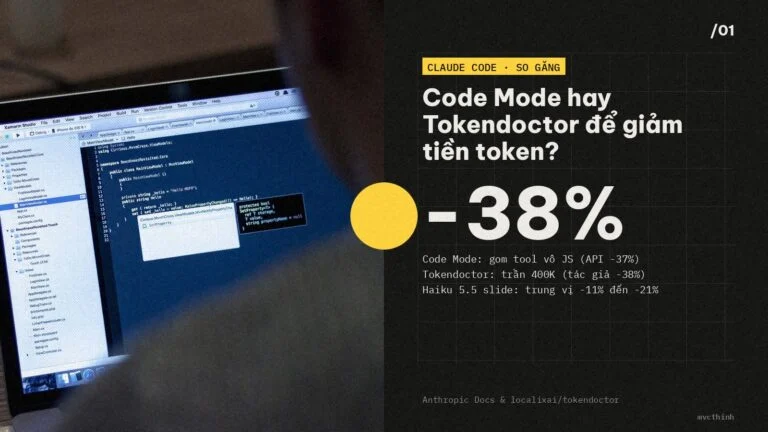
Comparing Claude Code Mode JS tool batching and Tokendoctor context tuning: real numbers, exact setup steps, strict limits, and who benefits.
 Safety & policy · Nov 17, 2026Anthropic CEO's Open-Source AI Warning Sparks Backlash on X
A 2023 Senate clip of Dario Amodei warning about open-source AI went viral again on X. Here are both reactions and why…