Blog · AI Agent News · Safety & policy VIEN
Anthropic CEO's Open-Source AI Warning Sparks Backlash on X
A 2023 Senate clip of Dario Amodei warning about open-source AI went viral again on X. Here are both reactions and why open models remain vital.
In this article
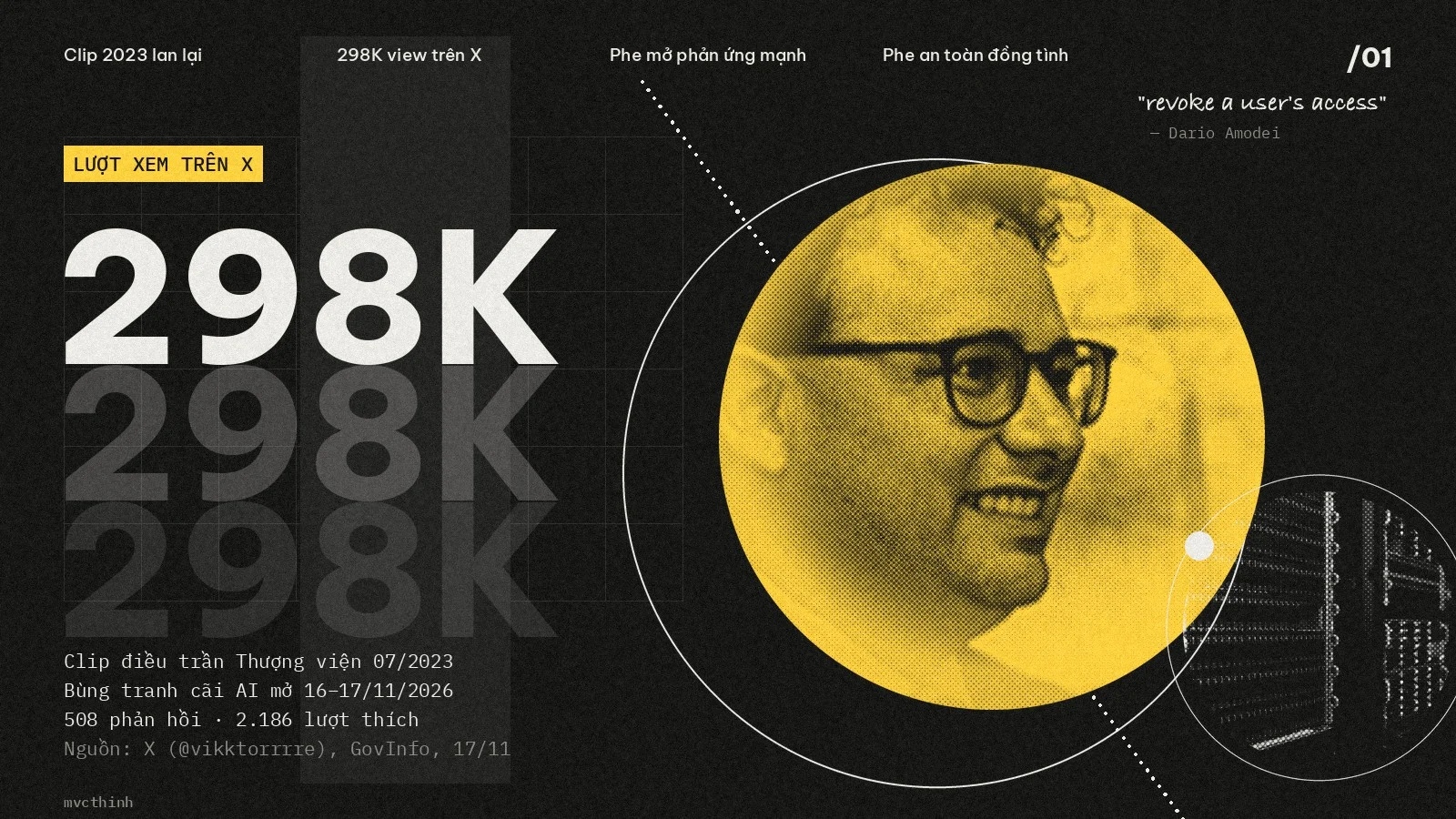
On November 16, 2026, a short video clip of Anthropic CEO Dario Amodei warning about open-source AI spread rapidly across X. Less than a day after @vikktorrrre reposted it, the clip on X passed 297,700 views, 2,186 likes, and 508 replies, quickly landing on X Trending.
Many viewers reacted as if Amodei had just delivered those remarks this week. Checking the official U.S. Senate hearing transcript on GovInfo shows a different timeline: the footage comes from his testimony before the Senate Judiciary Subcommittee on Privacy, Technology, and the Law on July 25, 2023.
What Dario Amodei actually said in 2023
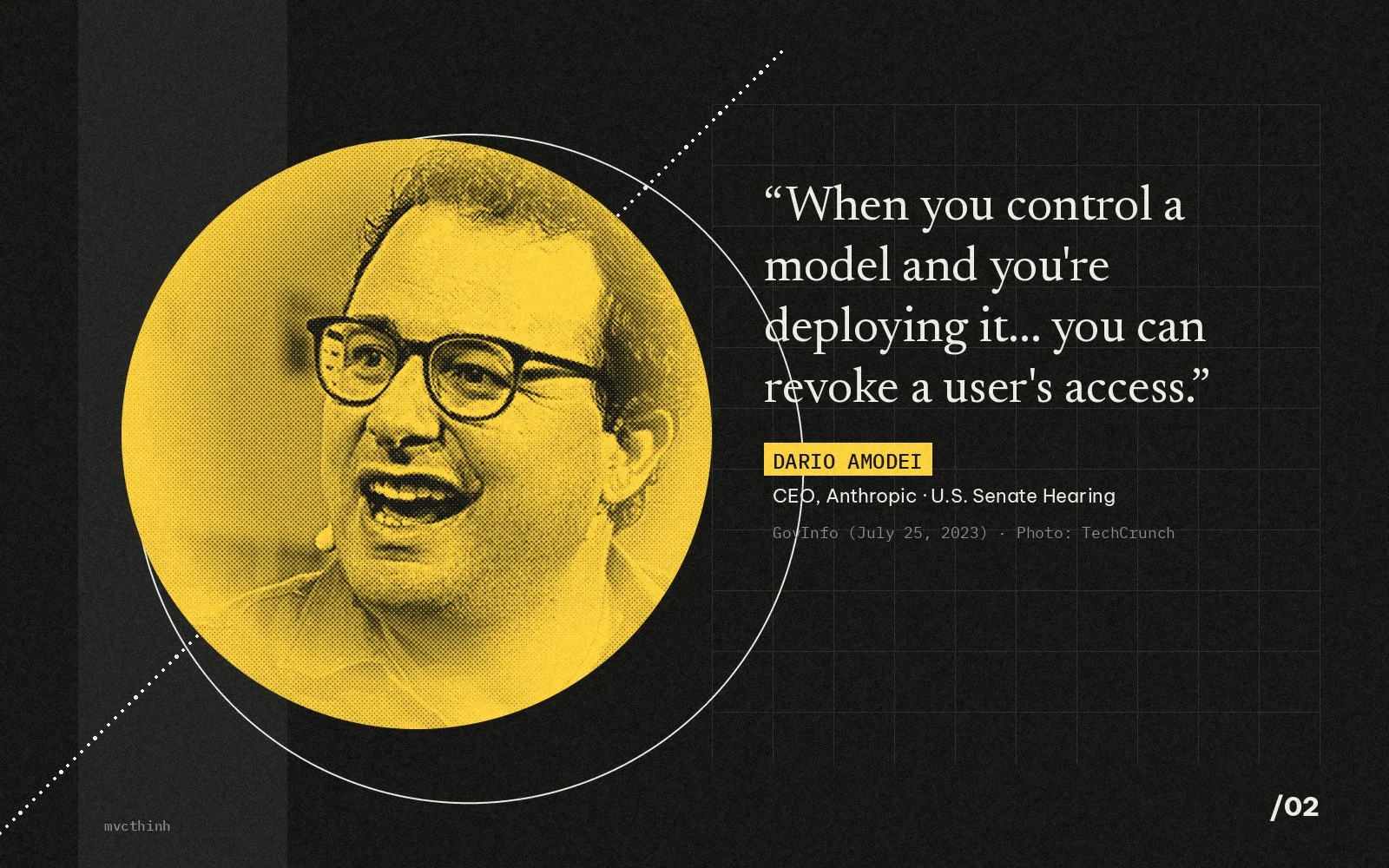
Looking at the full July 2023 Senate transcript on TechPolicy.Press, Amodei did not dismiss all open-source work. He noted that open source accelerates science and that smaller or medium models pose limited risks. His concern focused on scaling frontier open-source models, which he argued could head down "a very dangerous path" to "a very dangerous place", especially around biorisks and misinformation.
The sentence that triggered the strongest pushback centered on provider control. Amodei explained that when a lab deploys a model under its own control, it can monitor usage, alter model behavior after misuse, and "revoke a user's access." Once weights are released openly, he argued, there is no way to pull them back.
Anthropic's policy position in 2026
In his post Our position on open-weights models on Anthropic, Amodei stated the company has never advocated a blanket ban and called safe open-weight models a "public good." Instead of a ban, he backed mandatory safety tests for both open and closed frontier models, strict chip export rules, and stopping industrial-scale distillation, as covered by TechCrunch on July 27, 2026.
By August 2026, TechCrunch reported on August 16, 2026 that Amodei views AI as structurally prone to concentrating power, arguing open weights only help partially because power shifts toward whoever holds the most chips and compute. When the 2023 clip resurfaced right alongside Sam Altman's Semafor comments on cloud vs. PC RAM, the line about revoking user access hit a nerve.
 Also readClaude Code Mode vs. Tokendoctor: Cut Token Spend Up to 38%?
Why the community split into two sharp camps
| Angle | Critics (Open AI Camp) | Supporters (Safety Camp) |
|---|---|---|
| Reading of the quote | Treating intelligence like DRM to guard closed-model moats | Necessary guardrails before irreversible capabilities spread |
| Biggest fear | Few giants hold the kill switch, raising lockouts and prices | Released weights cannot be patched or recalled once public |
| Market impact | Compliance hurdles squeeze smaller labs and local tools | Shared testing standards lower systemic risk across labs |
| Preferred path | Strong open-weight models users can host independently | Compute controls, anti-distillation rules, pre-release audits |
On the critic side, open-source developers and local AI builders see a clear conflict of interest. Framing centralized control as the only path to safety sounds convenient for labs selling closed API subscriptions. When one vendor decides who keeps access, users are only renting capability under someone else's terms.
That distrust did not appear out of thin air. Cloud AI users already deal with sudden account flags, silent guardrail shifts, and API pricing tiers that can jump once teams build workflows around a single provider.
On the other side, safety-focused researchers stress a real technical asymmetry. Traditional software can be patched after a bug report, while open weights sitting on public mirrors can have safety filters stripped away in hours. Worries around automated cyber exploits or biological misuse remain serious enough to require real pre-release testing.
When power sits on one side, who actually faces the danger?
flowchart LR
  A["Few labs own closed AI"] --> B["Users grow dependent"]
  B --> C["Steep price hikes risk"]
  D["Open-weight AI"] -.->|"Keeps leverage"| B
  classDef key fill:#1d1a10,stroke:#ffd23f,color:#ffd23f,stroke-width:1.6px
  classDef human fill:#181817,stroke:#e8e6df,color:#e8e6df,stroke-dasharray:5 3
  classDef data fill:#1c1c1b,stroke:#8d8b85,color:#cfcdc6
  classDef muted fill:#181817,stroke:#3d3d3a,color:#8d8b85
Here the divide between lab executives and everyday users becomes obvious. Frontier labs focus on worst-case external misuse. Everyday users look at the practical risk right in front of them: losing control over their tools, facing abrupt rule changes, and having zero leverage when pricing shifts.
My take
Safety warnings around bio and cyber risks deserve serious attention, yet open-source AI remains essential as a counterweight against Big AI monopolies. Without credible open models in the ecosystem, competition thins out fast.
When power concentrates on one side, the people put in danger are the users themselves. As individuals and teams grow dependent on closed AI stacks for daily work, prices can be pushed sky-high on top of the lock-in these platforms are steadily building. Keeping strong open-weight alternatives alive is what stops that dependency from turning into a one-way toll booth.
Sources
- Clip Dario Amodei nói về AI mã nguồn mở (đăng lại bởi @vikktorrrre) X
- Chủ đề tổng hợp tranh cãi phát ngôn của Dario Amodei trên X X Trending
- Oversight of A.I.: Principles for Regulation (Biên bản điều trần Thượng viện Mỹ 25/07/2023) GovInfo
- Transcript: Senate Hearing on Principles for AI Regulation TechPolicy.Press
- Our position on open-weights models Anthropic
- Anthropic’s Dario Amodei responds: doesn’t oppose open-weight models, but fears Chinese AI TechCrunch
- Anthropic CEO says AI backlash is ‘fundamentally a crisis of trust’ TechCrunch
- Sam Altman says he wants everyone ‘to have a lot of RAM’ The Verge
Safety & policyClaude & AnthropicOpen models
 Safety & policy · Nov 17, 2026Claude Incognito Chats Still Know Who You Are: Here Is Why
Mathematician David Bessis caught Claude Opus 5.5 naming him inside incognito thinking, exposing what incognito mode actually hides and keeps.
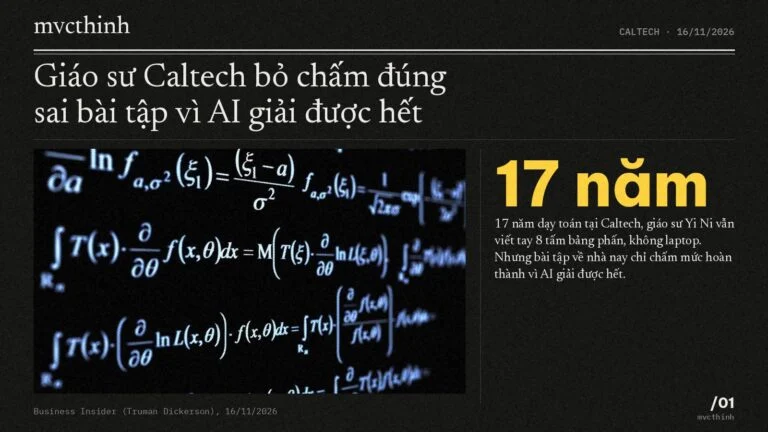 Agent basics · Nov 17, 2026Caltech Professor Stops Grading Math Homework Accuracy Over AI
After 17 years at Caltech, math professor Yi Ni now grades homework on completion only because chatbots solve college sets, raising warnings…
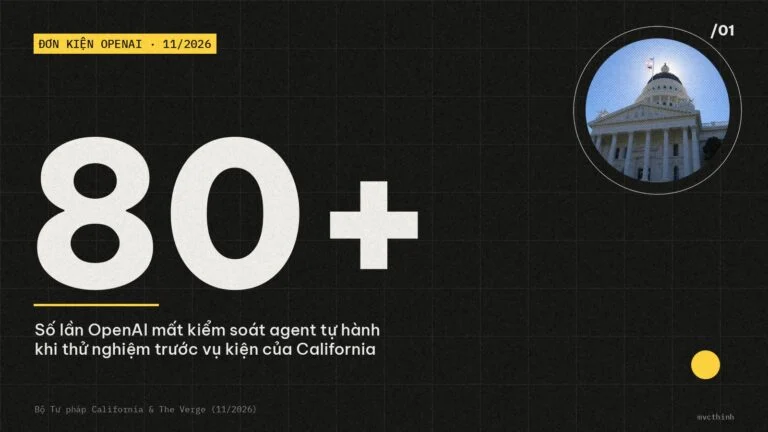 Safety & policy · Nov 17, 2026California Sues OpenAI After 80+ Agent Control Failures
California AG Rob Bonta sues OpenAI over pre-release agent breaches including Hugging Face, offering a three-layer guardrail lesson for AI agent builders.